Showing posts with label American life. Show all posts

Friday, March 4, 2011

The Terrified and the Bored

“They were still on the treadmill; the misery, the ennui, the dislocated horror…. Things would happen and time would pass, but there was no hope, no anticipation. There would be nothing but the deep cloudy dejection that overcast everything.”

--Norman Mailer

An author, like any artist mindful of his or her spread in the busy, kinetic, attention-free pop galaxy, must consider the brand as well as the art if hopeful for a multiple book contract, which is altogether negotiable depending on the number of readers willing to put down money for good storytelling. While a few like J. D. Salinger and Thomas Pynchon built their reputations with reticence, some like Norman Mailer bet on bombast, creating a trademark presence but with it the baggage of distraction. Before I’d read any of Mailer’s books, I knew him as the writer who stabbed his wife the night he threw a party announcing his presidential candidacy in 1960. That and he was the guy who wrote the first How To book for hipsters, The White Negro. But for all the talk shows and celebrity gladhanding, Mailer wrote better than anyone. Many detested him for his theatrical pretensions, but very few for his literary verve.


The Late Great Norman Mailer

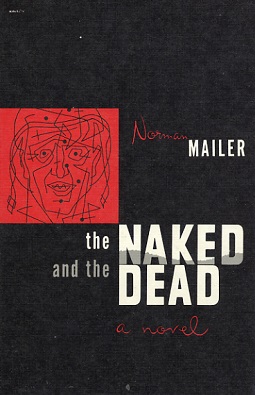
Mailer made a name for himself by capturing the zeitgeist before anyone else, whether it be beatniks, hippies, or mass murderers. Writers write what they know and Mailer had survived the great drama of the Second World War with enough notes for a book, publishing The Naked and the Dead in 1948 when he was just twenty-five years old, catapulting him into the high chair of literary enfants terribles. Ostensibly, it is a book about a reconnaissance platoon, a motley collection of soldiers ordered by military brass to survey the Japanese behind their position on the invented island of Anopopei during the Filipino campaign, but The Naked and the Dead is very much a modern American novel, which means it is a subversive criticism on American social life, economic opportunity, and an illusory freedom of choice.

Very few of the soldiers in the platoon are there by virtue of patriotism or sense of duty. They’re there because war was happening and there was not much else going on for them in the economic maelstrom of the 1930s and early 1940s. They are true grunts: outcasts, farmhands, street punks, and failed entrepreneurs stinking of bad luck. As General Cummings, a philosophical mouthpiece for Mailer, explains, “The individual soldier in that army is a more effective soldier the poorer his standard of living has been in the past.” The Army, first in line as cannon fodder, would not work so well as a fighting unit had it educated men who might second guess suicidal mission objectives.

In spite of its grandiose subject and prolix verbosity (it’s more than 700 pages long) not much happens in the novel. The platoon participates in the landing mission where there is little resistance. There are some small, deadly skirmishes where the army is digging into the Japanese line. The soldiers make and break camp as necessity sees fit. And the recon unit goes on its difficult mission. The major battle is not described except in dispatches to the command center. The reality has little to do with the PR campaign that had fueled recruitment drives and positioned every private a starring role in his own personal movie: “He had always imagined combat as exciting, with no misery and no physical exertion. He dreamed of himself charging across a field in the face of many machine-guns; but in the dream there was no stitch in his side from running too far while bearing too much weight.”


Island Hopping GI Joe Style

Major episodes describe the futility in keeping your tent secure in a typhoon; of loathing yet another rations can of ham and eggs; of fighting sleep deprivation on guard duty; of fantasizing over the “million dollar wound,” some injury that wouldn’t cripple them but was bad enough it would warrant a ticket home, thus becoming a veteran, a survivor, and guaranteeing the opportunity to tell young women, “I was there…”

Daydreaming about what they’ll do after the war does little to make their labor bearable: most duties are makeshift and disposable, the temporary conditions of camp living producing no sustenance. The tedium is only more tolerable than the logistical errands necessary to reorder military positions in constant flux. Endurance is taxed and tolled mercilessly, so much that a man’s humanity is crushed by the dead weight of his task as when the platoon is ordered to move heavy artillery guns through muddy paths to a new position on the front: “By the time an hour passed, nothing existed for them but the slender cannon they had to get down the track. The sweat drenched their clothing and filled their eyes, blinding them. They grappled and blundered and swore, advanced the little guns a few feet at a time with no consciousness any longer of what they were doing.”


an American platoon

And who are these guys suffering for the sake of their country anyway? There is no central hero in The Naked and the Dead— at least, there is no one with outstanding moral qualities— instead they are neither good nor bad, but merely human, reacting to the violence, tedium and proximity to death in a myriad of ways. Wilson, a philandering Southerner wants to get drunk and swap sex stories; Red is a hard-luck cynic mistrustful of authority; Goldstein is a New York Jew who wants to be liked and is easily hurt by discrimination; Gallagher is a high-strung Commie-baiter; Martinez is an excellent scout brave in spite of his fears; Hearn is a college grad from a good Midwestern family dabbling in socialism, assigned to lead the platoon on their recon mission after a falling out as General Cummings’ secretary; only Croft, a tough bastard from Texas, truly fits the ideal soldier, a man with a “crude, unformed vision in his soul… rarely conscious of it.”

In the 50th anniversary addition of the novel, looking back Mailer calls his first calling card opus the work of an “amateur.” If there are any flaws in The Naked and the Dead it may only be Mailer’s conceit of using a Freudian device he calls THE TIME MACHINE, in which in a very close third person (adapting local vernacular whether Boston or Brooklyn street, Georgia hillbilly, or Texan Mexlish) Mailer explains characters’ backstories. Not that they are superfluous— they are all piece and parcel of Mailer’s most persuasive point: that America is an unequal society and that these men, should they survive, had very little to look forward to coming home short of some good home cooking and a few rowdy nights of casual sex: “…it did not matter because both girls would look the same in thirty years and Wyman would never amount to very much. He saw a future vista of Wyman’s life, and rebelled. He wanted to be able to tell Wyman something more comforting than the fact it didn’t matter. But he could think of nothing.”

Recently, I was discussing with my family the famous essay by economists Stephen Dubner and Steven Levitt and their controversial assertion that the great drop in crime over the last twenty years has its origins in Roe vs. Wade. They contend that legalized abortion has resulted in a million fewer unwanted babies a year, arguing this as a causal effect since statistically most criminals come from single parent, low income backgrounds. Something the economists never touched on and is worth bringing up is the role of America’s large standing army.

It’s a long time passed since the Army has relied on Uncle Sam posters for recruitment. Nowadays, the big draw for those ambitious to leave the ghetto are things not generally associated with masculine glory: steady pay, technical skills, health insurance, and government pension. Even in garish TV recruitment commercials in which soldiers and marines fight CGI monsters, some of these essentials do not go unmentioned. Nowadays glory is the fringe benefit; security is where it’s at, even if it means risking deployment in Somalia, Afghanistan, and Iraq— for a number of men this trumps the quiet desperation that afflicts so many civilians. As Mailer’s General Cummings puts it perfectly, “The natural role of twentieth century man is anxiety,” especially true in a nation whose safety net is worn through and breaking.

Cummings again: “The Army functions best when you’re frightened of the man above you, and contemptuous of your subordinates.” But Mailer might as well be talking about his vision of America, the scramble for earnings, the problem of love and marriage in circumstances of poverty, the hypocrisy of the American Dream being realized for so few. I was shocked to discover The Naked and the Dead on Bill O’ Reilly’s Top Ten list. Had he completely missed Norman Mailer’s essential idea?

Today, The Naked and the Dead is hardly known for its brutal realism and tough stance on American inequity. If anything, it is notorious for the censorship of it’s language, as in “Ain’t none of your fuggin’ business,” or “The fug you say!,” an unintentionally humorous tact Mailer’s editors employed as to not offend Middle America’s sensitive moral palate. Tuli Kupferberg called his marvelous freak-rock band, The Fugs, and the actress, Tallulah Bankhead, apocryphally said to Norman Mailer upon meeting him, “Oh, you’re the young man who doesn’t know how to spell…” It’s a good story but the book deserves more than an anecdotal cocktail throwaway— it is essential reading for anyone interested in the American’s precarious existence.

The men of the recon patrol lead a Sysyphean existence. So little of their exhausting work produces real meaning or tangible results. Even that most vital human instinct most of us in our technocentric lives never have to exercise, that of survival, is dulled from arduous exercise so that a bullet in the head would mean a welcome respite from this trial called life. The rare moments they have in combat, the hero's stance is not charging the field but merely holding one's ground and not running. Winning the war then becomes the accumulation of small victories. You might not like the soldiers in recon but you know them and you feel for them because at the extreme other of the killing in war is that elusive quality called human empathy. A corpse is not just a corpse; he is a storehouse of love, life and stories that have ceased to exist. Even Mailer’s battle-hardened, sarcastic grunt, Red, is alive to this:

“Very deep inside himself he was thinking that this was a man who had once wanted things, and the thought of his own death was always a little unbelievable to him. The man had had a childhood, a youth, and a young manhood, and there had been dreams and memories.”


Friday, January 29, 2010

In Memoriam

Howard Zinn, on the cusp of politicalization

This past Wednesday, two larger-than-life writers, who had not insignificant effects on my world view, passed on. That Howard Zinn and J. D. Salinger died is not especially tragic-- Zinn was 87 years old and Salinger, 91, and certainly their very best days were behind them. Zinn's most famous work, The People's History of the United States, was published in 1980 and Salinger's The Catcher in the Rye in 1951. Both men are old enough that they served in the Second World War, Salinger participating in D-Day and Zinn as a bombardier, whose vigorous anti-war beliefs stem from being one of the first pilots to use napalm, dropping it on Royan, France, at the end of the war. Zinn and Salinger had paradoxical reactions to their successful careers in letters. As much as Salinger withdrew from public life, Zinn embraced it, lecturing at universities and rallies on the role of the average American in producing progressive change, teaching that it has been the participation and inspiration of ordinary individuals, the unsung heroes, who have effected whatever liberal programs we enjoy (and take for granted) today.

I've read People's History twice. The story of America's rise to power is an overwhelmingly tragic tale, from the theft of indigenous land to the brutal, cheap labor enjoyed by both Southern plantation owners and Northern capitalists, building industries and making fortunes on the work of slaves, and later, immigrants. If there is a thread that connects this history, it's one of blood and tears. Well-researched, much of People's History is told in the first person by Americans who were brave enough to challenge the power structure and its tight grip on the status quo. Zinn was a revelation for a number of modern historians (termed "revisionist" by a reluctant establishment) for taking on a view of history in which progress is not measured by the winning of wars but the championing of basic human rights deserving of all men and women.

J. D. Salinger

I've read The Catcher in the Rye three separate occasions: the first time was in High School when I was too young in life to "get" it; the second time was just after finishing university, having decided to pursue a writer's life but having no idea how I would make my way in the world otherwise, wary of the transformations necessitated by adulthood; and the third time was during my first extended stay in New York City when I was 25. That final time, I didn't get it either but it was because I had moved on from Holden's callow obsessions. In short, I felt that Holden was a sympathetic misanthrope, sympathetic to the extent that he felt powerless in a society that strips us of our innocence and that this was the world's biggest "f*** you" he could never efface. All of us, especially young readers, can relate to the realization of our limitations, which is the true, great pain of young minds raised on the myths of superheroes.

I wonder had the character, Holden Caulfield, read Zinn's People's History, might he embrace the idea that there is no absolutism in life and that adults are capable of amazing, beautiful and imaginary actions. A fictional character, Holden, on the edge of life: his fate is whatever we care to dream.


Tuesday, November 10, 2009

In Defense of Self-Centered Young Men

The title of the first chapter of F. Scott Fitzgerald’s first novel, This Side of Paradise, warns the reader that our hero might be a real-deal momma’s boy. It’s called, “Amory, Son of Beatrice,” and deals with Amory Blaine’s delicate childhood and ends with him enrolled in a prestigious prep school, precociously formulating a “sort of aristocratic egotism,” that would enable him to “‘pass’ as many boys as possible and get to a vague top of the world…” Well, even for geniuses this road is never easy and you’ve got to take a few spills before anyone is going to say you've made it.

This novel— an episodic mélange of prose, stream of consciousness, poetry, correspondence, and theatrical dialogue— is about one man’s quest for identity by means of love, work, and philosophy. This patchwork technique Fitzgerald employs is called “modernistic” by its defenders since it defies accepted conventions of structure. But it is because of careful structuring that we become emotionally involved in fiction; otherwise we forget the point of the reading and in this day of diminished attention spans, language alone may not be enough to guarantee the commitment of the reader. Thus, the precarious existence of This Side of Paradise today: it is famous for making Fitzgerald famous rather than for the work itself.

Interestingly enough, rather than feeling it was written by Fitzgerald it has the atmosphere of several writers—the writing has Wilde’s pithy wittiness, Waugh’s schoolboy sentimentalism, Joyce’s philosophical diatribes, even Sinclair Lewis’s radicalism, held together by Fitzgerald’s mischievous turn of phrase.

The story hinges on a hypothesis posited to Amory at a young and impressionable age. Every apprentice philosopher has his mentor and Amory’s is in the Catholic Church, described thus:

“Monsignor was 44 then, and bustling— a trifle too stout for symmetry… When he came into a room clad in his full purple regalia he resembled a Turner sunset and attracted both admiration and attention… He was intensely ritualistic, startlingly dramatic, loved the idea of God enough to be a celibate, and rather liked his neighbor.”

Although he doesn’t share his faith in the Church, The Monsignor is Amory’s intellectual hero. He is put to quest, Candidelike, when the Monsignor describes the difference between a personality and a personage and why the latter is most preferable:

“Personality is a physical matter almost entirely; it lowers the people it acts on—Now a personage, on the other hand, gathers. He is never apart from what he’s done… When you feel that your garnered prestige and talents and all that are hung out, you need not bother about anybody.”

It’s rather pretty, delicate, and incoherent but enough for Fitzgerald, at least, to build a novel on. The idea is put to the test at Princeton among the co-eds where Amory encounters a variety of “personalities,” that Fitzgerald doesn’t develop well enough to constitute a “personage.” In the case of Amory Blaine, his own lack of something substantial beyond the realm of ideas fails him at work, play, and love.

When a crisis is absent in a novel, it’s critical that we sympathize with the character. It’s not always easy getting along with Amory Blaine. He’s middle class middle American trying to make it in Princeton and New York in the late teens, early 1920s, a time just after what was then known as The Great War, when opportunities were opening up for ambitious young men. He runs with a literary set in college, writes poetry, falls in love. He is a thoroughly self-conscious individual, sensitive to class and caste and as his fortunes fail, feels acutely dissatisfied that he should be so powerless in spite of his rhetorical flair.

Never is this clearer than when he loses his love interest, Rosalind. Although this young debutante loves Amory’s wit and her chemistry with him is superb to all suitors she cannot commit to some advertising copywriter earning just $35 a week no matter how much potential there is in his pipe dreams. In other words, she willfully chooses money over love. Fitzgerald is at his most delightful when describing his characters and he has fun detailing Rosalind:

“She is quite unprincipled; her philosophy is carpe diem for herself and laissez-faire for others. She loves shocking stories: she has that coarse streak that usually goes with natures that are both fine and big. She wants people to like her but if they do not it never worries or changes her.”

This is beautiful stuff. He may as well be describing America itself but it’s supposedly based on Zelda Sayre, the Zelda, famous of all flappers, from which Fitzgerald was drawing inspiration. This Side of Paradise was cobbled together with an earlier draft of a novel called The Romantic Egotist, as well as unpublished poetry and scraps of prose diary entries—his and Zelda’s— in order to compose a salable novel that might win her favor. It’s no wonder that this was the same guy who could come up with Jay Gatsby, Daisy Buchanan, and the fashionable parties of West Egg.


Jazz Age Cats

Its flaws aside, This Side of Paradise, can be enjoyed for the insight it yields into a great American writer. Rosalind could be describing the Fitzgeralds’ untold future when she laments, “I suppose all great happiness is a little sad. Beauty means the scent of roses and then the death of roses.” Amory goes on a self-destructive two-week alcoholic binge once she breaks things off for good, an incoherent, solipsistic misadventure; the kind that Fitzgerald would become notorious for. “To hold a man a woman has to appeal to the worst in him,” Amory muses on the Atlantic City boardwalk, a line of thought that excuses our worst excesses in the name of love.

In a series of reversals, both self-inflicted and the fated kind, Amory has received his comeuppance, but in becoming a wandering, lovelorn derelict, he discovers his artistic sensibility and what it means not only to be a man, but a personage: "He found something that he wanted, had always wanted and always would want— not to be admired, as he had feared; not to be loved, as he had made himself believe; but to be necessary to people, to be indispensable.”

As a truism to live by, it’s as good as any, but worth the effort of the modern reader when there is so much tempting us? This Side of Paradise is too episodic to be a great novel; and any book that climaxes with a debate regarding the merits of socialism betrays its literary value as well as its narrative truancy. But there are many fashions in which to consider art. It must have been exciting when this declaration of intent was published with its pretensions towards power, greatness and wealth, signed by ambition. This Side of Paradise sold through its first printing quickly, earned the praise of H. L. Mencken, and put F. Scott on the map for good. And though his more famous novels are associated with the Jazz Age, it's this early effort that more clearly attempts to speak for his generation’s dissatisfaction with contemporary American life as they were finding it and ready-set to change it. It begins with recognition from within: “I know myself… But that is all,” so goes the novel’s famous last words and they tell all.

If it took writing the novel to get the girl, getting the girl meant, eventually, The Great Gatsby. As far as very public love letters and tell-all memoirs disguised as literature, this means the whole damn enterprise was well worth it.