Showing posts with label 1920s. Show all posts

Wednesday, June 1, 2011

Chrome Jell-o

“For if one had an imagination vivid enough and a sympathy sufficiently sensitive really to comprehend and to feel the sufferings of other people, one would never have a moment's peace of mind... One is always alone in suffering; the fact is depressing when one happens to be the sufferer, but it makes pleasure possible for the rest of the world.”

--Aldous Huxley

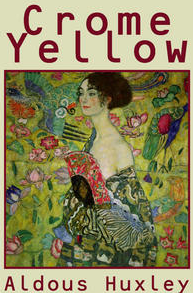
Crome Yellow
The problem for the author who writes a landmark novel is that once he or she has departed and is thus no longer capable of putting out new work, it is all too easy for posterity to associate him or her with that single legendary text. Herman Melville might have believed it all right we revere Moby Dick but it hardly stands to think that Jack Kerouac— who published eighteen novels in his lifetime and who disassociated himself from the Beat Generation—would be pleased that outside his small, committed fan base, anything not titled On the Road is mostly yellowing, dusty, forgotten, unread. It might be said that for any author who desires immortality, a beloved masterpiece is the ticket, but a caveat of oblivion for the remaining oeuvre is fair warning.

Aldous Huxley was one of those great geniuses who wrote one of the twentieth century’s masterpieces, Brave New World, which with its test tube babies, soma addiction, and sexual promiscuity predicts the pleasure principle of our contemporary times. It deserves its place in the literary canon but like said conundrum for many writers, most readers stop right there, as if all there was to know of Huxley and his godlike omniscience of the human condition was in that small, lovely book.

Published in 1922, Crome Yellow, Huxley’s first novel, demonstrates his unique gift for language, theorizes some of the blueprint that would become Brave New World, and vaguely predicts the Second World War as well as the eventual apotheosis of the machine as man’s best friend.

Crome Yellow is a quietly subversive parable, the whole of which takes place on the eponymous castle estate in the English countryside. It is less a story and more a forum for Huxley to air his many social theories regarding history, politics, reason, madness, love, and poetry. Not much really happens: a small party from Britain’s leisure class has congregated for the season to banter, create, review, discuss, and feast. The reader enters and leaves this tableau with Denis, a young, middling poet with a few published broadsheets and a modest book of verse to his name. His hosts, the Wimbushes, have a niece, Anne, whom Denis is hopelessly in love with (in the desperate, maddening vein romantic poets are wont) but whom treats Denis cynically as she would a kid brother for whose best intentions raise only snickering. She is more drawn to Gombauld, an artist of some repute and Byronic handsomeness.

Among the other guests, the primary character of interest is Mr. Scogan, who looks “like an extinct saurian… his nose was beaked…the skin of his wrinkled brown face had a dry and scaly look; his hands were the hands of a crocodile.” A friend and contemporary of Henry Wimbush, he is something of a pedantic, a bore, a philosopher king and, conjecturally, a mouthpiece for Huxley. He also has many of the novel’s choicest lines. Upon learning Denis is at work on a novel, in Scogan’s assumption of the plot he indicts nearly every writer of the 1920s, including, one supposes, Huxley himself:

“I’ll describe the plot for you. Little Percy, the hero, was never good at games, but he was always clever. He passes through the usual public school and the usual university and comes to London, where he lives among artists. He is bowed down with melancholy thought; he carries the whole weight of the universe upon his shoulders. He writes a novel of dazzling brilliance; he dabbles delicately in Amour and disappears, at the end of the book, into the luminous Future.”

His spot-on assessment humiliates Denis who vows quietly to tear the pages to pieces when he unpacks later that night. It’s a bad start for a young artist of marginal confidence and it’s a slippery slope from there. When alone with Anne he often contextualizes their time together by quoting poetry, an affectation which his muse calls “a bad habit.” In a setting of larger-than-life personalities at home with confirmed belief systems, the work-in-progress Denis inevitably flubs his lines (his social ineptness and half-cooked awareness is not dissimilar to Huxley’s more famous punching bag, Bernard Marx.) However, due his ingenuousness, Denis is an ideal sounding board, especially for the talkative Scogan, who often pins him down with breathless soliloquies.

Huxley would not publish Brave New World for another decade but here are the seeds being planted by Mr. Scogan, a self-described realist in an age of madmen. Anticipating the Greek alphabetical hierarchy of Huxley’s imagined future is a rough sketch of what would become the human organizing system of his greatest novel:

“In the Rational State, human beings will be separated out into distinct species, not according to the color of their eyes or the shape of their skulls, but according to the qualities of the their mind and temperament. Examining psychologists…will test each child that is born and assign it to its proper species. Duly labeled and docketed, the child will be given the education suitable to members of its species, and will be set, in adult life to perform those functions which human beings of his variety are capable of performing.”

This so-called Rational State consists of three distinct groups: the Directing Intelligences, the Men of Faith and the Herd. The breakdown is self-explanatory: the Intelligences devise the system, the Men of Faith sell it and the Herd follows orders. Of Denis’ role in this future society, Scogan is at a loss. Denis being independent but neither persuasive nor clearheaded, Scogan “can see no place for you; only the lethal chamber.”

Huxley before the Future

Denis’ host, Henry Wimbush, is a scion of some fortune. His magnum opus is a history of the village of Crome and especially the castle where they reside. On two occasions, Henry reads from his historical tome. One story involves an ancestor named Hercules, a dwarf, while another relates three sisters feigning an anorexic appetite as pseudo-spirituality. The first story is decidedly tragic, the second comic, which seems true for the novel as well. Although Huxley’s narrative voice is sportily sardonic, the philosophical musings on the future reflect an anxiety about the end result of technology intertwining itself with the worst instincts of human nature.

When the consequence is not deadly, it may be simply alienating. Even the affable Wimbush isn’t very much interested in mankind. Being a character in a Huxley novel, he is thoughtful, given to intelligent musings with some remarkable capacity to witness the distant future. Confiding with Denis the night of the country fair, Wimbush describes his own utopian vision:

“Perhaps, in the future, when machines have attained to a state of perfection—for I confess that I am, like Godwin and Shelley, a believer in perfectibility, the perfectibility of machinery—then, perhaps, it will be possible for those who, like myself, desire it, to live in a dignified seclusion, surrounded by the delicate attentions of silent and graceful machines, and entirely secure from any human intrusion.”

Huxley is not describing television, video games, and the Internet, or any of the quotidian appliances that guarantee a self-sufficient existence. But he knew human nature and its pull over us like moths to the flame. Would the descendants of Henry Wimbush bother hosting a party of individuals for the summer season if it stood to interrupt their online presence?

The answer is difficult to say. Denis might disagree. Humiliated multiple times he nevertheless needs other people to exist himself. He has no true form without recognition from others. In his own words:

“The individual is not a self-supporting universe. There are times when he comes into contact with other individuals, when he is forced to take cognizance of the existence of other universes beside himself.”

If we are to survive as a viable, energetic, empathetic species, may it always be so.

Sunday, June 20, 2010

Why the Disenchanted Enchant

“Fame, romance, success—these things were so precious that no one could be entrusted with their possession for more than a moment.”

-- Budd Schulberg via Manley Halliday

If we are to employ the old standby, “There are two kinds of people in the world…” to Americans, we would say there are winners and losers, but it is not a black & white world of course and there are permutations to the categorization— what about losers who come to win and more spectacularly, winners who come to lose? What is it about déclassé failure that makes us feel better about ourselves? Are Mike Tyson, Richard Nixon, Michael Jackson, and Mark McGwire, to name but a few great legends that received their comeuppance, more famous today for their declines than their greatness? Are they not interchangeable? For example, can you talk about Nixon without mentioning Watergate or McGwire without steroids? It’s fascinating that the term for taking pleasure in others’ pain, schadenfreude, is a loanword borrowed from the Germans, since, with all the pleasure we take in our heroes’ downfalls, you would have thought by now we could have come up with our own Americanism for the blissful joys reaped from the public disgrace of others.

One of the greatest novels ever written on the subject is Budd Schulberg’s The Disenchanted (1950), which is a dramatization of Schulberg’s experience teaming with the legendary F. Scott Fitzgerald, who by the time he was hired out to work on an inane studio script was more legendary for his boozing than The Great Gatsby. Fitzgerald died before he could finish his comeback novel (from whose notes for The Last Tycoon include the famous, clairvoyant line, “There are no second acts in American lives.”) But Schulberg, most celebrated for his screenwriting credit for On the Waterfront, made the most of this opportunity, developing a story that not only indicts Hollywood, but the Jazz Age itself, the generation that spawned Fitzgerald and the excesses that would create the Great Depression.

Budd Schulberg

In The Disenchanted, art imitates life: it is the winter of 1939, the world is heading towards another war (“how calmly they floated towards the falls”) and Shep Stearns, a lit-grad and idealist leaning towards Marxism, has taken a low-level screenwriting job because he believes movies are “the great new folk art.” Shep is youthful, enthusiastic, and can talk the talk, even though he knows Hollywood-speak is “a world fenced in with exclamation points… a world where hyperbole is the mother tongue.” But he’s accommodating since he desires to marry his sweetheart and avoid a regular job, i.e. inheriting his father’s studio car rental business. So Shep’s written a stinker of a college romance called “Love On Ice,” which he knows bears no relation to realities or art but “is the most convenient of apologetics: the means to an end.”

The studio head, Victor Milgrim, a rags-to-riches nouveaux riches aristocrat emblematic of the early studio founders, sees potential in Shep’s script but wants to polish it so he’s hired Manley Halliday to work on the script. Halliday is a legendary but mostly forgotten Jazz Age novelist. He is also a recovering alcoholic trying to glue himself back together long enough to finish his final literary masterpiece. Milgrim wants them to travel cross-country together to Shep’s alma mater, the fictional Webster College in New Hampshire, to shoot background scenes at the Mardi Gras festival. He believes the adventure will inspire their writing endeavors (though Halliday is sure that Milgrim, an intellectually insecure millionaire, is pushing for an honorary degree and wielding Halliday as bait for the prize). Manley, dependent on his live-in girlfriend, Ann, agrees to go in spite of grave misgivings regarding what might befall him on the journey. His fears are perfectly ground. The great novelist soon falls off the wagon and the consequences are disastrous.

The problem is that screenwriting is all wrong for Halliday, an idiot savant, prolific with the most exquisite prose but incapable of correctly folding his suits. Screenwriting “wasn’t writing; it was diplomacy” and as a younger man, powerful, free and a bit of the snob, “he’d been able to indulge in a lofty contempt for movies.” But Halliday needs quickie cash and lots of it— he’s paying down the debts racked up from the wild living: back taxes, back alimony, back rent, his ex-wife’s analysis, his son’s prep school education. As in the case of Shep, the lure of Hollywood money is more powerful than pride or convictions.

But the young screenwriter turns out to be a tonic to the old artist: Shep has not only read all of Halliday’s books, he quotes liberally from them and whose generation he inexplicably, guiltily, envies and admires. On the flight to New York, Shep shares with Halliday a few bottles of champagne, which is the first burst of the floodgates. The taste of booze is the flavor of memory and once they arrive in New York, Manley operates in a twilight consciousness revolving around a glorious past, a catastrophic decline, and an inebriated, less than elegant present. And rather than writing, Shep is compelled to live up to his name, shepherding Manley safely through numerous crises, mostly of the self-inflicted variety.

Like Fitzgerald suffering his beautiful Zelda, Halliday’s bête noir was a flapper named Jere. Much of the novel’s thick middle is close third person stream of consciousness covering the couple’s witty banter, bad behavior, terrific parties, and wholesale crack-ups not dissimilar to the Fitzgerads’ very own. It’s a life of gay yachting parties on the Riviera and grim sanitariums in Upstate New York. And though we veer from the plot (will Manley get it together and solve the damn cipher of this silly movie?) the digressions provide some of the most exquisite prose in the novel. After falling in love in Paris, Armistice Night, 1918, Jere “made his young manhood a time of bewitchment, when springtime was the only season and the days revolved on a lovers’ spectrum of sunlight, twilight, candlelight and dawn.” As long as Halliday had the Golden Touch they thrived vivaciously: “we weren’t a-Freud of anything.” But neither Manley nor Jere could transition to the austere 1930s, as “the trouble with both of them… was that they thought youth was a career instead of a preparation.”

The Good Old Days:
Two Flappers and a Gentleman

Failure has embittered Halliday, who can’t help but loathe the new generation. Jealous of the youthful love between Shep and his girl, he comforts himself with the knowledge that “the happiest of people were machines running down.” Pressured by Milgrim and Shep to produce something usable pronto, Halliday fortifies his incapacity to create with his condescending view of writers that churn out material by demand: “Writing comes easy… when you’re a natural hack an’ haven’t got any self to express.”

Nevertheless, Halliday sees himself as a professional. When it’s sink or swim, Manley can riff on the plot, adding poetry and dimension to the staid college romance formula. Shep’s impressed, but dubious, for “it was much too good for what they needed. But for what they needed, not good enough.” Unfortunately for them (but felicity for the schadenfreude-happy reader) when they finally reach Webster, Halliday is “too stupefied to tell day from night, gin from vodka, love from hate.” When the great writer humiliates himself at a college mixer to the delight of colleagues and students, Shep is furious: “Manley was drunk and he was a spectacle. But they seemed glad this had happened to him. That is what galled.” It’s that damn devil, envy, working itself into a fit again, expressed in shits and giggles. Halliday knows the source of their spiteful laughter all too well, as from a time when he nearly conquered his own demons through self-reflection:

“Ruthlessly he made a list of all his faults and found them all to be the same fault, an over-supply of vanity, an over-developed concern to hear his name at the end of the cheers. The wish to be publicly admired. To be a Success. Like the others he had sneered at the Babbitts with their ordinary business success, their abysmal bourgeois ignorance that passed for ‘being a smart operator’ and yet inadvertently he had allowed himself to be caught in the great American net.” 

Thus written is the central dilemma of living in a consumerist society: this is the mother of our disenchantment and our insatiable appetite for the new and the next. It may even be defined by that vague catchall word, “cool.” We have an unfortunate tendency to compare our fortunes to those of others, whether it be money, knowledge, gadgets, or style. When we fall short, for we inevitably do because there is always someone better, faster, cooler, loathing is the default emotional reaction. There is only one great truth to salve such insecure feelings, true then, now, and forever and for a moment, Halliday nearly grasped it:

“Men as far apart as the Bible poets, the Elizabethans and the French symbolists all seemed to agree that if there was a single wisdom it was simply To thine own self be true… All he had to do now was decide what was his own self.”

Manley Halliday only seemed to really understand Manley Halliday in the process of writing, in great confessional prose that excoriated his blunders and romanticized the things that were worth making beautiful. In a difficult culture where morals are compromised and pride despised, art is the single greatest outlet afforded the honest man. In Halliday’s own intoxicated language, “No good work of art I mean there’s no good work worthwhile work of art without the artist exposing himself.”

The Great F. Scott, circa 1938

In the end, Halliday has exposed too much in real life and it destroys him. When he is dying in a hospital at the end of the story, Shep, in spite of the promise of his hero’s unfinished manuscript, believes that only in death will his friend reach immortality: “Let him be lowered into his grave so that disciples may begin to worship, so that readers may savor the pleasure of rediscovery. Let us bury the remains. Let the Halliday revival begin.”

Sometimes life follows the inspirations of art. F. Scott Fitzgerald died at the young age of forty-four. Posthumously, he has become a larger-than-life success, The Great Gatsby being quite possibly the most beloved book of our culture, the so-called Great American Novel. Death, it seems, can save a reputation. Schadenfreude has only so much emotional reach before sentimentality overwhelms it and we Americans are more famous for being maudlin anyway.

Unfortunately, forgiveness comes too late but at least it does arrive in time for posterity.

Tuesday, November 10, 2009

In Defense of Self-Centered Young Men

The title of the first chapter of F. Scott Fitzgerald’s first novel, This Side of Paradise, warns the reader that our hero might be a real-deal momma’s boy. It’s called, “Amory, Son of Beatrice,” and deals with Amory Blaine’s delicate childhood and ends with him enrolled in a prestigious prep school, precociously formulating a “sort of aristocratic egotism,” that would enable him to “‘pass’ as many boys as possible and get to a vague top of the world…” Well, even for geniuses this road is never easy and you’ve got to take a few spills before anyone is going to say you've made it.

This novel— an episodic mélange of prose, stream of consciousness, poetry, correspondence, and theatrical dialogue— is about one man’s quest for identity by means of love, work, and philosophy. This patchwork technique Fitzgerald employs is called “modernistic” by its defenders since it defies accepted conventions of structure. But it is because of careful structuring that we become emotionally involved in fiction; otherwise we forget the point of the reading and in this day of diminished attention spans, language alone may not be enough to guarantee the commitment of the reader. Thus, the precarious existence of This Side of Paradise today: it is famous for making Fitzgerald famous rather than for the work itself.

Interestingly enough, rather than feeling it was written by Fitzgerald it has the atmosphere of several writers—the writing has Wilde’s pithy wittiness, Waugh’s schoolboy sentimentalism, Joyce’s philosophical diatribes, even Sinclair Lewis’s radicalism, held together by Fitzgerald’s mischievous turn of phrase.

The story hinges on a hypothesis posited to Amory at a young and impressionable age. Every apprentice philosopher has his mentor and Amory’s is in the Catholic Church, described thus:

“Monsignor was 44 then, and bustling— a trifle too stout for symmetry… When he came into a room clad in his full purple regalia he resembled a Turner sunset and attracted both admiration and attention… He was intensely ritualistic, startlingly dramatic, loved the idea of God enough to be a celibate, and rather liked his neighbor.”

Although he doesn’t share his faith in the Church, The Monsignor is Amory’s intellectual hero. He is put to quest, Candidelike, when the Monsignor describes the difference between a personality and a personage and why the latter is most preferable:

“Personality is a physical matter almost entirely; it lowers the people it acts on—Now a personage, on the other hand, gathers. He is never apart from what he’s done… When you feel that your garnered prestige and talents and all that are hung out, you need not bother about anybody.”

It’s rather pretty, delicate, and incoherent but enough for Fitzgerald, at least, to build a novel on. The idea is put to the test at Princeton among the co-eds where Amory encounters a variety of “personalities,” that Fitzgerald doesn’t develop well enough to constitute a “personage.” In the case of Amory Blaine, his own lack of something substantial beyond the realm of ideas fails him at work, play, and love.

When a crisis is absent in a novel, it’s critical that we sympathize with the character. It’s not always easy getting along with Amory Blaine. He’s middle class middle American trying to make it in Princeton and New York in the late teens, early 1920s, a time just after what was then known as The Great War, when opportunities were opening up for ambitious young men. He runs with a literary set in college, writes poetry, falls in love. He is a thoroughly self-conscious individual, sensitive to class and caste and as his fortunes fail, feels acutely dissatisfied that he should be so powerless in spite of his rhetorical flair.

Never is this clearer than when he loses his love interest, Rosalind. Although this young debutante loves Amory’s wit and her chemistry with him is superb to all suitors she cannot commit to some advertising copywriter earning just $35 a week no matter how much potential there is in his pipe dreams. In other words, she willfully chooses money over love. Fitzgerald is at his most delightful when describing his characters and he has fun detailing Rosalind:

“She is quite unprincipled; her philosophy is carpe diem for herself and laissez-faire for others. She loves shocking stories: she has that coarse streak that usually goes with natures that are both fine and big. She wants people to like her but if they do not it never worries or changes her.”

This is beautiful stuff. He may as well be describing America itself but it’s supposedly based on Zelda Sayre, the Zelda, famous of all flappers, from which Fitzgerald was drawing inspiration. This Side of Paradise was cobbled together with an earlier draft of a novel called The Romantic Egotist, as well as unpublished poetry and scraps of prose diary entries—his and Zelda’s— in order to compose a salable novel that might win her favor. It’s no wonder that this was the same guy who could come up with Jay Gatsby, Daisy Buchanan, and the fashionable parties of West Egg.


Jazz Age Cats

Its flaws aside, This Side of Paradise, can be enjoyed for the insight it yields into a great American writer. Rosalind could be describing the Fitzgeralds’ untold future when she laments, “I suppose all great happiness is a little sad. Beauty means the scent of roses and then the death of roses.” Amory goes on a self-destructive two-week alcoholic binge once she breaks things off for good, an incoherent, solipsistic misadventure; the kind that Fitzgerald would become notorious for. “To hold a man a woman has to appeal to the worst in him,” Amory muses on the Atlantic City boardwalk, a line of thought that excuses our worst excesses in the name of love.

In a series of reversals, both self-inflicted and the fated kind, Amory has received his comeuppance, but in becoming a wandering, lovelorn derelict, he discovers his artistic sensibility and what it means not only to be a man, but a personage: "He found something that he wanted, had always wanted and always would want— not to be admired, as he had feared; not to be loved, as he had made himself believe; but to be necessary to people, to be indispensable.”

As a truism to live by, it’s as good as any, but worth the effort of the modern reader when there is so much tempting us? This Side of Paradise is too episodic to be a great novel; and any book that climaxes with a debate regarding the merits of socialism betrays its literary value as well as its narrative truancy. But there are many fashions in which to consider art. It must have been exciting when this declaration of intent was published with its pretensions towards power, greatness and wealth, signed by ambition. This Side of Paradise sold through its first printing quickly, earned the praise of H. L. Mencken, and put F. Scott on the map for good. And though his more famous novels are associated with the Jazz Age, it's this early effort that more clearly attempts to speak for his generation’s dissatisfaction with contemporary American life as they were finding it and ready-set to change it. It begins with recognition from within: “I know myself… But that is all,” so goes the novel’s famous last words and they tell all.

If it took writing the novel to get the girl, getting the girl meant, eventually, The Great Gatsby. As far as very public love letters and tell-all memoirs disguised as literature, this means the whole damn enterprise was well worth it.