Showing posts with label philosophy. Show all posts

Wednesday, June 1, 2011

Chrome Jell-o

“For if one had an imagination vivid enough and a sympathy sufficiently sensitive really to comprehend and to feel the sufferings of other people, one would never have a moment's peace of mind... One is always alone in suffering; the fact is depressing when one happens to be the sufferer, but it makes pleasure possible for the rest of the world.”

--Aldous Huxley

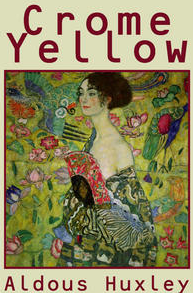
Crome Yellow
The problem for the author who writes a landmark novel is that once he or she has departed and is thus no longer capable of putting out new work, it is all too easy for posterity to associate him or her with that single legendary text. Herman Melville might have believed it all right we revere Moby Dick but it hardly stands to think that Jack Kerouac— who published eighteen novels in his lifetime and who disassociated himself from the Beat Generation—would be pleased that outside his small, committed fan base, anything not titled On the Road is mostly yellowing, dusty, forgotten, unread. It might be said that for any author who desires immortality, a beloved masterpiece is the ticket, but a caveat of oblivion for the remaining oeuvre is fair warning.

Aldous Huxley was one of those great geniuses who wrote one of the twentieth century’s masterpieces, Brave New World, which with its test tube babies, soma addiction, and sexual promiscuity predicts the pleasure principle of our contemporary times. It deserves its place in the literary canon but like said conundrum for many writers, most readers stop right there, as if all there was to know of Huxley and his godlike omniscience of the human condition was in that small, lovely book.

Published in 1922, Crome Yellow, Huxley’s first novel, demonstrates his unique gift for language, theorizes some of the blueprint that would become Brave New World, and vaguely predicts the Second World War as well as the eventual apotheosis of the machine as man’s best friend.

Crome Yellow is a quietly subversive parable, the whole of which takes place on the eponymous castle estate in the English countryside. It is less a story and more a forum for Huxley to air his many social theories regarding history, politics, reason, madness, love, and poetry. Not much really happens: a small party from Britain’s leisure class has congregated for the season to banter, create, review, discuss, and feast. The reader enters and leaves this tableau with Denis, a young, middling poet with a few published broadsheets and a modest book of verse to his name. His hosts, the Wimbushes, have a niece, Anne, whom Denis is hopelessly in love with (in the desperate, maddening vein romantic poets are wont) but whom treats Denis cynically as she would a kid brother for whose best intentions raise only snickering. She is more drawn to Gombauld, an artist of some repute and Byronic handsomeness.

Among the other guests, the primary character of interest is Mr. Scogan, who looks “like an extinct saurian… his nose was beaked…the skin of his wrinkled brown face had a dry and scaly look; his hands were the hands of a crocodile.” A friend and contemporary of Henry Wimbush, he is something of a pedantic, a bore, a philosopher king and, conjecturally, a mouthpiece for Huxley. He also has many of the novel’s choicest lines. Upon learning Denis is at work on a novel, in Scogan’s assumption of the plot he indicts nearly every writer of the 1920s, including, one supposes, Huxley himself:

“I’ll describe the plot for you. Little Percy, the hero, was never good at games, but he was always clever. He passes through the usual public school and the usual university and comes to London, where he lives among artists. He is bowed down with melancholy thought; he carries the whole weight of the universe upon his shoulders. He writes a novel of dazzling brilliance; he dabbles delicately in Amour and disappears, at the end of the book, into the luminous Future.”

His spot-on assessment humiliates Denis who vows quietly to tear the pages to pieces when he unpacks later that night. It’s a bad start for a young artist of marginal confidence and it’s a slippery slope from there. When alone with Anne he often contextualizes their time together by quoting poetry, an affectation which his muse calls “a bad habit.” In a setting of larger-than-life personalities at home with confirmed belief systems, the work-in-progress Denis inevitably flubs his lines (his social ineptness and half-cooked awareness is not dissimilar to Huxley’s more famous punching bag, Bernard Marx.) However, due his ingenuousness, Denis is an ideal sounding board, especially for the talkative Scogan, who often pins him down with breathless soliloquies.

Huxley would not publish Brave New World for another decade but here are the seeds being planted by Mr. Scogan, a self-described realist in an age of madmen. Anticipating the Greek alphabetical hierarchy of Huxley’s imagined future is a rough sketch of what would become the human organizing system of his greatest novel:

“In the Rational State, human beings will be separated out into distinct species, not according to the color of their eyes or the shape of their skulls, but according to the qualities of the their mind and temperament. Examining psychologists…will test each child that is born and assign it to its proper species. Duly labeled and docketed, the child will be given the education suitable to members of its species, and will be set, in adult life to perform those functions which human beings of his variety are capable of performing.”

This so-called Rational State consists of three distinct groups: the Directing Intelligences, the Men of Faith and the Herd. The breakdown is self-explanatory: the Intelligences devise the system, the Men of Faith sell it and the Herd follows orders. Of Denis’ role in this future society, Scogan is at a loss. Denis being independent but neither persuasive nor clearheaded, Scogan “can see no place for you; only the lethal chamber.”

Huxley before the Future

Denis’ host, Henry Wimbush, is a scion of some fortune. His magnum opus is a history of the village of Crome and especially the castle where they reside. On two occasions, Henry reads from his historical tome. One story involves an ancestor named Hercules, a dwarf, while another relates three sisters feigning an anorexic appetite as pseudo-spirituality. The first story is decidedly tragic, the second comic, which seems true for the novel as well. Although Huxley’s narrative voice is sportily sardonic, the philosophical musings on the future reflect an anxiety about the end result of technology intertwining itself with the worst instincts of human nature.

When the consequence is not deadly, it may be simply alienating. Even the affable Wimbush isn’t very much interested in mankind. Being a character in a Huxley novel, he is thoughtful, given to intelligent musings with some remarkable capacity to witness the distant future. Confiding with Denis the night of the country fair, Wimbush describes his own utopian vision:

“Perhaps, in the future, when machines have attained to a state of perfection—for I confess that I am, like Godwin and Shelley, a believer in perfectibility, the perfectibility of machinery—then, perhaps, it will be possible for those who, like myself, desire it, to live in a dignified seclusion, surrounded by the delicate attentions of silent and graceful machines, and entirely secure from any human intrusion.”

Huxley is not describing television, video games, and the Internet, or any of the quotidian appliances that guarantee a self-sufficient existence. But he knew human nature and its pull over us like moths to the flame. Would the descendants of Henry Wimbush bother hosting a party of individuals for the summer season if it stood to interrupt their online presence?

The answer is difficult to say. Denis might disagree. Humiliated multiple times he nevertheless needs other people to exist himself. He has no true form without recognition from others. In his own words:

“The individual is not a self-supporting universe. There are times when he comes into contact with other individuals, when he is forced to take cognizance of the existence of other universes beside himself.”

If we are to survive as a viable, energetic, empathetic species, may it always be so.

Thursday, May 26, 2011

One Order of Freedom Fries Two Security Sodas Please

“Everywhere you look—Britain, the States, western Europe--- people are sealing themselves off into crime-free enclaves. That’s a mistake—a certain level of crime is part of the necessary roughage of life. Total security is a disease of deprivation."

--J.G. Ballard

One of the great conundrums of a democracy, especially during a political era defined by a so-called War On Terror, is how to balance freedom with security. Like the mechanics of a seesaw, any action, whether it be the government’s or the individual’s, disequilibrates, favoring one value over another. It is not surprising that most governments choose security; what surprises is that the barbed wire walls, homeland bureaucracy, detention centers, security cameras, tapped phones and no-fly lists are proclaimed as tools to “protect our freedoms.” This argument— security as a means to freedom, an end— is a canard. In practice, there is no bargaining, it is one or the other, the seesaw going up or down. So for all the talk of freedom in America and elsewhere, it is a more frightening state of existence, one that is better dreamed than lived. That we should, in general, favor security over freedom makes me wonder if this is human nature or an evolutionary development made comfortable by the pleasures of Chinese takeout, wireless Internet, and three-hundred channels on cable TV.


I had not expected these questions to emerge when beginning a book called Cocaine Nights, but then I’m new to the dystopian fiction of J. G. Ballard. The narrator, a middle-aged travel writer named Charles Prentice, arrives in the small resort town of Estrella de Mar in Spain’s Costa Del Sol after his brother, Frank, pleads guilty to the murder of five individuals, setting fire to their cottage during a party with half the town in attendance. Charles is flabbergasted by his brother’s willingness to incriminate himself; he doesn’t believe his guilt is authentic. He moves in to his brother’s apartment, beds his paramour and takes on a job with Frank’s former colleagues.

While the titular cocaine may be in short supply firsthand, the drug’s inherent paranoia governs the storytelling. Charles is there to ask questions, to get at the truth and the truth being truth, especially when murder charges are involved, is a dangerous thing. He learns that Estrella de Mar is quite unlike most sleepy Costa Del Sol resorts in that people are actively participating in a cultural and intellectual life—taking sculpture classes and putting on Harold Pinter plays. There are sailboats rigged to the wind, waiting lists on the tennis courts and a busy nightlife centered around Club Nautico, where Frank, Charles’ brother, had worked once as manager. It’s a lot of activity for a strip of coast most famous for sitting around the pool or television, knocked out on pharmaceutical depressants.

But with artistic endeavors come criminal ones— seems the bored housewives are into cocaine as much as they are ashtanga yoga and not a few get mixed up in the local porno ring. In his search for the true culprit responsible for the deadly fire, Charles becomes involved with Bobby Crawford, the town’s blonde, beautiful, hyperactive resident philosopher-clown. Crawford is the mad social scientist responsible for Estrella de Mar’s cultural flowering. The problem with so many of the little resort towns of the Costa Del Sol, “people locking their doors and switching off their nervous systems,” has an unorthodox solution: inject a little petty crime into a community— vandalism, burglaries, car theft (victimless crime more or less) –- and its residents respond by coming together as a civic unit, forming committees, film clubs, and softball teams. Thus, if you take away a bit of security, you get freedom, or as Bobby Crawford puts it: “Sadly, crime is the only spur that rouses us. We’re fascinated by that ‘other world’ where anything is possible.”

If there’s a can of worms lying around, Ballard’s packing a Swiss army knife. Like many interesting novels, Cocaine Nights is a philosophical question tested in a narrative format. That crime is a catalyst for art— Ballard cites Shakespeare’s London and the Medicis’ Florence as examples— is an interesting idea. Moreover, the premise that men see this connection and will behave like gangsters in order to guarantee its flourishing is the stuff of good fiction. The only problem, as I see it, is that Ballard doesn’t successfully persuade me that crime inspires civic pride and the arts. It’s a nice try but the stuff of hardboiled fantasy.

We can assume that Bobby Crawford is Ballard’s mouthpiece, a Devil’s Advocate arguing a cloud’s silver lining. The logic at work is that crime causes individuals (some of them at least) to reflect on the precariousness of existence, concluding that as life is finite, it must be enjoyed and that this is best done by pleasuring in social taboos and expressing one’s creativity. Creativity, after all, is a strong expression of individualism, which of course is the essence of freedom, Mr. Hyde to security’s Dr. Jekyll.


Mr. Ballard--

the idealist dystopian or dystopian idealist?

For every Jazz Age with its bootleggers and masterpiece makers, there’s a dozen vice-ridden metropolises in which nothing beautiful developed. With all due respect to the artists of Washington DC and Camden, New Jersey, these two cities have consistently produced torrid crime and very little culture (at least little on a national level). Ballard’s thesis is provocative but it doesn’t hold up to logic. The Costa Del Sol is populated by the retired white-collar crowd. It does not follow that a middle manager or retired bank vice president would spontaneously develop an aesthetic vision just because his garage door is vandalized or some burglaries are reported in the neighborhood. Some aesthetic background and artistic energy are more important than a line of coke or a broken window.

Cocaine Nights was published in 1996. Had Ballard procrastinated on the book and witnessed the consequences of September 11th, would he have even bothered giving form to his idea? In the novel’s view, the more spectacular the crime, the greater the stimulation to live. But that did not happen after 9/11. There was very little reflection on the reasons behind this great theatrical work of horror, no reevaluation of America’s role in the world and the enemies we’ve created in a foreign policy bent on total self interest. There was no renaissance in the arts. Instead pop culture witnessed a superhero boom in cinema, Harry Potter led the publishing industry into blockbuster dependency and no real innovative movements developed in pop music.

One could argue the terror of 9/11 engendered isolation and ennui and that the naughts were the true lost generation. What could have been a 1960s utopian outburst puttered out in Twitter feeds and blogs no one would bother to read. Our retreat is not wholly complete. Still, someone may yet discover the magic formula that produces an engaged, intellectual, artistic society. Until then, watch out for pickpockets. Should your wallet get pilfered, it’s a logical fallacy that from this inconvenience you may pen the Great American Novel.

Monday, May 2, 2011

Airborne Philosophy

“A pilot’s business is with the wind, with the stars, with night, with sand, with the sea… He looks forward to port as to a promised land, and truth for him is what lives in the stars.”

--Antoine de Saint-Exupery


‘Philosopher’ really isn’t much of a career option these days, if it ever was a profession taken seriously by your average working man. Anyways, it hardly stands that a person sitting at home, doing not much more than sketching and organizing his or her thoughts can be expected to demonstrate some higher truth. The most vibrant ideas regarding that elusive concept known as “the meaning of life” are usually arrived at by men and women that have immersed themselves in the world, experience being a superior barometer of wisdom than intelligence. Thus, more than the Wall Street buccaneer it is often the gutter poet who understands life’s tragic inevitability far better, who, for all his material poverty, can articulate the arc of existence more beautifully.

It is no surprise then that those who come of age and choose a career that sends them forth into the world should return from their journeys with something valuable gleaned. Soldiers, sailors, circus performers not only travel but also witness human nature at its extremes, pieces of folly, glory and degradation providing potent color for a person’s scheme. A pilot is slightly more privileged in being literally above it all, on the very edge between earth and space. Is it the proximity to the heavens that gives the pilot his philosophical weight? The view of the Earth as God might look down upon it? Or possibly is it the risking of one’s life to elements of earth that are ferocious, capricious and untamable?

Flying is one of those modern conveniences so taken for granted that it is no longer special to fly and passengers need massive distractions with in-flight entertainment to pass the time. The idea of flight, once romanticized and later marveled as one of man’s greatest ingenuities, has the contemporary patina of plastic.

But it was not always so easy getting from one place to the next. In the early days of long-haul travel it was actually quite dangerous and emergency crash landings were hardly out of the question. We often think of air traffic as the movement of people but it is just as often the movement of people’s things— mementoes, documents, food, invoices, photographs, antiquities, contraband, love letters. FedEx and DHL are today’s major message carriers, but before the torch was privatized, airmail had been the domain of the state, a government job maybe, but one in which you could fly to the ends of the earth.

Antoine de Saint-Exupery is probably the most important pilot you might not have ever heard of. Even if you don’t know his name, you know his most famous work, The Little Prince, which is one of the best-selling and most-translated books in the history of the world. What Saint-Exupery manages in his children’s book is an adaptation of his general philosophy, summed up in his own words, “One sees clearly only with the heart. What is essential is invisible to the eyes.”

Saint-Exupery was as compulsive a graphophiliac as he was an aviator, publishing often throughout his brief life. Not as famous as his children’s book, Wind, Sand and Stars, is no less important in engaging the reader in his personal philosophical musings, that comprehensively, reads as some of the most beautiful humanistic espousals ever rendered.

The title references the pilot’s most elemental possessions composing his dangers, his bearings, and perhaps his inspirations. Saint-Exupery flew mail on the Toulouse-Dakar route, an occasionally fraught journey that took him over the Spanish Pyrenees and a great expanse of the Sahara Desert. This was in the 1920s and 1930s, at the twilight of the French colonial empire. In this golden age of aviation, pilots had far fewer instruments with which to monitor their journeys and thus survived only with sharp instincts and an aptitude for detail. They stored in their heads a bird’s eye’s lay of the land the way a stationmaster might rattle off timetables:

“Little by little, under the lamp, the Spain of my map became a sort of fairyland. The crosses I marked to indicate safety zones and traps were so many buoys and beacons. I charted the farmer, the thirty sheep, the brook. And, exactly where she stood, I set a buoy to mark the shepherdess forgotten by the geographers.”

It was a job Saint-Exupery loved, not for the responsibility of the mail he carried, but because it afforded him great frontiers for his insatiable curiosity. From his anecdotes, one senses a sensational dinner companion who greatly appreciates everything that had ever happened to him, no matter how small. His prose rings of vitality and gratitude in equal measures.

In Wind, Sand, and Stars, Saint-Exupery writes about his cherry flight, the brotherhood of pilots, the loneliness of the French colonial desert posts, the views over the Andes, the purchase and freeing of an African slave, emergency landings, and plenty of hair-raising episodes fighting wind to stave off a crash so as to fly one more day. But like any great writer, he is building towards something momentous and it is in the final two chapters in the book where Saint-Exupery becomes expansive not about airplanes and flying but about men and living.

In December, 1935, attempting a record-breaking flight from Paris to Saigon, Saint-Exupery crash-landed in the Libyan Desert. Saint-Exupery and his engineer survived but they didn’t know their coordinates and had only an orange, some grapes, and wine to survive. They had no wireless to communicate their situation and no idea which direction portended water, man, civilization. The rule of thumb recommended pilots stay close to their aircraft, as it was more likely for rescue teams to spot the crash site than wandering dots. But the Sahara was huge ground to cover and what if just over the next sand dune was a village with a well?

A friend of Saint-Exupery, Guillaumet, had crashed in the Andes a few years earlier and had survived. Survival is about will power as much as it is about wits. In moving across a limitlessly barren land, it is his friend’s words that he remembers and from which he gathers both motivation and hope: “What saves a man is to take a step. Then another step. It is always the same step but you have to take it.”

Over the next few days they wander from the plane searching, returning before nightfall, laying out an oil-slick tarp to collect whatever moisture accumulated over the night, retching afterwards. Hallucinations plague them. It would have been so easy for the both of them to lay down on the sand and sleep for all time, were it not for their family, who would have to go on without them:

“I was haunted by a vision of my wife’s eyes under the halo of her hat. Of her face I could see only the eyes questioning me, looking at me yearningly. I am answering, answering with all my strength! What flame cold leap higher than this that darts up into the night from my heart?”

Completely out of food and liquid they commit to a direction they hope is the sea and salvation. They become weary of an enveloping bright light that they believe will herald the end. Near death, they encounter a nomad who in giving them water and food and taking them in, saves their lives. Saint-Exupery writes of his gratitude thus:

“You, Bedouin of Libya who saved our lives, though you will dwell for ever in my memory yet I shall never be able to recapture your features. You are Humanity and your face comes into my mind simply as man incarnate. You, our beloved fellowman, did not know who we might be and yet you recognized us without fail. And I, in my turn, shall recognize you in the faces of all mankind.”


The Little Prince was inspired by Saint-Exupery's desert crash

*

“Nothing is easier than to divide men into rightists and leftists, hunchbacks and straightbacks, fascists and democrats.” -- Saint Exupery

Having narrowly survived such an ordeal and possessing such rich affection for humanity, what might have motivated Saint-Exupery to go to Spain in 1936, where the brutal ideological bloodbath was a preview stage for the Great War to come? Was he like Voltaire’s Candide, an individual fatally curious, but operating with a different incentive in mind: rather than hypothesizing that this may be the best of all possible worlds, was Saint-Exupery curious to know what abstract political idea should be worth one’s life?

After all was any fascist, monarchist, anarchist, communist more right than another? Saint-Exupery is not above politics— he is wise to know it affects all areas of men’s lives— he just argues that the willingness to kill and be killed for a belief system betrays a fundamental, yet invisible rule of man: “All beliefs are demonstrably true. All men are demonstrably in the right. Anything can be demonstrated by logic… To agree to discuss them is tantamount to despairing of the salvation of mankind— whereas everywhere about us men manifest identical yearnings. What all of us want is to be set free.”

Though a pioneer in aviation, interestingly Saint-Exupery disdained many of the emerging rubrics of modern life: bureaucracy, ideology, and most especially, industrialization. What he seemed to loathe in all of these was depersonalization, the reduction of man into a machine processed to dig minerals from the earth, file paperwork, or charge enemy trenches. In doing so it was quickly or slowly making null and void a human being.

Later, back in France, Saint-Exupery is restless on an overnight train and wanders to the lower class compartments where Polish migrant workers are sardine-canned into tight compartments, exhausted and beaten-down. He takes a seat across a young couple as extinguished as any of them and concludes:

“The problem does not reside in this poverty, in this filth, in this ugliness. But this same man and this same woman met one day. This man must have smiled at this woman. He may, after his work was done, have brought her flowers. Timid and awkward, perhaps he trembled lest she disdain him. And this woman, out of natural coquetry, this woman sure of her charms, perhaps took pleasure in teasing him. And this man, this man who is now no more than a machine for swinging a pick or a sledge-hammer, must have felt in his heart a delicious anguish. The mystery is that they should become these lumps of clay. Into what terrible mould were they forced? What was it that marked them like this as if they had been put through a monstrous stamping machine? A deer, a gazelle, any animal grown old preserves its grace. What is it that corrupts this wonderful clay of which man is kneaded?”

It is the forces of tragedy at work that death often robs those most vivacious among us. In 1944, flying for the French Free Forces, Saint-Exupery was shot down after taking off from Corsica. He was just forty-four years old. What he would have had to say about Auschwitz, Hiroshima, Cold War terror, the end of colonialism, and Civil Rights movements we shall never know.

In his brief life, Saint-Exupery had many heartbreaking experiences but when he witnessed death, he did not see it as a moment of great pain or abasement, but a man's spirit being stolen from the world:

“I thought of the white sanatorium where the light of a man’s life goes quietly out in the presence of those who love him and who garner as if it were an inestimable treasure his last words, his ultimate smile. How right hey are! Seeing that this same whole is never again to take shape in the world. Never again will be heard exactly that note of laughter, that intonation of voice, that quality of repartee. Each individual is a miracle. No wonder we go on speaking of the dead for twenty years.”

Or in the cases of some truly loving, charismatic men, go on cherishing for all eternity.