Showing posts with label literature. Show all posts

Monday, September 26, 2011

Freedom Is Fun! Freedom Is Good! Freedom Is Sexy!


That Jonathan Franzen’s fourth novel, Freedom, debuted at #1 on the Fiction section of the New York Times Bestsellers List in September last year is one of those phenomenal outliers that defy the logic of free market capitalism. It’s not that it has no business being #1 when the spot is usually held by the likes of Henry Potter and Danielle Steele— on occasion there are tremendous works of literature that manage to win public adulation (although it doesn’t happen anywhere near as much as it used to)— what makes Franzen’s sales trumping remarkable is that it is a case of dog biting the proverbial hand. Freedom is an angry work of literary activism that wholeheartedly skewers the celebrated virtues of capitalism— unrestricted growth, consumer branding, mass production— indicting nearly every American, who whether they feel guilty about it or not, enjoy unsustainable lifestyles that are a “cancer on the planet.” Freedom is a novel that Al Gore might have written had he the imagination to portray the extravagant waste of the Bush era as an American family in microcosm.

The family in Freedom is the Berglunds, Walter and Patty, who raised their son, Joey, and daughter, Jessica in St. Paul, Minnesota. On the surface, to neighbors for example, they are secular middle-class Democrats. But in literature, a character is rarely just a character; just as often it is a metaphor for an idea. Walter is an environmentalist with a Malthusian obsession of population growth, a “nice” guy who loves his wife in spite of her eccentricities and lingering depressiveness. Because she was once a basketball “jock,” Patty has a very competitive spirit that shadows every decision she makes. She is a stay-at-home mother, an atheist, and an adulterer. The person she has a long-term affair with is Richard Katz, a moody, womanizing post-punk front man, and Walter’s long time best friend. This rather untenable and scandalous development is the personal drama of the novel. At its bones, Freedom is the story of a Midwestern family growing up and growing old, weathering the inevitable life crises that is the fate of all of us.

At 562 pages, Freedom is quite a bit more than just a tricky love triangle. It’s not possible to describe the many subplots of the novel but suffice it to say, the political undercurrent begins in the novel’s first paragraph referencing an item in the New York Times about Walter making “quite a mess of his professional life out there in Washington… in trouble now for conniving with the coal industry and mistreating country people,” in methods described as “arrogant” and “ethically compromised.” How “nice” Walter got into so much trouble is a mystery that beguiles the reader to understand what might have developed.

But horses will be held: we’re almost 300 pages into the novel before Franzen lets us inside Walter’s life with the close third person. The novel, carved into jigsaw pieces that slowly fit together, begins in St. Paul, describing how the Berglunds had become the inspiration of playful, if sometimes malicious gossip, as conveyed in the tone of an omniscient scuttlebutt. Their next-door neighbor, Carol Monaghan, falls in love with a noisy, self-righteous Republican, Blake, while her daughter, Connie, seduces Patty and Walter’s son, Joey, who leaves his family to move in with the Monaghans, disappointing Walter and devastating Patty. It’s comic and sad and seems to suggest that American families, for all their secrets, can’t help exposing their dirty laundry.

The second section is a long “autobiography,” called “Mistakes Were Made,” written by Patty, a Babushka doll-like story within a story in which Patty writes about her social awkwardness, her rape experience, her desire to get away from her parents and “special” siblings. When she finishes high school in Westchester, New York, she attends the University of Minnesota, plays collegiate basketball, and falls in love with her best friend’s boyfriend, Richard Katz, who fronts a band called The Traumatics, singing derivative punk ditties like “I Hate Sunshine.” At a Traumatics show, she meets Walter, who comes from a rural dysfunctional family that doesn’t appreciate his intellectual curiosities and strong work ethic. Richard and Walter are challenging thinkers—they can recognize the bullshit of the Reagan-Thatcher era they’re entering—but diverge wildly with their attitudes toward women. Richard has the rock star’s gratuitous one-bite-and-throw-‘em-away appetite. Walter, sensitive beyond reason, falls in love with Patty, who has a thing for Richard, who doesn’t reciprocate her feelings but thinks she’s pretty unique for a jock. Patty is grateful for Walter’s many kindnesses though she’d throw it all away for a wild night with Richard. The triangle’s degrees thus first measured.

Patty, recognizing that by choosing one man she loses the other, hedges her bet, and marries Walter even though she’s not nor could ever be in love with him. But Walter is smitten and acquiesces to her bourgeois middle class desires—buying and renovating a house, finding a good-paying job and starting a family that she stays at home to raise even though he’s a Malthusian feminist, suggesting that for Patty’s sake he compromises on his ideal woman, that of the childless working professional.
Not all crushes go unrequited however and years later there is a short weekend with Richard, brisker yet much more intense than the average honeymoon. It’s a betrayal that’s horrible for the both of them—Richard and Patty are essentially competitive people whose touchstone for goodness is Walter. And for Patty their amorous aberration magnifies the emptiness in her life:

“She had all day every day to figure out some decent and satisfying way to live, and yet all she ever seemed to get for all her choices and all her freedom was more miserable. The autobiographer is almost forced to the conclusion that she pitied herself for being so free.”

Patty drifts into depression while Richard discovers enormous success. In his early forties now, he draws from their affair a mature, quiet, lyrical alt-country album that goes multi-platinum, turning him into a reluctant celebrity. It’s the kind of CD bought by people who like Norah Jones or the “Brother, Where Art Thou” soundtrack: easy listening background music for people who don’t really have sensibility or taste, something Starbucks might promote as a tie-in, a stocking stuffer. It’s so disheartening for Richard to become a profitable product for capitalists that he quits the industry altogether to go back to his day job of roofing. Having been spewed out by the star-making machine, he can only express his fall from artistic integrity in bitterly cynical terms:

“We in the Chiclet-manufacturing business are not about social justice, we’re not about accurate or objectively verifiable information, we’re not about meaningful labor, we’re not about a coherent set of national ideals, we’re not about wisdom. We’re about choosing what WE want to listen to and ignoring everyone else.”

An inevitability in American exceptionalism and the cultivating of online personas in which our tastes and predilections are catalogued and itemized on social networking sites, Richard is speaking for all of us in the iEverything generation, zoning out on iPods, tweeting on iPhones, watching downloaded vampire flicks on iPads—generally oblivious to the Big Picture, that of the world going to hell in a hand basket. People may give lip service to the environment but self-interest prevails in habit and identity.

(As an interesting aside, how much of Jonathan Franzen is in Richard Katz? Franzen is more famous for refusing Oprah Winfrey’s Book Club seal of approval when she praised his last novel, The Corrections, than he is for receiving the National Book Award for the effort. In a famous Harpers essay from 1996, “Perchance to Dream,” he claims he sought to follow the example of author William Gaddis, in that the novelist should get out of the way of the novel: “no matter how attractively subversive self-promotion may seem in the short run, the artist who’s really serious about resisting a culture of inauthentic mass-marketed image must resist becoming an image himself, even at the price of certain obscurity.” Franzen doesn’t need to apologize his dissing Opraholic housewives who in his estimation didn’t have the necessary literary intelligence to understand The Corrections. Nor does he need to explain why such a contrarian viewpoint might be useful dramatic fodder.)

By this time, Walter and Patty have left St. Paul for D.C., where Walter has forged an unlikely working alliance with Vin Haven, a Texan multi-billionaire whose fortune was built on America’s limitless capacity for energy consumption. For all his professional faults (he also hunts with Dick Cheney and is pals with Bush) Vin is a bit of a birder and wants to preserve some considerable land in coal-rich West Virginia where a certain songbird, a cerulean warbler, breeds in its annual migration to and from the South American tropics.

Of course, when you’re dealing with wealthy, ambitious Texans, it is good to beware of looking gift horses in the mouth: the devil in the deal is MTR, mountaintop removal, a term most familiar to coal companies and green activists, in which a mountain is blasted and pillaged of its minerals. But once plundered, it is the responsibility of the coal company for reclamation, that is, reforestation of the surface. Walter wants to be an insider, a voice of conscience ensuring that the coal companies keep their word and build a biodiverse forest that will serve as a sanctuary for the cerulean warbler and other migratory words. But the compromises are obvious— condoning mountaintop removal, coal extraction, and the eviction of local families with longtime ancestral roots.

But Walter is no starry-eyed college student mired in Manichean us-and-them trenches. It’s better than nothing and it gives him access to unprecedented capital for his more important project: putting population control on the mainstream activist agenda. The correlation between rising population levels and rising energy use is obvious. Walter believes it might be checked with responsible “breeding.” He wants to marginalize big families living in big houses with big lawns, which, though sensible of course, is like scribbling earnest agitprop over a picture postcard of the American Dream. In Walter’s own words: “We just want to make having babies more of an embarrassment. Like smoking’s an embarrassment. Like being obese is an embarrassment.”

In order to make it work, Walter has invited Richard to work with them on the message. He needs Richard because Richard is famous and cool and thus people want to follow his example: “Join rock legend Richard Katz in Washington this summer.” Richard, bitterly cynical yet generally apathetic, is more intrigued by Lalitha, Walter’s young, lovely, energetic Bengali-American personal assistant. It seems to Richard that Walter and Lalitha have, if not “a thing,” then some powerful chemistry going on and Lalitha has an obvious crush on Walter. She lives upstairs from Walter and Patty in D.C.. So it seems to Richard that their triangle has expanded into a quadrangle. And we are then well into our characters’ midlife crises, from which personal catastrophes— the stuff of page-turning literature— is wrought.


Nearly ten years after Franzen snubbed Oprah for recommending The Corrections, Oprah Winfrey came out last year with a ringing endorsement for Freedom. It is not surprising she would like the novel— Franzen has a gift of interweaving the micro and the macro, the family and the nation, that Leo Tolstoy was so tremendous at (Oprah is a big Tolstoy fan). But though I had posited some of Jonathan Franzen was in Richard Katz, it is likely that a lot more of Jonathan Franzen is in Walter Berglund. If Franzen wants his Cassandra calls for temperate energy use heeded, then he needs the largest possible audience and with Oprah comes her common touch, a medium that connects his ecological concerns to those millions of American housewives who might otherwise glance at his novel’s title and girth, shrugging, “Meh, too political.”

Franzen writes ‘social novels,’ a certain kind of fiction that holds a mirror up to the society that has produced the conditions that gives the social novel its raison d’etre. In this increasingly distracted media culture we’ve entered, it is becoming increasingly difficult to process the warning signs when we have the “democratic” options of channel changing and googling. With so many entertainment options, it becomes increasingly difficult to recognize our limitations— social, political, economic, special— much less care. Walter puts it best while pitching his Free Space campaign to limit population growth to Richard:

“We can never sit down and have any kind of sustained conversation, it’s all just cheap trash and shitty development. All the real things, the authentic things, the honest things are dying off. Intellectually and culturally, we just bounce around like random billiard balls, reacting to the latest random stimuli.”
In that same Harper’s essay from 1996, Franzen wrote, “Expecting a novel to bear the weight of our whole disturbed society—to help solve our contemporary problems— seems to me a peculiarly American delusion.” It’s just a book and not only that but a work of fiction. But the purpose of art, unlike argument and documentary, is a transformative experience. Art affects the heart more than it does the head; more often it is emotion, rather than reason, that is the source of our convictions. And perhaps in literature a political message can become more palatable because in this forum ideas are explored rather than declared. Franzen, perhaps aware of the rare privilege bestowed upon him— a polemical artist with mainstream reach and generous publicity—is willing to challenge that delusion and like Walter Berglund, utilize his authorial star power to reach those normally impervious to such viewpoints.

But how successful can such ambitions be? It may very well depend on your existing political framework as well as preferential taste. Some critics believe that literature is blighted by politics, i.e. the world is already a bad place and we need not be reminded of it when our agenda is escapism. The Amazon.com page for Freedom is especially contentious. The book rates only three out of five stars; there are as many one star reviews as five. Not a few people hate Franzen, his ideas, and most especially, his books.

But should we take what Franzen said in 1996 at face value? That it is “delusional” that a novel could enter the national conversation as a voice of conscience counterweighing our extravagance? Should we make allowances that the world has changed enough in the fifteen preceding years that artists have been politicized, embracing a sense of duty in spite of the accompanying baggage of delusions, hatred, and ridicule? To my mind, it’s worth it. We are better off with Jonathan Franzen than without him. We need more event books populated by rational environmentalists and selfish nihilists instead of teenaged vampires and boy magicians.


Freedom defines a decade— it was the idea of ‘freedom’ that morally guaranteed our bombardment and, later, privatization of Iraq and it was ‘freedom’ behind the motivation of banks making questionable loans to people buying McMansions beyond their means to afford them. American freedom has hardly changed since we defeated the Soviets in the Cold War—that is, the freedom to buy whatever you want, whether its blue jeans or rock and roll LPs or Italian sports cars, the layman’s simple explanation why capitalism, perhaps imperfect, remains the world’s best economic model. Yet the correlation between freedom and purchasing power is so obvious it must confound the political philosopher that there is not more violence in the streets. When we say we want our MTV, we don’t mean we want to watch the cable network—we want lifestyle freedom, liberated from our economic limits.

When luxury becomes the end game of freedom (private jets and gated communications its apotheosis) getting there is going to be competitive. You could argue those who invested in defense and energy blue chips in the aftermath of 9/11 were vultures fattening on our freedom to bomb Islamic countries and pillage and pollute the earth but you might also say such investments were exceptionally prescient (or pragmatic). Walter and Patty’s son, Joey, a burgeoning Republican, suffers a massive crush on Jenna, a high-maintenance rich girl who believes that “…the world wasn’t fair and was never going to be fair, that there would always be big winners and big losers, and that she personally, in the tragically finite life that she’d been given, preferred to be a winner and to surround herself with winners.”
Joey has his own interesting subplot. It involves pro-war Jewish American think tanks and parasitical war profiteers. Joey, who has an independent streak and a contentious relationship with both Walter and Patty, becomes immersed in a shady business deal (involving a company modeled on Halliburton) that would make him incredibly wealthy but would almost certainly consequence in dead Americans overseas in Iraq. Herein lies the true freedom of a human being, that of trying to determine and act upon the right thing. With financial and personal needs, the answer is not always obvious:

“He didn’t know what to do, he didn’t know how to live. Each new thing he encountered in life impelled him in a direction that fully convinced him of its rightness, but then the next new thing loomed up and impelled him in the opposite direction, which also felt right.”

It’s not easy being free. Sometimes it takes an 18-years-old kid speaking off the cuff to frame the discussion perfectly:

“Isn’t that what freedom is for? The right to think whatever you want? I mean, I admit, it’s a pain in the ass sometimes.”


*This piece originally appeared in Heso Magazine.

Wednesday, June 1, 2011

Chrome Jell-o

“For if one had an imagination vivid enough and a sympathy sufficiently sensitive really to comprehend and to feel the sufferings of other people, one would never have a moment's peace of mind... One is always alone in suffering; the fact is depressing when one happens to be the sufferer, but it makes pleasure possible for the rest of the world.”

--Aldous Huxley

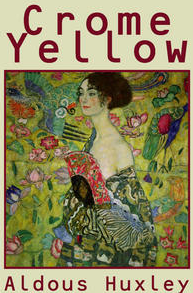
Crome Yellow

The problem for the author who writes a landmark novel is that once he or she has departed and is thus no longer capable of putting out new work, it is all too easy for posterity to associate him or her with that single legendary text. Herman Melville might have believed it all right we revere Moby Dick but it hardly stands to think that Jack Kerouac— who published eighteen novels in his lifetime and who disassociated himself from the Beat Generation—would be pleased that outside his small, committed fan base, anything not titled On the Road is mostly yellowing, dusty, forgotten, unread. It might be said that for any author who desires immortality, a beloved masterpiece is the ticket, but a caveat of oblivion for the remaining oeuvre is fair warning.

Aldous Huxley was one of those great geniuses who wrote one of the twentieth century’s masterpieces, Brave New World, which with its test tube babies, soma addiction, and sexual promiscuity predicts the pleasure principle of our contemporary times. It deserves its place in the literary canon but like said conundrum for many writers, most readers stop right there, as if all there was to know of Huxley and his godlike omniscience of the human condition was in that small, lovely book.

Published in 1922, Crome Yellow, Huxley’s first novel, demonstrates his unique gift for language, theorizes some of the blueprint that would become Brave New World, and vaguely predicts the Second World War as well as the eventual apotheosis of the machine as man’s best friend.

Crome Yellow is a quietly subversive parable, the whole of which takes place on the eponymous castle estate in the English countryside. It is less a story and more a forum for Huxley to air his many social theories regarding history, politics, reason, madness, love, and poetry. Not much really happens: a small party from Britain’s leisure class has congregated for the season to banter, create, review, discuss, and feast. The reader enters and leaves this tableau with Denis, a young, middling poet with a few published broadsheets and a modest book of verse to his name. His hosts, the Wimbushes, have a niece, Anne, whom Denis is hopelessly in love with (in the desperate, maddening vein romantic poets are wont) but whom treats Denis cynically as she would a kid brother for whose best intentions raise only snickering. She is more drawn to Gombauld, an artist of some repute and Byronic handsomeness.

Among the other guests, the primary character of interest is Mr. Scogan, who looks “like an extinct saurian… his nose was beaked…the skin of his wrinkled brown face had a dry and scaly look; his hands were the hands of a crocodile.” A friend and contemporary of Henry Wimbush, he is something of a pedantic, a bore, a philosopher king and, conjecturally, a mouthpiece for Huxley. He also has many of the novel’s choicest lines. Upon learning Denis is at work on a novel, in Scogan’s assumption of the plot he indicts nearly every writer of the 1920s, including, one supposes, Huxley himself:

“I’ll describe the plot for you. Little Percy, the hero, was never good at games, but he was always clever. He passes through the usual public school and the usual university and comes to London, where he lives among artists. He is bowed down with melancholy thought; he carries the whole weight of the universe upon his shoulders. He writes a novel of dazzling brilliance; he dabbles delicately in Amour and disappears, at the end of the book, into the luminous Future.”

His spot-on assessment humiliates Denis who vows quietly to tear the pages to pieces when he unpacks later that night. It’s a bad start for a young artist of marginal confidence and it’s a slippery slope from there. When alone with Anne he often contextualizes their time together by quoting poetry, an affectation which his muse calls “a bad habit.” In a setting of larger-than-life personalities at home with confirmed belief systems, the work-in-progress Denis inevitably flubs his lines (his social ineptness and half-cooked awareness is not dissimilar to Huxley’s more famous punching bag, Bernard Marx.) However, due his ingenuousness, Denis is an ideal sounding board, especially for the talkative Scogan, who often pins him down with breathless soliloquies.

Huxley would not publish Brave New World for another decade but here are the seeds being planted by Mr. Scogan, a self-described realist in an age of madmen. Anticipating the Greek alphabetical hierarchy of Huxley’s imagined future is a rough sketch of what would become the human organizing system of his greatest novel:

“In the Rational State, human beings will be separated out into distinct species, not according to the color of their eyes or the shape of their skulls, but according to the qualities of the their mind and temperament. Examining psychologists…will test each child that is born and assign it to its proper species. Duly labeled and docketed, the child will be given the education suitable to members of its species, and will be set, in adult life to perform those functions which human beings of his variety are capable of performing.”

This so-called Rational State consists of three distinct groups: the Directing Intelligences, the Men of Faith and the Herd. The breakdown is self-explanatory: the Intelligences devise the system, the Men of Faith sell it and the Herd follows orders. Of Denis’ role in this future society, Scogan is at a loss. Denis being independent but neither persuasive nor clearheaded, Scogan “can see no place for you; only the lethal chamber.”

Huxley before the Future

Denis’ host, Henry Wimbush, is a scion of some fortune. His magnum opus is a history of the village of Crome and especially the castle where they reside. On two occasions, Henry reads from his historical tome. One story involves an ancestor named Hercules, a dwarf, while another relates three sisters feigning an anorexic appetite as pseudo-spirituality. The first story is decidedly tragic, the second comic, which seems true for the novel as well. Although Huxley’s narrative voice is sportily sardonic, the philosophical musings on the future reflect an anxiety about the end result of technology intertwining itself with the worst instincts of human nature.

When the consequence is not deadly, it may be simply alienating. Even the affable Wimbush isn’t very much interested in mankind. Being a character in a Huxley novel, he is thoughtful, given to intelligent musings with some remarkable capacity to witness the distant future. Confiding with Denis the night of the country fair, Wimbush describes his own utopian vision:

“Perhaps, in the future, when machines have attained to a state of perfection—for I confess that I am, like Godwin and Shelley, a believer in perfectibility, the perfectibility of machinery—then, perhaps, it will be possible for those who, like myself, desire it, to live in a dignified seclusion, surrounded by the delicate attentions of silent and graceful machines, and entirely secure from any human intrusion.”

Huxley is not describing television, video games, and the Internet, or any of the quotidian appliances that guarantee a self-sufficient existence. But he knew human nature and its pull over us like moths to the flame. Would the descendants of Henry Wimbush bother hosting a party of individuals for the summer season if it stood to interrupt their online presence?

The answer is difficult to say. Denis might disagree. Humiliated multiple times he nevertheless needs other people to exist himself. He has no true form without recognition from others. In his own words:

“The individual is not a self-supporting universe. There are times when he comes into contact with other individuals, when he is forced to take cognizance of the existence of other universes beside himself.”

If we are to survive as a viable, energetic, empathetic species, may it always be so.

Monday, May 30, 2011

Time Has Come Today

“You may ask yourself, well, how did I get here?”

--David Byrne

“When does a fake Mohawk become a real Mohawk? Who decides? How do you know when it’s happened?”

--Rhea from A Visit From the Goon Squad

I believe it was in my mid-twenties when I began downgrading my artistic aspirations from ‘the voice of a generation’ to what it has become ten years later in its more or less present incarnation, ‘a voice.’ It’s embarrassing looking back but there was a certain point of my life when I truly believed I would be one of those authors— the few, the proud— who would survive posterity not only as one of those writers whom people wanted to read but also whom they wanted to be. Hey, there’s still time and you never know but I’ve had to adjust my expectations into a more modest outlook. Sometimes I’m okay with this. Sometimes I’m not. I’m only human.


As you roll into your thirties, you should be hitting your career stride. When you aren’t, you can’t help but observe those who have. Particularly friends and acquaintances. If you dare go there, the route is peppered with questions, like, what is it about the neighbor’s grass? What makes it so green? Is it a human folly to envy the qualities of others or is it Madison Avenue marketing that has created this general dissatisfaction? Is the difference between happiness and discontent the difference between having chosen the life we lead and the life we have having chosen us? It doesn’t seem fair, does it? The way we are compared against the way we were supposed to be?

Whoever said introspection was for weenies never took a long, hard look at the mirror. ‘What if…?’ is the worst kind of self-interrogation since it almost always consequences in regret. This self, this person that we are leading now may be hard-won but isn’t necessarily the best person we could have been. Invariably something went wrong somewhere and this life we lead is the one we got stuck with, for better, for worse.

Disheartening this is, we can self-medicate. Sex, drugs, and rock and roll are viable options (but don’t they often mislead us away from our ideal selves?). Or one can read good literature that utilizes sex, drugs, and rock and roll to frame these questions. A worthwhile book need not answer the unanswerable— it’s enough that it reminds us that failure and humanity are cut from the same cloth and that this might be a beautiful thing.

It is certainly beautiful the way Jennifer Egan writes about it in her novel, A Visit From the Goon Squad, the closest a book has ever come to the literary equivalent of a solid mixed tape, rewinding and fast forwarding across the years, or perhaps ‘skipping’ over generation gaps, as the story—it travels between New York City, San Francisco, Naples, and Italy as well as from the early 1970s to the 2020s— is as much about the progress of technology as it is culture. The truth whether or not new technology is good or bad, necessary or distracting, safe or dangerous, nearly always depends on who’s asking. For those holding onto some yesteryear ideal, change is something to be despised, as Bennie Salazar, a record label owner who came of age in San Francisco’s late 1970s punk scene, wearies once the direction of his company changes after a corporate takeover:

“The problem was precision, perfection; the problem was digitalization, which sucked the life out of everything that got smeared through its microscopic mesh. Film, photography, music: dead. An aesthetic holocaust!”

Just as our relationship to music and musicians evolves with technology (shrinking considerably from LPs to cassette tapes and CDs, disappearing totally as a tactile thing with the rise of the mp3), so does the way we communicate with one another. As Bix, an NYU student doing his postgrad in computer engineering in early 1993 tells his friends, “This computer-message-sending is going to be huge—way beyond the telephone…” But though Egan touches on facebook, google and how “the days of losing touch are almost gone,” she goes further: a preteen using Power Point slides to describe her family’s dysfunctional faults and then later to the near future when Instant Messaging has become the medium for our more difficult words as when Lulu shares with Alex on their “handsets” that she “Nvr met my dad. Dyd b4 I ws brn,” texting him this even though they are sitting across from each other in a café.

But now you’re wondering who’s Lulu? And who’s Alex? In 2021, they are working together using Internet bloggers called ‘parrots’ to word-of-mouth the upcoming concert of Scotty Hausmann, a publicity-shy, burnt-out slide guitarist who played in The Flaming Dildos, the same High School punk band Bennie played with in the 1970s. Scotty had unsuccessfully pined for Jocelyn, a girl who learned the fast life as Lou’s teenage mistress. Lou is a super successful rock and roll producer-cum-hedonist that mentors Bennie. Bennie marries Stephanie, a one-time protégée to La Doll, Lulu’s mother and a PR titan who falls from grace. Stephanie’s brother, Jules, is a journalist who goes to jail for assaulting a movie star named Kitty Jackson. Meanwhile, Bennie makes a name for himself in the music business discovering and recording a punk band named the Conduits. Around this time his factotum is Sasha, a beautiful redhead who euphemistically calls her shoplifted things, “found objects.” She survives a druggie stint in Naples and leaves New York and the music business when she reconnects with her college sweetheart, Drew, moving to Arizona to start a family. She has an autistic son obsessed with great pauses in rock and roll songs and a daughter who expresses herself with Power Point slides. If it seems very six-degrees-of-separation, it is. One story’s peripheral character is another’s hero.

And heroes they are in a very rock and roll sense of the word: interesting people making catastrophic mistakes, sometimes large, sometimes so small it is hard to know exactly where everything went wrong. Once The Flaming Dildos disbanded, why did Bennie wind up with his own record label and a corner office on Park Avenue with a fantastic view while Scotty performed janitorial functions and fished for his lunch in the East River? It doesn’t bother Scotty too much when he goes to see his old friend again because, “there was only an infinitesimal difference, a difference so small that it barely existed except as a figment of the human imagination, between working in a tall green glass building on Park Avenue and collecting litter in a park.”

Like the incremental movement of continental plates, pressures mount in our own lives to a breaking point, in which an inevitable seismic shift leaves a trail of victims, most especially ourselves. For Jules Jones, Bennie’s brother-in-law, once a promising, young writer who had come to New York full of ideas (“Who isn’t, at twenty-four?”), his decline began when he’d become another hack celebrity journalist. This is the late 1990s now and some are getting spectacularly wealthy while most are being left behind. His feeling is common to many of us, that sense of not belonging, of having missed some boat that’s not coming back for us. In a young, ingenuous film star, Kitty Jackson, he witnesses everything he will never be: beautiful, rich, successful, loved. His sole advantage over her, the one card he can play, is the knowledge that time, though slow and deliberate, takes no prisoners:

“Because Kitty is so young and well nourished, so sheltered form the gratuitous cruelty of others, so unaware as yet that she will reach middle age and eventually die (possibly alone), because she has not yet disappointed herself, merely startled herself and the world with her own premature accomplishments, Kitty’s skin—that smooth, plump, sweetly fragrant sac upon which life scrawls the record of our failures and exhaustion—is perfect.”

In a very confessional meta-me article for Details Magazine, he describes his attempted rape of Kitty in the canny, ironic prose so typical of magazine writing today, but briefly he too considers what went wrong:

“At what precise moment did you tip just slightly out of alignment with the relatively normal life you had been enjoying theretofore, cant infinitesimally to the left or the right and thus embark upon the trajectory that ultimately delivered you to your present whereabouts—in my case, Rikers Island Correctional Facility?”


It seems no accident then that the album central to this story should be called A to B, offered up by the Conduits’ former frontman, Bosco. Bosco was once a skinny, manic redhead known for his explosive live shows but he didn’t age well. As he explains to Stephanie, Bennie’s wife and his publicist, “The album’s called A to B, right? And that’s the question I want to hit straight on: how did I go from being a rock star to being a fat fuck no one cares about?” But A to B is not a comeback album— for Bosco it’s the only dignified way out of his messy life. It is his belief that this farewell tour should be a rock and roll suicide, “I want out of this mess. But I don’t want to fade away, I want to flame away— I want my death to be an attraction, a spectacle, a mystery. A work of art.”

Bosco believes his tour will be a success because of the public’s infatuation with “Reality TV.” Reality, of course, has everything to do with authenticity and is at play in the characters’ lives. It’s extremely important, yet somehow elusive, as being real is knowing oneself. As Rhea says enviously of her friend Alice, “I can’t tell if she’s actually real, or if she’s stopped caring if she’s real or not. Or is not caring what makes a person real?”

It’s not an easy question, but there might be some connection between authenticity and happiness, at least in this literary world. We are always in the act of becoming: artists, doctors, drug addicts, hookers, lovers, husbands, fathers and mothers— and some roles work better than others. It often depends on who you’re partnered with. Jules’ sister, Stephanie, knows that Bennie is unfaithful and she suffers to keep their marriage intact. Witnessing the flabby, tragic mess of Bosco, once a promising singer, now a joke on her hands, is a straw-camel’s back revelation: her life is a sham and an unhappy one at that. Helplessly she thinks of the old days: “premarriage, preparenthood, pre-money, pre-hard drug renunciation, preresponsibility of any kind…going to bed after sunrise, turning up at strangers’ apartments, having sex in quasi public, engaging in daring acts that had more than once included (for her) shooting heroin, because none of it was serious. They were young and lucky and strong….”

… And perhaps, real.

* * * * * * *

Published in 2010, Jennifer Egan has already won both the Pulitzer Prize and the National Book Critics Circle Award. Two days after receiving the Pulitzer, she inked a deal with HBO to adapt A Visit From the Goon Squad into a television series. It’s no surprise. Like very few novels, it succeeds on visceral, literary, and spiritual levels. It’s bold: besides the Power Point chapter, her point-of-view shifts between the third person, close first person and even the second person in a way that the ‘you’ is not directed at the reader but at the self-critical narrator himself. Skipping around between years, places, and heroes does not feel jarring in the least bit. Each story feels self-contained, yet integral, not to the greater story, but the unifying theme, that which relates to the inevitability of personal change.

Perhaps nowhere in the novel is this exemplified better than when Sasha disappears to Naples and her stepfather sends her Uncle Ted out to search for her. Instead of looking for her, Ted, a tenured arts history professor at a minor university, spends most of his time wandering museums, the ruins of Pompeii, and labyrinthine alleyways. He is away from his family and unusually pensive. Why had he sexually disengaged himself from his wife, Susan, to the point that there could be no more true intimacy between them? From an initial rage, Susan mellows into a “sweet, eternal sunniness that was terrible in the way that life would be terrible without death to give it gravitas and shape.” What is so tragic about this turn of events is that he didn’t abandon his desire for any other reason than because he could. He had ruined her and now having found Sasha and trying to win her confidence to come back with him to America, he helplessly recalls a happy moment before everything was irrevocably ruined. Herein may be the saddest paragraph in a bittersweet book:

“On a trip to New York, riding the Staten Island Ferry for fun, because neither one of them had ever done it, Susan turned to him suddenly and said, ‘Let’s make sure it’s always like this.’ And so entwined were their thoughts at that point that Ted knew exactly why she’d said it: not because they’d made love that morning or drunk a bottle of Pouilly-Fuisse at lunch—because she’d felt the passage of time. And then Ted felt it, too, in the leaping brown water, the scudding boats and wind—motion, chaos everywhere—and he’d held Susan’s hand and said, ‘Always. It will always be like this.’”

Perhaps Ted was caught up in the moment but he was certainly not disingenuous. At the time he believed it was true. As Bosco says, “Time’s a goon.” The novel’s boogeyman is as invincible and irrepressible as any villain in literature. Time sets the booby traps and we’re the ones clumsy enough to step on them— yet it might not be our fault. We can’t be so hard on ourselves as we don’t always have as many choices as it may seem.

Fucking up is a life process as universal as birth, childhood, adolescence, marriage, aging, and death. Being inevitable thus, we can only hope that when it happens to us, it a) is not lethal and b) perhaps we learn something.

Not all of us are lucky enough to balance self-destruction with redemption. A comeback is not always in the works. But sometimes it may be enough to learn from our mistakes and carry on the best we can.

Sasha speaks for the novel, if not a good percentage of the human race when comforting her friend, Rob, after a failed suicide attempt she reminds him:

“We’re the survivors.”


This originally appeared in Heso Magazine

Thursday, May 26, 2011

One Order of Freedom Fries Two Security Sodas Please

“Everywhere you look—Britain, the States, western Europe--- people are sealing themselves off into crime-free enclaves. That’s a mistake—a certain level of crime is part of the necessary roughage of life. Total security is a disease of deprivation."

--J.G. Ballard

One of the great conundrums of a democracy, especially during a political era defined by a so-called War On Terror, is how to balance freedom with security. Like the mechanics of a seesaw, any action, whether it be the government’s or the individual’s, disequilibrates, favoring one value over another. It is not surprising that most governments choose security; what surprises is that the barbed wire walls, homeland bureaucracy, detention centers, security cameras, tapped phones and no-fly lists are proclaimed as tools to “protect our freedoms.” This argument— security as a means to freedom, an end— is a canard. In practice, there is no bargaining, it is one or the other, the seesaw going up or down. So for all the talk of freedom in America and elsewhere, it is a more frightening state of existence, one that is better dreamed than lived. That we should, in general, favor security over freedom makes me wonder if this is human nature or an evolutionary development made comfortable by the pleasures of Chinese takeout, wireless Internet, and three-hundred channels on cable TV.


I had not expected these questions to emerge when beginning a book called Cocaine Nights, but then I’m new to the dystopian fiction of J. G. Ballard. The narrator, a middle-aged travel writer named Charles Prentice, arrives in the small resort town of Estrella de Mar in Spain’s Costa Del Sol after his brother, Frank, pleads guilty to the murder of five individuals, setting fire to their cottage during a party with half the town in attendance. Charles is flabbergasted by his brother’s willingness to incriminate himself; he doesn’t believe his guilt is authentic. He moves in to his brother’s apartment, beds his paramour and takes on a job with Frank’s former colleagues.

While the titular cocaine may be in short supply firsthand, the drug’s inherent paranoia governs the storytelling. Charles is there to ask questions, to get at the truth and the truth being truth, especially when murder charges are involved, is a dangerous thing. He learns that Estrella de Mar is quite unlike most sleepy Costa Del Sol resorts in that people are actively participating in a cultural and intellectual life—taking sculpture classes and putting on Harold Pinter plays. There are sailboats rigged to the wind, waiting lists on the tennis courts and a busy nightlife centered around Club Nautico, where Frank, Charles’ brother, had worked once as manager. It’s a lot of activity for a strip of coast most famous for sitting around the pool or television, knocked out on pharmaceutical depressants.

But with artistic endeavors come criminal ones— seems the bored housewives are into cocaine as much as they are ashtanga yoga and not a few get mixed up in the local porno ring. In his search for the true culprit responsible for the deadly fire, Charles becomes involved with Bobby Crawford, the town’s blonde, beautiful, hyperactive resident philosopher-clown. Crawford is the mad social scientist responsible for Estrella de Mar’s cultural flowering. The problem with so many of the little resort towns of the Costa Del Sol, “people locking their doors and switching off their nervous systems,” has an unorthodox solution: inject a little petty crime into a community— vandalism, burglaries, car theft (victimless crime more or less) –- and its residents respond by coming together as a civic unit, forming committees, film clubs, and softball teams. Thus, if you take away a bit of security, you get freedom, or as Bobby Crawford puts it: “Sadly, crime is the only spur that rouses us. We’re fascinated by that ‘other world’ where anything is possible.”

If there’s a can of worms lying around, Ballard’s packing a Swiss army knife. Like many interesting novels, Cocaine Nights is a philosophical question tested in a narrative format. That crime is a catalyst for art— Ballard cites Shakespeare’s London and the Medicis’ Florence as examples— is an interesting idea. Moreover, the premise that men see this connection and will behave like gangsters in order to guarantee its flourishing is the stuff of good fiction. The only problem, as I see it, is that Ballard doesn’t successfully persuade me that crime inspires civic pride and the arts. It’s a nice try but the stuff of hardboiled fantasy.

We can assume that Bobby Crawford is Ballard’s mouthpiece, a Devil’s Advocate arguing a cloud’s silver lining. The logic at work is that crime causes individuals (some of them at least) to reflect on the precariousness of existence, concluding that as life is finite, it must be enjoyed and that this is best done by pleasuring in social taboos and expressing one’s creativity. Creativity, after all, is a strong expression of individualism, which of course is the essence of freedom, Mr. Hyde to security’s Dr. Jekyll.


Mr. Ballard--

the idealist dystopian or dystopian idealist?

For every Jazz Age with its bootleggers and masterpiece makers, there’s a dozen vice-ridden metropolises in which nothing beautiful developed. With all due respect to the artists of Washington DC and Camden, New Jersey, these two cities have consistently produced torrid crime and very little culture (at least little on a national level). Ballard’s thesis is provocative but it doesn’t hold up to logic. The Costa Del Sol is populated by the retired white-collar crowd. It does not follow that a middle manager or retired bank vice president would spontaneously develop an aesthetic vision just because his garage door is vandalized or some burglaries are reported in the neighborhood. Some aesthetic background and artistic energy are more important than a line of coke or a broken window.

Cocaine Nights was published in 1996. Had Ballard procrastinated on the book and witnessed the consequences of September 11th, would he have even bothered giving form to his idea? In the novel’s view, the more spectacular the crime, the greater the stimulation to live. But that did not happen after 9/11. There was very little reflection on the reasons behind this great theatrical work of horror, no reevaluation of America’s role in the world and the enemies we’ve created in a foreign policy bent on total self interest. There was no renaissance in the arts. Instead pop culture witnessed a superhero boom in cinema, Harry Potter led the publishing industry into blockbuster dependency and no real innovative movements developed in pop music.

One could argue the terror of 9/11 engendered isolation and ennui and that the naughts were the true lost generation. What could have been a 1960s utopian outburst puttered out in Twitter feeds and blogs no one would bother to read. Our retreat is not wholly complete. Still, someone may yet discover the magic formula that produces an engaged, intellectual, artistic society. Until then, watch out for pickpockets. Should your wallet get pilfered, it’s a logical fallacy that from this inconvenience you may pen the Great American Novel.

Friday, March 4, 2011

The Terrified and the Bored

“They were still on the treadmill; the misery, the ennui, the dislocated horror…. Things would happen and time would pass, but there was no hope, no anticipation. There would be nothing but the deep cloudy dejection that overcast everything.”

--Norman Mailer

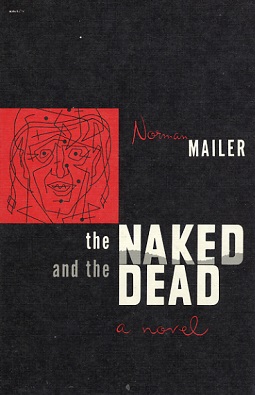
An author, like any artist mindful of his or her spread in the busy, kinetic, attention-free pop galaxy, must consider the brand as well as the art if hopeful for a multiple book contract, which is altogether negotiable depending on the number of readers willing to put down money for good storytelling. While a few like J. D. Salinger and Thomas Pynchon built their reputations with reticence, some like Norman Mailer bet on bombast, creating a trademark presence but with it the baggage of distraction. Before I’d read any of Mailer’s books, I knew him as the writer who stabbed his wife the night he threw a party announcing his presidential candidacy in 1960. That and he was the guy who wrote the first How To book for hipsters, The White Negro. But for all the talk shows and celebrity gladhanding, Mailer wrote better than anyone. Many detested him for his theatrical pretensions, but very few for his literary verve.


The Late Great Norman Mailer

Mailer made a name for himself by capturing the zeitgeist before anyone else, whether it be beatniks, hippies, or mass murderers. Writers write what they know and Mailer had survived the great drama of the Second World War with enough notes for a book, publishing The Naked and the Dead in 1948 when he was just twenty-five years old, catapulting him into the high chair of literary enfants terribles. Ostensibly, it is a book about a reconnaissance platoon, a motley collection of soldiers ordered by military brass to survey the Japanese behind their position on the invented island of Anopopei during the Filipino campaign, but The Naked and the Dead is very much a modern American novel, which means it is a subversive criticism on American social life, economic opportunity, and an illusory freedom of choice.

Very few of the soldiers in the platoon are there by virtue of patriotism or sense of duty. They’re there because war was happening and there was not much else going on for them in the economic maelstrom of the 1930s and early 1940s. They are true grunts: outcasts, farmhands, street punks, and failed entrepreneurs stinking of bad luck. As General Cummings, a philosophical mouthpiece for Mailer, explains, “The individual soldier in that army is a more effective soldier the poorer his standard of living has been in the past.” The Army, first in line as cannon fodder, would not work so well as a fighting unit had it educated men who might second guess suicidal mission objectives.

In spite of its grandiose subject and prolix verbosity (it’s more than 700 pages long) not much happens in the novel. The platoon participates in the landing mission where there is little resistance. There are some small, deadly skirmishes where the army is digging into the Japanese line. The soldiers make and break camp as necessity sees fit. And the recon unit goes on its difficult mission. The major battle is not described except in dispatches to the command center. The reality has little to do with the PR campaign that had fueled recruitment drives and positioned every private a starring role in his own personal movie: “He had always imagined combat as exciting, with no misery and no physical exertion. He dreamed of himself charging across a field in the face of many machine-guns; but in the dream there was no stitch in his side from running too far while bearing too much weight.”


Island Hopping GI Joe Style

Major episodes describe the futility in keeping your tent secure in a typhoon; of loathing yet another rations can of ham and eggs; of fighting sleep deprivation on guard duty; of fantasizing over the “million dollar wound,” some injury that wouldn’t cripple them but was bad enough it would warrant a ticket home, thus becoming a veteran, a survivor, and guaranteeing the opportunity to tell young women, “I was there…”

Daydreaming about what they’ll do after the war does little to make their labor bearable: most duties are makeshift and disposable, the temporary conditions of camp living producing no sustenance. The tedium is only more tolerable than the logistical errands necessary to reorder military positions in constant flux. Endurance is taxed and tolled mercilessly, so much that a man’s humanity is crushed by the dead weight of his task as when the platoon is ordered to move heavy artillery guns through muddy paths to a new position on the front: “By the time an hour passed, nothing existed for them but the slender cannon they had to get down the track. The sweat drenched their clothing and filled their eyes, blinding them. They grappled and blundered and swore, advanced the little guns a few feet at a time with no consciousness any longer of what they were doing.”


an American platoon

And who are these guys suffering for the sake of their country anyway? There is no central hero in The Naked and the Dead— at least, there is no one with outstanding moral qualities— instead they are neither good nor bad, but merely human, reacting to the violence, tedium and proximity to death in a myriad of ways. Wilson, a philandering Southerner wants to get drunk and swap sex stories; Red is a hard-luck cynic mistrustful of authority; Goldstein is a New York Jew who wants to be liked and is easily hurt by discrimination; Gallagher is a high-strung Commie-baiter; Martinez is an excellent scout brave in spite of his fears; Hearn is a college grad from a good Midwestern family dabbling in socialism, assigned to lead the platoon on their recon mission after a falling out as General Cummings’ secretary; only Croft, a tough bastard from Texas, truly fits the ideal soldier, a man with a “crude, unformed vision in his soul… rarely conscious of it.”

In the 50th anniversary addition of the novel, looking back Mailer calls his first calling card opus the work of an “amateur.” If there are any flaws in The Naked and the Dead it may only be Mailer’s conceit of using a Freudian device he calls THE TIME MACHINE, in which in a very close third person (adapting local vernacular whether Boston or Brooklyn street, Georgia hillbilly, or Texan Mexlish) Mailer explains characters’ backstories. Not that they are superfluous— they are all piece and parcel of Mailer’s most persuasive point: that America is an unequal society and that these men, should they survive, had very little to look forward to coming home short of some good home cooking and a few rowdy nights of casual sex: “…it did not matter because both girls would look the same in thirty years and Wyman would never amount to very much. He saw a future vista of Wyman’s life, and rebelled. He wanted to be able to tell Wyman something more comforting than the fact it didn’t matter. But he could think of nothing.”

Recently, I was discussing with my family the famous essay by economists Stephen Dubner and Steven Levitt and their controversial assertion that the great drop in crime over the last twenty years has its origins in Roe vs. Wade. They contend that legalized abortion has resulted in a million fewer unwanted babies a year, arguing this as a causal effect since statistically most criminals come from single parent, low income backgrounds. Something the economists never touched on and is worth bringing up is the role of America’s large standing army.

It’s a long time passed since the Army has relied on Uncle Sam posters for recruitment. Nowadays, the big draw for those ambitious to leave the ghetto are things not generally associated with masculine glory: steady pay, technical skills, health insurance, and government pension. Even in garish TV recruitment commercials in which soldiers and marines fight CGI monsters, some of these essentials do not go unmentioned. Nowadays glory is the fringe benefit; security is where it’s at, even if it means risking deployment in Somalia, Afghanistan, and Iraq— for a number of men this trumps the quiet desperation that afflicts so many civilians. As Mailer’s General Cummings puts it perfectly, “The natural role of twentieth century man is anxiety,” especially true in a nation whose safety net is worn through and breaking.

Cummings again: “The Army functions best when you’re frightened of the man above you, and contemptuous of your subordinates.” But Mailer might as well be talking about his vision of America, the scramble for earnings, the problem of love and marriage in circumstances of poverty, the hypocrisy of the American Dream being realized for so few. I was shocked to discover The Naked and the Dead on Bill O’ Reilly’s Top Ten list. Had he completely missed Norman Mailer’s essential idea?

Today, The Naked and the Dead is hardly known for its brutal realism and tough stance on American inequity. If anything, it is notorious for the censorship of it’s language, as in “Ain’t none of your fuggin’ business,” or “The fug you say!,” an unintentionally humorous tact Mailer’s editors employed as to not offend Middle America’s sensitive moral palate. Tuli Kupferberg called his marvelous freak-rock band, The Fugs, and the actress, Tallulah Bankhead, apocryphally said to Norman Mailer upon meeting him, “Oh, you’re the young man who doesn’t know how to spell…” It’s a good story but the book deserves more than an anecdotal cocktail throwaway— it is essential reading for anyone interested in the American’s precarious existence.

The men of the recon patrol lead a Sysyphean existence. So little of their exhausting work produces real meaning or tangible results. Even that most vital human instinct most of us in our technocentric lives never have to exercise, that of survival, is dulled from arduous exercise so that a bullet in the head would mean a welcome respite from this trial called life. The rare moments they have in combat, the hero's stance is not charging the field but merely holding one's ground and not running. Winning the war then becomes the accumulation of small victories. You might not like the soldiers in recon but you know them and you feel for them because at the extreme other of the killing in war is that elusive quality called human empathy. A corpse is not just a corpse; he is a storehouse of love, life and stories that have ceased to exist. Even Mailer’s battle-hardened, sarcastic grunt, Red, is alive to this:

“Very deep inside himself he was thinking that this was a man who had once wanted things, and the thought of his own death was always a little unbelievable to him. The man had had a childhood, a youth, and a young manhood, and there had been dreams and memories.”


Thursday, September 23, 2010

The Life and Times of a Stoner

In the first few paragraphs of John Williams' novel, Stoner, we learn that the title character was born to rural farmers, taught English literature at a University and died rather quietly at age 64. By putting all of his cards on the table early Williams leads us to understand that this is not a dramatic story. Drama, however, is inessential if a character is drawn well enough. In such circumstances it doesn't hurt either if a modest life is explained in luminous prose. Williams succeeds on both counts and perhaps his sympathetic portrait is as good as it is because the omniscient voice is marked by its precision and economy. Williams may have published Stoner in 1965 but the novel has the serenity of late Victorian storytelling rather than the breezy tongue-in-cheek style of so many of his contemporaries.

The story is simple. William Stoner, a dirt poor Missouri farmer tends his father's fields for a share of diminishing returns. When he is 18 he receives an opportunity to escape destiny and destitution attending a university in the nearby town of Columbia. Though he matriculates as an agronomics student he falls under the spell of his English professor, Archer Slone, and embeds himself within the fixed course of academia, receiving his degree, his masters, his doctorate, and finally a teaching position. His life, once isolated by the strict demands of land becomes just as restricted by his love of English Renaissance poetry, an esoteric interest that he cannot share with his wife, Edith, an attractive yet frail blonde from a more successful family. There is no way that Stoner can merge his old life with his new. Stoner's family understands the irreconcilability of this:

“His mother was facing him, but she did not see him. Her eyes were squeezed shut; she was breathing heavily, her face twisted as if in pain, and her closed fists were pressed against her cheeks. With wonder Stoner realized that she was crying deeply and silently, with the shame and awkwardness of one who seldom weeps.”

But as exclusive the collegiate universe is to Stoner's parents it's just as difficult accommodating Edith. She and Stoner do not ever truly understand each other and being mutually inexperienced in life, they struggle to fill their middle class masks while also failing spectacularly at the lovemaking that produces their only daughter, Grace. Williams can write extreme melancholy and human awkwardness with the best of them as he does here describing the Stoners' sex life: “If she was sufficiently roused from sleep she tensed and stiffened, turning her head sideways in a familiar gesture and burying it in her pillow, enduring violation…”


"Office in a Small City"
Edward Hopper

Their marriage is an unhappy one but Stoner is not necessarily unhappy himself. He genuinely loves his work, even if he never got over his childhood clumsiness and whose bearing is marked by "stooped shoulders." As a scholar he enjoys the challenge of rigorous academic interpretation, helping students on their dissertations and publishing his own specialized and obscure monograph. Though he may feel lost outside the campus, Stoner thrives in his work environment, perhaps --as explained by one of his only friends, Dave Masters, an intellectual killed in the First World War-- because he could do no better anywhere else: "It (the university) is an asylum…a rest home, for the infirm, the aged, the discontent, and the otherwise incompetent…”

Events in the novel debunk this assertion, setbacks which if not destroying Stoner, strips him of what might have been a happier life. A petty rivalry between Stoner and Holly Lomax, a gnome of a person obsessed with his crippled leg, stymies his career. Lomax runs the English department, assigning Stoner the least desirable classes and inconvenient scheduling. And when Stoner's uneventful life becomes thrilling when he falls in love with Katherine Driscoll, an intelligent and intriguing graduate student, gossip among faculty and students is the seed for a scandal that dooms the only true happiness Stoner had ever experienced. Indeed, the university members who pride themselves on living outside the social contract prove themselves to be outsiders by pretense only. The asylum never actually existed or for Stoner, it retreated to a small basement room that existed on borrowed time, a small, dark ordinary place but made magical by a secret love, shared intimately and solely with his lover:

“It was a world of half-light in which they lived and to which they brought the better parts of themselves—so that, after a while, the outer world where people walked and spoke, where there was change and continual movement, seemed to them false and unreal. Their lives were sharply divided between the two worlds, and it seemed to them natural that they should live so divided.”

But there is no duality of living, there are just moments and in these moments one is either safe or exposed, either happy or distraught. Stoner the academic never loses the posture of Stoner the farmer. The wife he tolerates is the one he once fell madly in love with. If there are any compartments, they are manmade, invented by a reasoning, imaginative mind to organize the world into a more satisfying existence. Doing so, however, entails the peril of losing that safe, trusted place.

My Fated Disappointment with War and Peace, Briefly

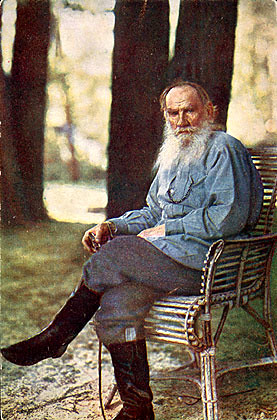
When people found out I was reading War and Peace this summer the most common question posed was, “Is it worth it?” To which I generally shrugged, sighed and said, “Yes and no.” For those who love literature and are interested in the evolution and idea of the novel, then it probably should be read. But for most of us, with all the options of books, not to mention various entertainments and outdoor diversions available, the answer leans towards No, that it is not worth it and that life is too short to read War and Peace. You can lead a wonderful life without ever knowing the Rostovs or the Bolkonskys or even its pontificating author.

This is not to say that I feel War and Peace is a bad book per se. Tolstoy does some marvelous work dramatizing one of the most cataclysmic events in Russian history. (Who will dramatize the Russian Revolution? It seems incredible that no Russian novelist has tackled that event and transformed it into a literary epic.) Tolstoy demonstrates a thorough capacity for detail, describing the nuances of aristocratic manners and the gruff speech of common foot soldiers with persuasive savoir-faire. His characters are lively and unique and undergo profound changes, grappling with responsibilities of war and career, marriage, finances, births, and death-- in other words, life in all its glory and banality. As some critics have suggested, should the earth write a novel, it might sound like Tolstoy.

But the Earth is not perfect and neither is Tolstoy’s book for that matter. We can generally gauge the quality of a novel using three primary benchmarks: the story, the characters and the style. War and Peace suffers from many digressions into the lives of periphery characters but remains compelling due to its dramatic historical nature. The main characters, as I mentioned, are mostly sympathetic, their humanity drawn out beautifully. It’s difficult to discuss style since War and Peace is a translation (I had the Anthony Briggs edition) so while we cannot judge Tolstoy by his prose, we can nevertheless opine on his structuring of the novel and the general pool of language he has chosen to tell that story. It is here that Tolstoy astonishes me with his narrative miscalculations. The problem is the author inserting himself into the story to make declarative points that relate to his celebration of a divine force. The unfortunate consequence on the reader is having to bear the lecturing of a writer guilty of a god complex. Little is left for us to interpret on his or her own. Everything must be explained according to the way Tolstoy intended it. He violates the cardinal rule of storytelling: show, don’t tell.

In doing so, Tolstoy comes off as an insufferable dinner companion. He never hesitates to interrupt the narrative with long-winded discussions regarding the scientific basis for understanding history (an irritating device that has no place in a novel! None!) but literature, though an aesthetic branch of the arts, is understood by rules established between authors and their audience. Of course these rules are malleable (art being more lenient than science) but to disregard them is done at the writer’s peril.

As everyone knows, whether consciously or intrinsically, good storytelling makes for an irresistible yarn: the writer instills in the reader the need to know what happens. Napoleon’s invasion of Russia was an incredible event, changing the course of history. Historical narrative is drawn out in both micro and macro formats-- the lives of individual characters contrasted with the nation’s larger struggle. I found Tolstoy’s telling at the micro level engrossing. For example, on the eve of the French entering Moscow, during the collapse of public order Count Rostopchin’s justification for throwing a criminal (traitor) into the mad violence of a crowd is apropos of Tolstoy’s insight into human character, in this case, a politician’s:

“Since time began and men started killing each other, no man has ever committed such a crime against one of his fellows without comforting himself with the same idea. This idea is the ‘public good…’” (Vol. III, Part III, Ch. 25)

Could a historical novel involving George W. Bush’s faith in the Iraq War be written any different? In a thoughtful meditation on the wastefulness of armed conflict, Tolstoy, speaking through Andrei Bolkonsky in a midnight oil heart-to-heart with Pierre the night before the Battle of Borodino would destroy the young prince, suggests:

“If we didn’t have all this business of magnanimity in warfare, we would only ever go to war when there was something worth facing certain death for, as there is now.” (Vol. III, Part II, Ch. 25).

Here is Tolstoy at his very best, pensive and theoretical, but, importantly, expressing himself through his characters. His narrative problems come when he enters the scene, for example, carrying on about troop movements, particularly the fate of the French army making the catastrophic blunder of retreating on the Smolensk road, which had seen the land around it plundered and destroyed and so would not provide the needs for Napoleon’s massive army. Tolstoy wastes our time with endless dissections of this blunder, reveling in it, repeating it, and in the end, boring us with such eye-glazing assertions and unnecessary sarcasm:

“This was done by Napoleon, the man of genius. And yet to say that Napoleon destroyed his own army because he wanted to, or because he was a very stupid man, would be just as wrong as claiming that Napoleon got his troops to Moscow because he wanted to, and because he was a clever man and a great genius. In both cases his individual contribution, no stronger than the individual contribution of every common soldier, happened to coincide with the laws by which the event was being determined.” (Vol. IV, Part II, Ch. 8)

This paragraph propels two important theories of Tolstoy’s. First, that historians put too much weight on single individuals (personalities) guiding history-- in doing so, they fail to cite the billions of contingencies that determine world events (which are God’s doing). Secondly, it’s another opportunity for Tolstoy to criticize Napoleon. Sometimes it feels he wrote the book for the purpose of excoriating Napoleon to a general reading public. Throughout the novel but especially in the epilogue, Tolstoy goes out of his way to downplay his achievements, arguing that Napoleon was simply an egotistical, arrogant opportunist at the right place and the right time.

This is the book’s greatest failure: not his antipathy for Napoleon-- Tolstoy is entitled to his likes and dislikes-- but that his arguments overwhelm the storytelling in pompous cant. According to biographers, Tolstoy turned to literature as a young writer after being disenchanted with history. In his second epilogue, he spends more than 40 pages (in technical, colorless, dull language) disparaging the work of historians on the premise that they are unable to differentiate the actions on mankind, whether it be free will or motivations built from necessity. What he seems to suggest, dramatically in Napoleon’s retreat and the marriages of Pierre and Natasha and Nikolay and Marie is that they were predestined by a supernatural force. It was all meant to be:

“And just as the indefinable essence of the force that moves the heavenly bodies, the indefinable essence that drives heat, electricity, chemical affinity or the life force, forms the content of astronomy, physics, chemistry, botany, zoology and so on, the essence of the force of free will forms the subject matter of history.” (Epilogue, Part II, Ch. 10).

A decade before Tolstoy composed his thoughts on this subject, Charles Darwin had published his Origin of Species, whose arguments of evolution refute Biblical infallibility. Probably, its evidence threatened Tolstoy’s vision of the world. Obliquely referencing Darwin’s thesis, he argues that,

“in the frog, the rabbit and the monkey we can observe nothing but muscular and nervous activity, whereas in man we have muscular and nervous activity plus consciousness.” (Epilogue, Part II, Ch. 8)

But this confuses me. What is the importance of consciousness if everything is divinely predetermined? Is it so we can recognize and celebrate God? And why are we even getting into this? On abstract terms rather than through the prism of the characters’ actions or dreams? Imagine John Steinbeck ending The Grapes of Wrath not with that lovely and tragic scene of the Joads’ pregnant daughter sharing her breast milk with an emaciated stranger but the novelist spending thirty pages examining the causal effects of the Great Depression and the merits of the New Deal. I’d love to read Steinbeck’s views on politics, but preferably in a chapbook or a magazine interview format.

In the epilogue Tolstoy ignores the Rostovs and Bolkonskys, only bothering to mention Napoleon (for one last drubbing) in his final descent into didacticism. Beyond whether or not Tolstoy is persuasive in his argument is besides the point. The best storytelling weaves philosophy into its narrative without resorting to pedantic posturing. I found Tolstoy’s voice irritating, his arguments confusing, his language obfuscating. Not to mention hypocritical. After lambasting historians for telling us how to interpret events, he goes and instructs us himself. The nerve of great minds!

Tuesday, September 14, 2010

The Good, the Bad, and the Beautiful

“We’re on the cutting edge of reality itself. Right where it turns into a dream.”


It’s hard to believe that there has been no great Vietnam War novel. The war has been better served by memoirs (Ron Kovics’ Born on the 4th of July and Neil Sheehan’s Bright Shining Lie) and especially cinema (Apocalypse Now and Coming Home, among others). Perhaps the best story about the conflict may be Graham Greene’s The Quiet American but that was written by a Brit in 1955, before the conflict became a national security issue making front page headlines. Back then it was but one of the many stories of decolonization rapidly transforming geopolitics in Asia and Africa in the 1950s. At the time of Greene’s novel it wasn’t quite yet the war it became, an ideological civil war between North and South lasting more than 15 years. The great World Wars were comparatively brief. Is it for this reason that Vietnam defies the ambition of writers in recasting the war in a poetic narrative? Is it just too damn big, ugly, and morally wrong? Where would you even begin?


It shouldn’t be so. After all, moral dilemmas make for some of the best reading. Into this discussion rides Denis Johnson and his Vietnam novel, Tree of Smoke. At first glance, it wouldn’t seem that Johnson, famous for his poetic tales of dropouts and ex-cons in books like Angel and Jesus Son would be the kind of guy to give the Vietnam War its just due. But this isn’t quite about politics or platoons as it is about personalities, dreams, and God. The hall-of-mirrors confusion of such a setting is perfect for a writer like Johnson, a writer that revels in tricky storytelling and moral ambiguity. Rather than going there, he prefers tumbling down the slippery slope of Manichean worldviews. When everyone is just trying to stay alive in a place as brutal as ’Nam, who are the good guys anyway? Literature being a Western art form, in a cross-cultural conflict we tend to write from our side of things. Among various detailed atrocities, to save us from a supposed Communism menace, our government employed seven-ton super bombs against North Vietnam, capable of decimating 8000 square meters. Into this inferno we also dropped Spiders, small grenades with near-invisible antennas that were detonated upon touch. They were designed to kill survivors helping the wounded or putting out fires. And for what purpose in the end? The defeat of an exaggerated Communist means. No, the end never justified the means. While Johnson describes little of the fighting itself (besides the Tet Offensive), at times he captures the situation’s moral ambivalence perfectly:

“They threw hand grenades through doorways and blew the arms and legs off ignorant farmers, they rescued puppies from starvation and smuggled them home to Mississippi in their shirts, they burned down whole villages and raped young girls, they stole medicines by the jeepload to save the lives of orphans.”

The closest we come to a concept of a hero (in the Greek sense: military honors, hubris, appetites, tragic trajectory) is an alcoholic raconteur, Colonel Sands. Running a renegade CIA outfit with his nephew and a few aids, he understands that the Vietnamese goal of self-determination may be too powerful for the U.S. to win the war no matter how many bombs are dropped. However, he believes in a certain hearts & minds strategy:

“This land under our feet is where the Vietcong locate their national heart. This land is their myth. We penetrate this land, we penetrate their heart, their myth, their soul. That’s real infiltration. And that’s our mission: penetrating the myth of the land.”

Ironically (or perhaps not very much so), the colonel’s base is above Cu Chi, the famous tunnel network from which the Vietcong conducted guerilla warfare. The Colonel is a true Cold War Warrior, a legend of his own time, with nearly three decades experience in Asia battling “evil.” In Vietnam his status or relationship to the Top Brass is enigmatic and it seems his scheming is likely outside of the military hierarchy or jurisdiction. Even his relationship to leadership in the CIA seems sketchy. Like an artist or perhaps a conman, he is looking beyond military strength to defeat the enemy. In the colonel’s world, mindfucking can be just as powerful as strategic bombing, as this memo conveys:

“…Consider the possibility that a coterie or insulated group might elect to create fictions independent of the leadership’s intuition of its own needs. And might serve these fictions to the enemy in order to influence choices.”

The Colonel’s number one point man in carrying through his plans with a double agent is his nephew, Skip. Skip likes languages and has a mustache. “Always a sucker for sardonic, myopic, intellectual women,” he enjoys a fling with Kathy, a missionary in the Philippines, who also relocates to Vietnam to help orphans and who writes Skip digressive letters that make him uncomfortable. Kathy “wasn’t, herself, beautiful. Her moments were beautiful.” But Skip is mostly alone in a countryside villa that once belonged to a French colonial doctor who went mad in isolation and whose obsession with tunnels was his mortal ruin. Skip, bored with a pre-Internet burden of cataloging everybody or everything associated with the war up to that point spends hours translating the deceased doctor’s diary entries, including the following:

“Is the mind a labyrinth through which the consciousness gropes its way or is the mind the boundless void in which certain limited thoughts rise up and disappear?”

It feels like Johnson’s own consciousness is in on this labyrinth. The novel feels piecemeal at times, following satellite characters to dead ends. The book often reads like a screenplay or a poem, shifting between bizarre conversations and weird prose. Johnson is capable of lovely, nuanced language and it is for the writing more than anything else that one reads Denis Johnson. However, sometimes you just don’t know what to make of him. Getting carried away with the kooky, psychedelic nature of the war, Johnson occasionally fails to articulately establish setting:

“He crouched by the window and listened shuddering to the sound of ripped high-voltage wires out there stroking the darkness, humming closer and farther, feeling along the darkness after fear. The voltage sucked along the shaft of fear toward any heart emanating it and burned the soul right inside it. That was the True Death. Thereafter nobody lived in that heart, nobody saw out of those eyes. The stench of such burning floated in and out of the room all night.”

But I’m nitpicking. If the story and its scenarios are confusing, it’s only mirroring the war. The novel’s titular Tree of Smoke has Old Testament connotations as well as, of course, an atomic reference to widespread devastation. It’s also about something that has a shape but no actual being, much like what happened to our soldiers who fought there. War is brutal enough when it’s waged with something at stake. But when we have to invent principles, the line between tragedy and farce blurs, just as our notion of heroism. In such battlefields, many one-eyed kings are crowned:

“You’re sad about the kids, sad about the animals, you don’t do the women, you don’t kill the animals, but after that you realize this is a war zone and everybody here lives in it. You don’t care whether these people live or die tomorrow, you don’t care whether you yourself live or die tomorrow, you kick the children aside, you do the women, you shoot the animals.”