Thursday, June 16, 2011

The Beguiling Charms of Handsome Self-Interest

"It don't take long to kill things. Not like it does to grow."

-- Melvyn Douglas (Homer)

It is entirely natural that formative personalities with a thing for cinema will gravitate towards Paul Newman. From the late 1950s through the early 1970s he’d picked up where James Dean left off, becoming the embodiment of the handsome, brooding rebel, a man at home with tough guys and dangerous ladies, operating outside mainstream moral codes. Because becoming an adult entails following societal rules—the wife, the job, the mortgage, the taxes, the Judeo-Christian value system— flouting them, or at least making it up as you go along, can make a man feel unique, alone among a crowd of dullards, though all his desperado might be, at best, a smokescreen covering up the insecurity about making one’s way in the world, and at worst, a tragic absence of real human empathy.

Of all Paul Newman’s films, the one I think best embodies this juxtaposition of charming hustler and selfish man-boy is Martin Ritt’s Hud, based on the novel Horseman, Pass By, written by Larry McMurtry. Produced in 1963, Newman plays the eponymous Hud, a philandering cowboy who works for his father, Homer Bannon (Melvyn Douglas), and razzes his nephew, Lonnie (Brandon De Wilde) and housekeeper, Alma (Patricia Neal). They live on a ranch in a large spread in remote cattle country Texas. The crisis in the story involves one of their cows dying of foot-and-mouth: a highly contagious livestock infection that requires special quarantine measures as well as the immediate slaughter of all infected animals to contain the disease.


James Hong's cinematography sometimes reminds you
of Edward Hopper surveying Texas

Of course, the right thing to do is to follow the law. Homer doesn’t like the situation one bit— he’s been a rancher all his life and stands to lose his fortune. But the alternative is knowingly swindling his neighbors, passing his crisis on people who trust his word, which not only means bankrupting a man after looking a man in the eye with a strong handshake but also possibly unleashing an epidemic that could affect the region, if not the nation, infecting millions of cows and financially ruining hundreds of other families, who like the Bannons, have been living off the land for generations. But that’s exactly what Hud proposes to do before the government veterinarian can declare an emergency situation: “Let us put some of our bread in that gravy while it’s still hot.”


Beware of men bearing flowers?

Caught between Homer’s sense of duty and Hud’s self-interest is Homer’s grandson, Lonnie, an impressionable sixteen-year-old getting to the age where he is figuring out what kind of man he wants to be. It’s not such an easy path. Soft-spoken, addicted to cowboy ballads on his wireless, he admires Hud’s way with women, the devil-may-care attitude that puts him in daily situations most sensible men would recognize as dangerous, like driving drunk and tomfooling with married women. Living off his family wealth and good looks, Hud acts impulsively with a sense of entitlement oblivious to naysayers and moralists. For a kid suffering both hormones and virginity politely, the spectacle of a man that gets what he wants—what society fetishes but does not altogether condone, that of the virile, uninhibited lothario— is heady inspiration.


Uncle Hud and his corruptible nephew

Essentially then, Hud is a family drama about the contestation of two ways of life. And though we naturally sympathize with Homer, we can’t help liking Hud. Newman’s performance inspires every man’s inner sixteen-year-old. We know he’s wrong, even morally repugnant, but Newman plays him so charming that the audience— women, but especially men— forgive him. This is good for a film but bad for us as a species. That we could be so bamboozled by charisma suggests why so much has gone wrong for America in the last thirty years. The character, Hud, epitomizes the late twentieth century politicking corporate cowboy that would connive us out of our clean skies and untouched frontiers with huckster good ol’ boy hucksterism.

“Don’t plant ‘em where I park,” he barks at the housekeeper, Alma, after she reprimands him for driving over her flowers. It’s a small detail—an automobile crushing a delicate patch of Mother Nature— but suggestive of how little Hud is tied to the land. He has none of his father’s frontier spirit. There is no romanticizing this vast, stark, dusty landscape. A modern man trapped in rural Texas, Hud is a new kind of pioneer, the technocratic cowboy, much more comfortable behind the steering wheel of a convertible than holding the reins of a horse.

Hud anticipates the opportunist millionaire oilman that would transform Texan power. His father, Homer, senses that his son represents the changing times. When it becomes clear that the family’s situation has become perilous and it’s suggested that they drill for resources, Homer rails beautifully against a future landscape ruined by tractors, derricks, and tarmac scarring up God’s country: “What can I do with a bunch of rotten oil wells? I can’t ride out there and prowl amongst them like I can my cattle… I can’t feel a smidgen of pride in them. I want money to come from that something that keeps a man doing for himself.”

The moral contest escalates as it becomes certain that their cattle will be ruled dangerous. But Homer never doubts there is any other way than living by his conscience. “I want out of this spread what I put into it,” Hud tells his father. It leads to a painful confrontation in which Homer reprimands his son in the clearest possible language: “You don’t give a damn… You don’t care about people… You don’t value nothing. You don’t respect nothing. You don’t check your appetites. You live just for yourself which makes you not fit to live with.” Lonnie expresses some solidarity for his uncle, arguing that Hud may be selfish but he’s not so different from everybody else. Homer, recognizing that he may lose his grandson to Hud’s easy living, responds sadly, “Little by little the look of the country changes because of the men we admire.”

The bulldozer & the horseman

It’s a beautiful line, prescient of our contemporary celebrity culture that has blurred the traditional merits of heroism. I don’t remember exactly how I felt watching Hud fifteen years ago other than liking the film and loving Paul Newman for it. But watching it recently, I no longer felt empathy for his character, only tremendous respect for Newman for giving such a contemptuous antihero magnetic charisma. From this viewing many years later, I have to wonder what kind of person I was at twenty that I could be taken with a character so symbolic of man’s capacity to trample the earth and his fellow men. Is it just me? Or is it a mistake nearly every young man makes in his long journey to goodness?

Wednesday, June 1, 2011

Chrome Jell-o

“For if one had an imagination vivid enough and a sympathy sufficiently sensitive really to comprehend and to feel the sufferings of other people, one would never have a moment's peace of mind... One is always alone in suffering; the fact is depressing when one happens to be the sufferer, but it makes pleasure possible for the rest of the world.”

--Aldous Huxley

Crome Yellow

The problem for the author who writes a landmark novel is that once he or she has departed and is thus no longer capable of putting out new work, it is all too easy for posterity to associate him or her with that single legendary text. Herman Melville might have believed it all right we revere Moby Dick but it hardly stands to think that Jack Kerouac— who published eighteen novels in his lifetime and who disassociated himself from the Beat Generation—would be pleased that outside his small, committed fan base, anything not titled On the Road is mostly yellowing, dusty, forgotten, unread. It might be said that for any author who desires immortality, a beloved masterpiece is the ticket, but a caveat of oblivion for the remaining oeuvre is fair warning.

Aldous Huxley was one of those great geniuses who wrote one of the twentieth century’s masterpieces, Brave New World, which with its test tube babies, soma addiction, and sexual promiscuity predicts the pleasure principle of our contemporary times. It deserves its place in the literary canon but like said conundrum for many writers, most readers stop right there, as if all there was to know of Huxley and his godlike omniscience of the human condition was in that small, lovely book.

Published in 1922, Crome Yellow, Huxley’s first novel, demonstrates his unique gift for language, theorizes some of the blueprint that would become Brave New World, and vaguely predicts the Second World War as well as the eventual apotheosis of the machine as man’s best friend.

Crome Yellow is a quietly subversive parable, the whole of which takes place on the eponymous castle estate in the English countryside. It is less a story and more a forum for Huxley to air his many social theories regarding history, politics, reason, madness, love, and poetry. Not much really happens: a small party from Britain’s leisure class has congregated for the season to banter, create, review, discuss, and feast. The reader enters and leaves this tableau with Denis, a young, middling poet with a few published broadsheets and a modest book of verse to his name. His hosts, the Wimbushes, have a niece, Anne, whom Denis is hopelessly in love with (in the desperate, maddening vein romantic poets are wont) but whom treats Denis cynically as she would a kid brother for whose best intentions raise only snickering. She is more drawn to Gombauld, an artist of some repute and Byronic handsomeness.

Among the other guests, the primary character of interest is Mr. Scogan, who looks “like an extinct saurian… his nose was beaked…the skin of his wrinkled brown face had a dry and scaly look; his hands were the hands of a crocodile.” A friend and contemporary of Henry Wimbush, he is something of a pedantic, a bore, a philosopher king and, conjecturally, a mouthpiece for Huxley. He also has many of the novel’s choicest lines. Upon learning Denis is at work on a novel, in Scogan’s assumption of the plot he indicts nearly every writer of the 1920s, including, one supposes, Huxley himself:

“I’ll describe the plot for you. Little Percy, the hero, was never good at games, but he was always clever. He passes through the usual public school and the usual university and comes to London, where he lives among artists. He is bowed down with melancholy thought; he carries the whole weight of the universe upon his shoulders. He writes a novel of dazzling brilliance; he dabbles delicately in Amour and disappears, at the end of the book, into the luminous Future.”

His spot-on assessment humiliates Denis who vows quietly to tear the pages to pieces when he unpacks later that night. It’s a bad start for a young artist of marginal confidence and it’s a slippery slope from there. When alone with Anne he often contextualizes their time together by quoting poetry, an affectation which his muse calls “a bad habit.” In a setting of larger-than-life personalities at home with confirmed belief systems, the work-in-progress Denis inevitably flubs his lines (his social ineptness and half-cooked awareness is not dissimilar to Huxley’s more famous punching bag, Bernard Marx.) However, due his ingenuousness, Denis is an ideal sounding board, especially for the talkative Scogan, who often pins him down with breathless soliloquies.

Huxley would not publish Brave New World for another decade but here are the seeds being planted by Mr. Scogan, a self-described realist in an age of madmen. Anticipating the Greek alphabetical hierarchy of Huxley’s imagined future is a rough sketch of what would become the human organizing system of his greatest novel:

“In the Rational State, human beings will be separated out into distinct species, not according to the color of their eyes or the shape of their skulls, but according to the qualities of the their mind and temperament. Examining psychologists…will test each child that is born and assign it to its proper species. Duly labeled and docketed, the child will be given the education suitable to members of its species, and will be set, in adult life to perform those functions which human beings of his variety are capable of performing.”

This so-called Rational State consists of three distinct groups: the Directing Intelligences, the Men of Faith and the Herd. The breakdown is self-explanatory: the Intelligences devise the system, the Men of Faith sell it and the Herd follows orders. Of Denis’ role in this future society, Scogan is at a loss. Denis being independent but neither persuasive nor clearheaded, Scogan “can see no place for you; only the lethal chamber.”

Huxley before the Future

Denis’ host, Henry Wimbush, is a scion of some fortune. His magnum opus is a history of the village of Crome and especially the castle where they reside. On two occasions, Henry reads from his historical tome. One story involves an ancestor named Hercules, a dwarf, while another relates three sisters feigning an anorexic appetite as pseudo-spirituality. The first story is decidedly tragic, the second comic, which seems true for the novel as well. Although Huxley’s narrative voice is sportily sardonic, the philosophical musings on the future reflect an anxiety about the end result of technology intertwining itself with the worst instincts of human nature.

When the consequence is not deadly, it may be simply alienating. Even the affable Wimbush isn’t very much interested in mankind. Being a character in a Huxley novel, he is thoughtful, given to intelligent musings with some remarkable capacity to witness the distant future. Confiding with Denis the night of the country fair, Wimbush describes his own utopian vision:

“Perhaps, in the future, when machines have attained to a state of perfection—for I confess that I am, like Godwin and Shelley, a believer in perfectibility, the perfectibility of machinery—then, perhaps, it will be possible for those who, like myself, desire it, to live in a dignified seclusion, surrounded by the delicate attentions of silent and graceful machines, and entirely secure from any human intrusion.”

Huxley is not describing television, video games, and the Internet, or any of the quotidian appliances that guarantee a self-sufficient existence. But he knew human nature and its pull over us like moths to the flame. Would the descendants of Henry Wimbush bother hosting a party of individuals for the summer season if it stood to interrupt their online presence?

The answer is difficult to say. Denis might disagree. Humiliated multiple times he nevertheless needs other people to exist himself. He has no true form without recognition from others. In his own words:

“The individual is not a self-supporting universe. There are times when he comes into contact with other individuals, when he is forced to take cognizance of the existence of other universes beside himself.”

If we are to survive as a viable, energetic, empathetic species, may it always be so.

Monday, May 30, 2011

Time Has Come Today

“You may ask yourself, well, how did I get here?”

--David Byrne

“When does a fake Mohawk become a real Mohawk? Who decides? How do you know when it’s happened?”

--Rhea from A Visit From the Goon Squad

I believe it was in my mid-twenties when I began downgrading my artistic aspirations from ‘the voice of a generation’ to what it has become ten years later in its more or less present incarnation, ‘a voice.’ It’s embarrassing looking back but there was a certain point of my life when I truly believed I would be one of those authors— the few, the proud— who would survive posterity not only as one of those writers whom people wanted to read but also whom they wanted to be. Hey, there’s still time and you never know but I’ve had to adjust my expectations into a more modest outlook. Sometimes I’m okay with this. Sometimes I’m not. I’m only human.


As you roll into your thirties, you should be hitting your career stride. When you aren’t, you can’t help but observe those who have. Particularly friends and acquaintances. If you dare go there, the route is peppered with questions, like, what is it about the neighbor’s grass? What makes it so green? Is it a human folly to envy the qualities of others or is it Madison Avenue marketing that has created this general dissatisfaction? Is the difference between happiness and discontent the difference between having chosen the life we lead and the life we have having chosen us? It doesn’t seem fair, does it? The way we are compared against the way we were supposed to be?

Whoever said introspection was for weenies never took a long, hard look at the mirror. ‘What if…?’ is the worst kind of self-interrogation since it almost always consequences in regret. This self, this person that we are leading now may be hard-won but isn’t necessarily the best person we could have been. Invariably something went wrong somewhere and this life we lead is the one we got stuck with, for better, for worse.

Disheartening this is, we can self-medicate. Sex, drugs, and rock and roll are viable options (but don’t they often mislead us away from our ideal selves?). Or one can read good literature that utilizes sex, drugs, and rock and roll to frame these questions. A worthwhile book need not answer the unanswerable— it’s enough that it reminds us that failure and humanity are cut from the same cloth and that this might be a beautiful thing.

It is certainly beautiful the way Jennifer Egan writes about it in her novel, A Visit From the Goon Squad, the closest a book has ever come to the literary equivalent of a solid mixed tape, rewinding and fast forwarding across the years, or perhaps ‘skipping’ over generation gaps, as the story—it travels between New York City, San Francisco, Naples, and Italy as well as from the early 1970s to the 2020s— is as much about the progress of technology as it is culture. The truth whether or not new technology is good or bad, necessary or distracting, safe or dangerous, nearly always depends on who’s asking. For those holding onto some yesteryear ideal, change is something to be despised, as Bennie Salazar, a record label owner who came of age in San Francisco’s late 1970s punk scene, wearies once the direction of his company changes after a corporate takeover:

“The problem was precision, perfection; the problem was digitalization, which sucked the life out of everything that got smeared through its microscopic mesh. Film, photography, music: dead. An aesthetic holocaust!”

Just as our relationship to music and musicians evolves with technology (shrinking considerably from LPs to cassette tapes and CDs, disappearing totally as a tactile thing with the rise of the mp3), so does the way we communicate with one another. As Bix, an NYU student doing his postgrad in computer engineering in early 1993 tells his friends, “This computer-message-sending is going to be huge—way beyond the telephone…” But though Egan touches on facebook, google and how “the days of losing touch are almost gone,” she goes further: a preteen using Power Point slides to describe her family’s dysfunctional faults and then later to the near future when Instant Messaging has become the medium for our more difficult words as when Lulu shares with Alex on their “handsets” that she “Nvr met my dad. Dyd b4 I ws brn,” texting him this even though they are sitting across from each other in a café.

But now you’re wondering who’s Lulu? And who’s Alex? In 2021, they are working together using Internet bloggers called ‘parrots’ to word-of-mouth the upcoming concert of Scotty Hausmann, a publicity-shy, burnt-out slide guitarist who played in The Flaming Dildos, the same High School punk band Bennie played with in the 1970s. Scotty had unsuccessfully pined for Jocelyn, a girl who learned the fast life as Lou’s teenage mistress. Lou is a super successful rock and roll producer-cum-hedonist that mentors Bennie. Bennie marries Stephanie, a one-time protégée to La Doll, Lulu’s mother and a PR titan who falls from grace. Stephanie’s brother, Jules, is a journalist who goes to jail for assaulting a movie star named Kitty Jackson. Meanwhile, Bennie makes a name for himself in the music business discovering and recording a punk band named the Conduits. Around this time his factotum is Sasha, a beautiful redhead who euphemistically calls her shoplifted things, “found objects.” She survives a druggie stint in Naples and leaves New York and the music business when she reconnects with her college sweetheart, Drew, moving to Arizona to start a family. She has an autistic son obsessed with great pauses in rock and roll songs and a daughter who expresses herself with Power Point slides. If it seems very six-degrees-of-separation, it is. One story’s peripheral character is another’s hero.

And heroes they are in a very rock and roll sense of the word: interesting people making catastrophic mistakes, sometimes large, sometimes so small it is hard to know exactly where everything went wrong. Once The Flaming Dildos disbanded, why did Bennie wind up with his own record label and a corner office on Park Avenue with a fantastic view while Scotty performed janitorial functions and fished for his lunch in the East River? It doesn’t bother Scotty too much when he goes to see his old friend again because, “there was only an infinitesimal difference, a difference so small that it barely existed except as a figment of the human imagination, between working in a tall green glass building on Park Avenue and collecting litter in a park.”

Like the incremental movement of continental plates, pressures mount in our own lives to a breaking point, in which an inevitable seismic shift leaves a trail of victims, most especially ourselves. For Jules Jones, Bennie’s brother-in-law, once a promising, young writer who had come to New York full of ideas (“Who isn’t, at twenty-four?”), his decline began when he’d become another hack celebrity journalist. This is the late 1990s now and some are getting spectacularly wealthy while most are being left behind. His feeling is common to many of us, that sense of not belonging, of having missed some boat that’s not coming back for us. In a young, ingenuous film star, Kitty Jackson, he witnesses everything he will never be: beautiful, rich, successful, loved. His sole advantage over her, the one card he can play, is the knowledge that time, though slow and deliberate, takes no prisoners:

“Because Kitty is so young and well nourished, so sheltered form the gratuitous cruelty of others, so unaware as yet that she will reach middle age and eventually die (possibly alone), because she has not yet disappointed herself, merely startled herself and the world with her own premature accomplishments, Kitty’s skin—that smooth, plump, sweetly fragrant sac upon which life scrawls the record of our failures and exhaustion—is perfect.”

In a very confessional meta-me article for Details Magazine, he describes his attempted rape of Kitty in the canny, ironic prose so typical of magazine writing today, but briefly he too considers what went wrong:

“At what precise moment did you tip just slightly out of alignment with the relatively normal life you had been enjoying theretofore, cant infinitesimally to the left or the right and thus embark upon the trajectory that ultimately delivered you to your present whereabouts—in my case, Rikers Island Correctional Facility?”


It seems no accident then that the album central to this story should be called A to B, offered up by the Conduits’ former frontman, Bosco. Bosco was once a skinny, manic redhead known for his explosive live shows but he didn’t age well. As he explains to Stephanie, Bennie’s wife and his publicist, “The album’s called A to B, right? And that’s the question I want to hit straight on: how did I go from being a rock star to being a fat fuck no one cares about?” But A to B is not a comeback album— for Bosco it’s the only dignified way out of his messy life. It is his belief that this farewell tour should be a rock and roll suicide, “I want out of this mess. But I don’t want to fade away, I want to flame away— I want my death to be an attraction, a spectacle, a mystery. A work of art.”

Bosco believes his tour will be a success because of the public’s infatuation with “Reality TV.” Reality, of course, has everything to do with authenticity and is at play in the characters’ lives. It’s extremely important, yet somehow elusive, as being real is knowing oneself. As Rhea says enviously of her friend Alice, “I can’t tell if she’s actually real, or if she’s stopped caring if she’s real or not. Or is not caring what makes a person real?”

It’s not an easy question, but there might be some connection between authenticity and happiness, at least in this literary world. We are always in the act of becoming: artists, doctors, drug addicts, hookers, lovers, husbands, fathers and mothers— and some roles work better than others. It often depends on who you’re partnered with. Jules’ sister, Stephanie, knows that Bennie is unfaithful and she suffers to keep their marriage intact. Witnessing the flabby, tragic mess of Bosco, once a promising singer, now a joke on her hands, is a straw-camel’s back revelation: her life is a sham and an unhappy one at that. Helplessly she thinks of the old days: “premarriage, preparenthood, pre-money, pre-hard drug renunciation, preresponsibility of any kind…going to bed after sunrise, turning up at strangers’ apartments, having sex in quasi public, engaging in daring acts that had more than once included (for her) shooting heroin, because none of it was serious. They were young and lucky and strong….”

… And perhaps, real.

* * * * * * *

Published in 2010, Jennifer Egan has already won both the Pulitzer Prize and the National Book Critics Circle Award. Two days after receiving the Pulitzer, she inked a deal with HBO to adapt A Visit From the Goon Squad into a television series. It’s no surprise. Like very few novels, it succeeds on visceral, literary, and spiritual levels. It’s bold: besides the Power Point chapter, her point-of-view shifts between the third person, close first person and even the second person in a way that the ‘you’ is not directed at the reader but at the self-critical narrator himself. Skipping around between years, places, and heroes does not feel jarring in the least bit. Each story feels self-contained, yet integral, not to the greater story, but the unifying theme, that which relates to the inevitability of personal change.

Perhaps nowhere in the novel is this exemplified better than when Sasha disappears to Naples and her stepfather sends her Uncle Ted out to search for her. Instead of looking for her, Ted, a tenured arts history professor at a minor university, spends most of his time wandering museums, the ruins of Pompeii, and labyrinthine alleyways. He is away from his family and unusually pensive. Why had he sexually disengaged himself from his wife, Susan, to the point that there could be no more true intimacy between them? From an initial rage, Susan mellows into a “sweet, eternal sunniness that was terrible in the way that life would be terrible without death to give it gravitas and shape.” What is so tragic about this turn of events is that he didn’t abandon his desire for any other reason than because he could. He had ruined her and now having found Sasha and trying to win her confidence to come back with him to America, he helplessly recalls a happy moment before everything was irrevocably ruined. Herein may be the saddest paragraph in a bittersweet book:

“On a trip to New York, riding the Staten Island Ferry for fun, because neither one of them had ever done it, Susan turned to him suddenly and said, ‘Let’s make sure it’s always like this.’ And so entwined were their thoughts at that point that Ted knew exactly why she’d said it: not because they’d made love that morning or drunk a bottle of Pouilly-Fuisse at lunch—because she’d felt the passage of time. And then Ted felt it, too, in the leaping brown water, the scudding boats and wind—motion, chaos everywhere—and he’d held Susan’s hand and said, ‘Always. It will always be like this.’”

Perhaps Ted was caught up in the moment but he was certainly not disingenuous. At the time he believed it was true. As Bosco says, “Time’s a goon.” The novel’s boogeyman is as invincible and irrepressible as any villain in literature. Time sets the booby traps and we’re the ones clumsy enough to step on them— yet it might not be our fault. We can’t be so hard on ourselves as we don’t always have as many choices as it may seem.

Fucking up is a life process as universal as birth, childhood, adolescence, marriage, aging, and death. Being inevitable thus, we can only hope that when it happens to us, it a) is not lethal and b) perhaps we learn something.

Not all of us are lucky enough to balance self-destruction with redemption. A comeback is not always in the works. But sometimes it may be enough to learn from our mistakes and carry on the best we can.

Sasha speaks for the novel, if not a good percentage of the human race when comforting her friend, Rob, after a failed suicide attempt she reminds him:

We’re the survivors.”


This originally appeared in Heso Magazine

Thursday, May 26, 2011

One Order of Freedom Fries Two Security Sodas Please

“Everywhere you look—Britain, the States, western Europe--- people are sealing themselves off into crime-free enclaves. That’s a mistake—a certain level of crime is part of the necessary roughage of life. Total security is a disease of deprivation."

--J.G. Ballard

One of the great conundrums of a democracy, especially during a political era defined by a so-called War On Terror, is how to balance freedom with security. Like the mechanics of a seesaw, any action, whether it be the government’s or the individual’s, disequilibrates, favoring one value over another. It is not surprising that most governments choose security; what surprises is that the barbed wire walls, homeland bureaucracy, detention centers, security cameras, tapped phones and no-fly lists are proclaimed as tools to “protect our freedoms.” This argument— security as a means to freedom, an end— is a canard. In practice, there is no bargaining, it is one or the other, the seesaw going up or down. So for all the talk of freedom in America and elsewhere, it is a more frightening state of existence, one that is better dreamed than lived. That we should, in general, favor security over freedom makes me wonder if this is human nature or an evolutionary development made comfortable by the pleasures of Chinese takeout, wireless Internet, and three-hundred channels on cable TV.


I had not expected these questions to emerge when beginning a book called Cocaine Nights, but then I’m new to the dystopian fiction of J. G. Ballard. The narrator, a middle-aged travel writer named Charles Prentice, arrives in the small resort town of Estrella de Mar in Spain’s Costa Del Sol after his brother, Frank, pleads guilty to the murder of five individuals, setting fire to their cottage during a party with half the town in attendance. Charles is flabbergasted by his brother’s willingness to incriminate himself; he doesn’t believe his guilt is authentic. He moves in to his brother’s apartment, beds his paramour and takes on a job with Frank’s former colleagues.

While the titular cocaine may be in short supply firsthand, the drug’s inherent paranoia governs the storytelling. Charles is there to ask questions, to get at the truth and the truth being truth, especially when murder charges are involved, is a dangerous thing. He learns that Estrella de Mar is quite unlike most sleepy Costa Del Sol resorts in that people are actively participating in a cultural and intellectual life—taking sculpture classes and putting on Harold Pinter plays. There are sailboats rigged to the wind, waiting lists on the tennis courts and a busy nightlife centered around Club Nautico, where Frank, Charles’ brother, had worked once as manager. It’s a lot of activity for a strip of coast most famous for sitting around the pool or television, knocked out on pharmaceutical depressants.

But with artistic endeavors come criminal ones— seems the bored housewives are into cocaine as much as they are ashtanga yoga and not a few get mixed up in the local porno ring. In his search for the true culprit responsible for the deadly fire, Charles becomes involved with Bobby Crawford, the town’s blonde, beautiful, hyperactive resident philosopher-clown. Crawford is the mad social scientist responsible for Estrella de Mar’s cultural flowering. The problem with so many of the little resort towns of the Costa Del Sol, “people locking their doors and switching off their nervous systems,” has an unorthodox solution: inject a little petty crime into a community— vandalism, burglaries, car theft (victimless crime more or less) –- and its residents respond by coming together as a civic unit, forming committees, film clubs, and softball teams. Thus, if you take away a bit of security, you get freedom, or as Bobby Crawford puts it: “Sadly, crime is the only spur that rouses us. We’re fascinated by that ‘other world’ where anything is possible.”

If there’s a can of worms lying around, Ballard’s packing a Swiss army knife. Like many interesting novels, Cocaine Nights is a philosophical question tested in a narrative format. That crime is a catalyst for art— Ballard cites Shakespeare’s London and the Medicis’ Florence as examples— is an interesting idea. Moreover, the premise that men see this connection and will behave like gangsters in order to guarantee its flourishing is the stuff of good fiction. The only problem, as I see it, is that Ballard doesn’t successfully persuade me that crime inspires civic pride and the arts. It’s a nice try but the stuff of hardboiled fantasy.

We can assume that Bobby Crawford is Ballard’s mouthpiece, a Devil’s Advocate arguing a cloud’s silver lining. The logic at work is that crime causes individuals (some of them at least) to reflect on the precariousness of existence, concluding that as life is finite, it must be enjoyed and that this is best done by pleasuring in social taboos and expressing one’s creativity. Creativity, after all, is a strong expression of individualism, which of course is the essence of freedom, Mr. Hyde to security’s Dr. Jekyll.


Mr. Ballard--

the idealist dystopian or dystopian idealist?

For every Jazz Age with its bootleggers and masterpiece makers, there’s a dozen vice-ridden metropolises in which nothing beautiful developed. With all due respect to the artists of Washington DC and Camden, New Jersey, these two cities have consistently produced torrid crime and very little culture (at least little on a national level). Ballard’s thesis is provocative but it doesn’t hold up to logic. The Costa Del Sol is populated by the retired white-collar crowd. It does not follow that a middle manager or retired bank vice president would spontaneously develop an aesthetic vision just because his garage door is vandalized or some burglaries are reported in the neighborhood. Some aesthetic background and artistic energy are more important than a line of coke or a broken window.

Cocaine Nights was published in 1996. Had Ballard procrastinated on the book and witnessed the consequences of September 11th, would he have even bothered giving form to his idea? In the novel’s view, the more spectacular the crime, the greater the stimulation to live. But that did not happen after 9/11. There was very little reflection on the reasons behind this great theatrical work of horror, no reevaluation of America’s role in the world and the enemies we’ve created in a foreign policy bent on total self interest. There was no renaissance in the arts. Instead pop culture witnessed a superhero boom in cinema, Harry Potter led the publishing industry into blockbuster dependency and no real innovative movements developed in pop music.

One could argue the terror of 9/11 engendered isolation and ennui and that the naughts were the true lost generation. What could have been a 1960s utopian outburst puttered out in Twitter feeds and blogs no one would bother to read. Our retreat is not wholly complete. Still, someone may yet discover the magic formula that produces an engaged, intellectual, artistic society. Until then, watch out for pickpockets. Should your wallet get pilfered, it’s a logical fallacy that from this inconvenience you may pen the Great American Novel.

Monday, May 2, 2011

Airborne Philosophy

“A pilot’s business is with the wind, with the stars, with night, with sand, with the sea… He looks forward to port as to a promised land, and truth for him is what lives in the stars.”

--Antoine de Saint-Exupery


‘Philosopher’ really isn’t much of a career option these days, if it ever was a profession taken seriously by your average working man. Anyways, it hardly stands that a person sitting at home, doing not much more than sketching and organizing his or her thoughts can be expected to demonstrate some higher truth. The most vibrant ideas regarding that elusive concept known as “the meaning of life” are usually arrived at by men and women that have immersed themselves in the world, experience being a superior barometer of wisdom than intelligence. Thus, more than the Wall Street buccaneer it is often the gutter poet who understands life’s tragic inevitability far better, who, for all his material poverty, can articulate the arc of existence more beautifully.

It is no surprise then that those who come of age and choose a career that sends them forth into the world should return from their journeys with something valuable gleaned. Soldiers, sailors, circus performers not only travel but also witness human nature at its extremes, pieces of folly, glory and degradation providing potent color for a person’s scheme. A pilot is slightly more privileged in being literally above it all, on the very edge between earth and space. Is it the proximity to the heavens that gives the pilot his philosophical weight? The view of the Earth as God might look down upon it? Or possibly is it the risking of one’s life to elements of earth that are ferocious, capricious and untamable?

Flying is one of those modern conveniences so taken for granted that it is no longer special to fly and passengers need massive distractions with in-flight entertainment to pass the time. The idea of flight, once romanticized and later marveled as one of man’s greatest ingenuities, has the contemporary patina of plastic.

But it was not always so easy getting from one place to the next. In the early days of long-haul travel it was actually quite dangerous and emergency crash landings were hardly out of the question. We often think of air traffic as the movement of people but it is just as often the movement of people’s things— mementoes, documents, food, invoices, photographs, antiquities, contraband, love letters. FedEx and DHL are today’s major message carriers, but before the torch was privatized, airmail had been the domain of the state, a government job maybe, but one in which you could fly to the ends of the earth.

Antoine de Saint-Exupery is probably the most important pilot you might not have ever heard of. Even if you don’t know his name, you know his most famous work, The Little Prince, which is one of the best-selling and most-translated books in the history of the world. What Saint-Exupery manages in his children’s book is an adaptation of his general philosophy, summed up in his own words, “One sees clearly only with the heart. What is essential is invisible to the eyes.”

Saint-Exupery was as compulsive a graphophiliac as he was an aviator, publishing often throughout his brief life. Not as famous as his children’s book, Wind, Sand and Stars, is no less important in engaging the reader in his personal philosophical musings, that comprehensively, reads as some of the most beautiful humanistic espousals ever rendered.

The title references the pilot’s most elemental possessions composing his dangers, his bearings, and perhaps his inspirations. Saint-Exupery flew mail on the Toulouse-Dakar route, an occasionally fraught journey that took him over the Spanish Pyrenees and a great expanse of the Sahara Desert. This was in the 1920s and 1930s, at the twilight of the French colonial empire. In this golden age of aviation, pilots had far fewer instruments with which to monitor their journeys and thus survived only with sharp instincts and an aptitude for detail. They stored in their heads a bird’s eye’s lay of the land the way a stationmaster might rattle off timetables:

“Little by little, under the lamp, the Spain of my map became a sort of fairyland. The crosses I marked to indicate safety zones and traps were so many buoys and beacons. I charted the farmer, the thirty sheep, the brook. And, exactly where she stood, I set a buoy to mark the shepherdess forgotten by the geographers.”

It was a job Saint-Exupery loved, not for the responsibility of the mail he carried, but because it afforded him great frontiers for his insatiable curiosity. From his anecdotes, one senses a sensational dinner companion who greatly appreciates everything that had ever happened to him, no matter how small. His prose rings of vitality and gratitude in equal measures.

In Wind, Sand, and Stars, Saint-Exupery writes about his cherry flight, the brotherhood of pilots, the loneliness of the French colonial desert posts, the views over the Andes, the purchase and freeing of an African slave, emergency landings, and plenty of hair-raising episodes fighting wind to stave off a crash so as to fly one more day. But like any great writer, he is building towards something momentous and it is in the final two chapters in the book where Saint-Exupery becomes expansive not about airplanes and flying but about men and living.

In December, 1935, attempting a record-breaking flight from Paris to Saigon, Saint-Exupery crash-landed in the Libyan Desert. Saint-Exupery and his engineer survived but they didn’t know their coordinates and had only an orange, some grapes, and wine to survive. They had no wireless to communicate their situation and no idea which direction portended water, man, civilization. The rule of thumb recommended pilots stay close to their aircraft, as it was more likely for rescue teams to spot the crash site than wandering dots. But the Sahara was huge ground to cover and what if just over the next sand dune was a village with a well?

A friend of Saint-Exupery, Guillaumet, had crashed in the Andes a few years earlier and had survived. Survival is about will power as much as it is about wits. In moving across a limitlessly barren land, it is his friend’s words that he remembers and from which he gathers both motivation and hope: “What saves a man is to take a step. Then another step. It is always the same step but you have to take it.”

Over the next few days they wander from the plane searching, returning before nightfall, laying out an oil-slick tarp to collect whatever moisture accumulated over the night, retching afterwards. Hallucinations plague them. It would have been so easy for the both of them to lay down on the sand and sleep for all time, were it not for their family, who would have to go on without them:

“I was haunted by a vision of my wife’s eyes under the halo of her hat. Of her face I could see only the eyes questioning me, looking at me yearningly. I am answering, answering with all my strength! What flame cold leap higher than this that darts up into the night from my heart?”

Completely out of food and liquid they commit to a direction they hope is the sea and salvation. They become weary of an enveloping bright light that they believe will herald the end. Near death, they encounter a nomad who in giving them water and food and taking them in, saves their lives. Saint-Exupery writes of his gratitude thus:

“You, Bedouin of Libya who saved our lives, though you will dwell for ever in my memory yet I shall never be able to recapture your features. You are Humanity and your face comes into my mind simply as man incarnate. You, our beloved fellowman, did not know who we might be and yet you recognized us without fail. And I, in my turn, shall recognize you in the faces of all mankind.”


The Little Prince was inspired by Saint-Exupery's desert crash

*

“Nothing is easier than to divide men into rightists and leftists, hunchbacks and straightbacks, fascists and democrats.” -- Saint Exupery

Having narrowly survived such an ordeal and possessing such rich affection for humanity, what might have motivated Saint-Exupery to go to Spain in 1936, where the brutal ideological bloodbath was a preview stage for the Great War to come? Was he like Voltaire’s Candide, an individual fatally curious, but operating with a different incentive in mind: rather than hypothesizing that this may be the best of all possible worlds, was Saint-Exupery curious to know what abstract political idea should be worth one’s life?

After all was any fascist, monarchist, anarchist, communist more right than another? Saint-Exupery is not above politics— he is wise to know it affects all areas of men’s lives— he just argues that the willingness to kill and be killed for a belief system betrays a fundamental, yet invisible rule of man: “All beliefs are demonstrably true. All men are demonstrably in the right. Anything can be demonstrated by logic… To agree to discuss them is tantamount to despairing of the salvation of mankind— whereas everywhere about us men manifest identical yearnings. What all of us want is to be set free.”

Though a pioneer in aviation, interestingly Saint-Exupery disdained many of the emerging rubrics of modern life: bureaucracy, ideology, and most especially, industrialization. What he seemed to loathe in all of these was depersonalization, the reduction of man into a machine processed to dig minerals from the earth, file paperwork, or charge enemy trenches. In doing so it was quickly or slowly making null and void a human being.

Later, back in France, Saint-Exupery is restless on an overnight train and wanders to the lower class compartments where Polish migrant workers are sardine-canned into tight compartments, exhausted and beaten-down. He takes a seat across a young couple as extinguished as any of them and concludes:

“The problem does not reside in this poverty, in this filth, in this ugliness. But this same man and this same woman met one day. This man must have smiled at this woman. He may, after his work was done, have brought her flowers. Timid and awkward, perhaps he trembled lest she disdain him. And this woman, out of natural coquetry, this woman sure of her charms, perhaps took pleasure in teasing him. And this man, this man who is now no more than a machine for swinging a pick or a sledge-hammer, must have felt in his heart a delicious anguish. The mystery is that they should become these lumps of clay. Into what terrible mould were they forced? What was it that marked them like this as if they had been put through a monstrous stamping machine? A deer, a gazelle, any animal grown old preserves its grace. What is it that corrupts this wonderful clay of which man is kneaded?”

It is the forces of tragedy at work that death often robs those most vivacious among us. In 1944, flying for the French Free Forces, Saint-Exupery was shot down after taking off from Corsica. He was just forty-four years old. What he would have had to say about Auschwitz, Hiroshima, Cold War terror, the end of colonialism, and Civil Rights movements we shall never know.

In his brief life, Saint-Exupery had many heartbreaking experiences but when he witnessed death, he did not see it as a moment of great pain or abasement, but a man's spirit being stolen from the world:

“I thought of the white sanatorium where the light of a man’s life goes quietly out in the presence of those who love him and who garner as if it were an inestimable treasure his last words, his ultimate smile. How right hey are! Seeing that this same whole is never again to take shape in the world. Never again will be heard exactly that note of laughter, that intonation of voice, that quality of repartee. Each individual is a miracle. No wonder we go on speaking of the dead for twenty years.”

Or in the cases of some truly loving, charismatic men, go on cherishing for all eternity.

Wednesday, April 20, 2011

Dangerous Ground

Many friends have suggested I try to write about my experiences since the events of March 11th. Living in Tokyo, I would be a poor candidate for such an endeavor. The ongoing catastrophe is about two hundred miles north of the city and I have not yet experienced any hardship, save the frazzling of multiple aftershocks and concerns over elevated radiation levels. My good fortunes aside, there are many with a deeper background in seismology, nuclear energy, and Japanese political history— journalists, researchers, writers— devoted to the task of chronicling, analyzing, and piecing together what this calamity means for Japan. My larger personal concerns are not what has happened but what shall come to pass.

The changes in Tokyo are more superficial than substantial. Shibuya is no longer a flaming candle, streetlamps are off, and the subdued lighting in train and subway stations is a dingy hue that might lead to a revival in pickpockets’ fortunes. Everyone dreads the summer when rolling blackouts will make it very difficult to overcome the humidity. Air conditioning will once again acquire its luxurious quality. Tokyoites have been asked to conserve energy. Self-restraint is not a problem in brilliant spring weather. But these inconveniences are banal when set against worst-case scenarios—that is, the inevitable monster shake known as the Tokai Quake that happens in the Shizuoka region just west of Tokyo with some regularity every 150 years. The last quake was in 1854.

As tragic as this year’s triple whammy of earthquake-tsunami-meltdown has been, it may pale when measured against the consequences of the inevitable Tokai Quake. Not only may it lead to another tsunami and an eruption of Mt. Fuji (which is seeing some activity for the first time in a long while), but perhaps worst of it all is that Japan may have to deal with the fallout of yet another nuclear crisis that would be much more detrimental to Tokyo— the meltdown of its nuclear power plant at Hamaoka, built almost directly above what is believed will be this disaster’s future epicenter.

Essentially, it does not seem sound judgment to build a nuclear reactor on top of a historically active fault line, especially when your country’s preeminent seismologist argued against the hubris of such an undertaking before construction even began. Dr. Kiyoo Mogi has long argued for the responsible application of nuclear technology on Japan’s vulnerable territory. Unfortunately for hundreds of thousands whose livelihoods have been destroyed by the manmade disaster of Fukushima (residents, farmers, fishermen) Dr. Mogi’s good judgment has been vindicated. The authorities at Hamaoka swear that the plant can withstand a major quake but the same corporate suits made the same fail-safe promise at Fukushima.

It seems then in the court of common sense, the government should have taken a proactive role in shutting down the nuclear plant at Hamaoka weeks ago. Already global public opinion is mixed on Japan— there is sorrow for the victims and their families and bitterness at the country’s mismanagement of the crisis. Radiation leaks affect all of us, more or less, since we understand the ecosystem to be something shared by all of us, from the air we breathe to the fish on our plates. It’s not hippiespeak to say we are of one world.

Every human drama needs a villain, if only to lash out our frustrations and humiliations. The fact that there has been lying, mismanagement, deliberate cover-ups, and general incompetence on the part of Tokyo Electric Power Company (TEPCO) has led to some consternation on the part of the international community. What would conventional wisdom make of Japan should a similar if not more catastrophic meltdown were to occur in short succession? I am helplessly reminded of the aphorism reserved for the gullible: “Fool me once shame on you, fool me twice shame on me.”

Being a foreigner, it is hard to know exactly what the public’s sentiments are. Most people would like to be let alone of the issue and trust a benevolent fate. The Japanese are trying to go on with their daily lives and in this beautiful spring weather it is easy to forget the carnage of the north and the direness of the near future. Only occasionally do the aftershocks rattle us into reality, returning the fear that trembles our hearts. But even these, frequent as they are, subside easily enough into the mundane elements of more trivial pursuits.

But many Japanese have been politicized for the first times in their lives. Like Middle Easterners uprising against their governments the Japanese are using Facebook, Twitter and other social media to organize. On April 10th a major demonstration in the Tokyo neighborhood of Koenji drew at least ten thousand protesters. It was a very Japanese affair— more like a parade than a march: wonderful costumes, peaceful inclinations, gentle shout-outs. At the head of the parade, was a simulacrum of a New Orleans jazz band, dressed in razzle-dazzle kimonos and playing popular yesteryear numbers. Some attendees were unironically costumed in radiation suits and gas masks. Most wore sanitary face masks, a usual seasonal big seller for protecting the allergic against hay fever, but now a symbol of our very flimsy protection against radioactivity.

Making good use of the if-no-one-hears-the-tree-falling-in-the-forest theory, Japan’s mainstream media managed to drop the story. It was an election day in Tokyo (the incumbent, Shintaro Ishihara, who publicly claimed the earthquake and tsunami were divine punishment for Japanese greed, was handily reelected) and moreover, that Sunday was the most beautiful weekend day for hanami, cherry blossom viewing. After the protest I took the train to Yoyogi, Tokyo’s largest park and site of the biggest parties. Arriving just after the sunset, it was surreal to see this forest of pink flowers in twilight, where tens of thousands frolicked, wasted on good sake and cold beer, pleasuring against all arguments to be somber and self-restrained. I couldn’t blame them.

On the 16th this month there was another protest in Shibuya but it was much smaller and I’m worried that the so-called Sakura Revolution might be losing its momentum. That would be a shame since it is the most appropriate week to get out and fight for peace-of-mind. Today, April 20th is Earth Day, and next week on the 26th is the 25th anniversary of Chernobyl.


Understanding Japan’s limited availability of resources, I am not against nuclear energy per se, but am very much in favor of safe and responsible use. It’s bad enough to worry about earthquakes and tsunamis, the sudden catastrophic moment where everything changes. This is more than enough than the average person needs to worry about.

Friday, March 4, 2011

The Terrified and the Bored

“They were still on the treadmill; the misery, the ennui, the dislocated horror…. Things would happen and time would pass, but there was no hope, no anticipation. There would be nothing but the deep cloudy dejection that overcast everything.”

--Norman Mailer

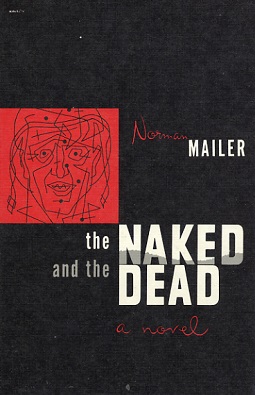
An author, like any artist mindful of his or her spread in the busy, kinetic, attention-free pop galaxy, must consider the brand as well as the art if hopeful for a multiple book contract, which is altogether negotiable depending on the number of readers willing to put down money for good storytelling. While a few like J. D. Salinger and Thomas Pynchon built their reputations with reticence, some like Norman Mailer bet on bombast, creating a trademark presence but with it the baggage of distraction. Before I’d read any of Mailer’s books, I knew him as the writer who stabbed his wife the night he threw a party announcing his presidential candidacy in 1960. That and he was the guy who wrote the first How To book for hipsters, The White Negro. But for all the talk shows and celebrity gladhanding, Mailer wrote better than anyone. Many detested him for his theatrical pretensions, but very few for his literary verve.


The Late Great Norman Mailer

Mailer made a name for himself by capturing the zeitgeist before anyone else, whether it be beatniks, hippies, or mass murderers. Writers write what they know and Mailer had survived the great drama of the Second World War with enough notes for a book, publishing The Naked and the Dead in 1948 when he was just twenty-five years old, catapulting him into the high chair of literary enfants terribles. Ostensibly, it is a book about a reconnaissance platoon, a motley collection of soldiers ordered by military brass to survey the Japanese behind their position on the invented island of Anopopei during the Filipino campaign, but The Naked and the Dead is very much a modern American novel, which means it is a subversive criticism on American social life, economic opportunity, and an illusory freedom of choice.

Very few of the soldiers in the platoon are there by virtue of patriotism or sense of duty. They’re there because war was happening and there was not much else going on for them in the economic maelstrom of the 1930s and early 1940s. They are true grunts: outcasts, farmhands, street punks, and failed entrepreneurs stinking of bad luck. As General Cummings, a philosophical mouthpiece for Mailer, explains, “The individual soldier in that army is a more effective soldier the poorer his standard of living has been in the past.” The Army, first in line as cannon fodder, would not work so well as a fighting unit had it educated men who might second guess suicidal mission objectives.

In spite of its grandiose subject and prolix verbosity (it’s more than 700 pages long) not much happens in the novel. The platoon participates in the landing mission where there is little resistance. There are some small, deadly skirmishes where the army is digging into the Japanese line. The soldiers make and break camp as necessity sees fit. And the recon unit goes on its difficult mission. The major battle is not described except in dispatches to the command center. The reality has little to do with the PR campaign that had fueled recruitment drives and positioned every private a starring role in his own personal movie: “He had always imagined combat as exciting, with no misery and no physical exertion. He dreamed of himself charging across a field in the face of many machine-guns; but in the dream there was no stitch in his side from running too far while bearing too much weight.”


Island Hopping GI Joe Style

Major episodes describe the futility in keeping your tent secure in a typhoon; of loathing yet another rations can of ham and eggs; of fighting sleep deprivation on guard duty; of fantasizing over the “million dollar wound,” some injury that wouldn’t cripple them but was bad enough it would warrant a ticket home, thus becoming a veteran, a survivor, and guaranteeing the opportunity to tell young women, “I was there…”

Daydreaming about what they’ll do after the war does little to make their labor bearable: most duties are makeshift and disposable, the temporary conditions of camp living producing no sustenance. The tedium is only more tolerable than the logistical errands necessary to reorder military positions in constant flux. Endurance is taxed and tolled mercilessly, so much that a man’s humanity is crushed by the dead weight of his task as when the platoon is ordered to move heavy artillery guns through muddy paths to a new position on the front: “By the time an hour passed, nothing existed for them but the slender cannon they had to get down the track. The sweat drenched their clothing and filled their eyes, blinding them. They grappled and blundered and swore, advanced the little guns a few feet at a time with no consciousness any longer of what they were doing.”


an American platoon

And who are these guys suffering for the sake of their country anyway? There is no central hero in The Naked and the Dead— at least, there is no one with outstanding moral qualities— instead they are neither good nor bad, but merely human, reacting to the violence, tedium and proximity to death in a myriad of ways. Wilson, a philandering Southerner wants to get drunk and swap sex stories; Red is a hard-luck cynic mistrustful of authority; Goldstein is a New York Jew who wants to be liked and is easily hurt by discrimination; Gallagher is a high-strung Commie-baiter; Martinez is an excellent scout brave in spite of his fears; Hearn is a college grad from a good Midwestern family dabbling in socialism, assigned to lead the platoon on their recon mission after a falling out as General Cummings’ secretary; only Croft, a tough bastard from Texas, truly fits the ideal soldier, a man with a “crude, unformed vision in his soul… rarely conscious of it.”

In the 50th anniversary addition of the novel, looking back Mailer calls his first calling card opus the work of an “amateur.” If there are any flaws in The Naked and the Dead it may only be Mailer’s conceit of using a Freudian device he calls THE TIME MACHINE, in which in a very close third person (adapting local vernacular whether Boston or Brooklyn street, Georgia hillbilly, or Texan Mexlish) Mailer explains characters’ backstories. Not that they are superfluous— they are all piece and parcel of Mailer’s most persuasive point: that America is an unequal society and that these men, should they survive, had very little to look forward to coming home short of some good home cooking and a few rowdy nights of casual sex: “…it did not matter because both girls would look the same in thirty years and Wyman would never amount to very much. He saw a future vista of Wyman’s life, and rebelled. He wanted to be able to tell Wyman something more comforting than the fact it didn’t matter. But he could think of nothing.”

Recently, I was discussing with my family the famous essay by economists Stephen Dubner and Steven Levitt and their controversial assertion that the great drop in crime over the last twenty years has its origins in Roe vs. Wade. They contend that legalized abortion has resulted in a million fewer unwanted babies a year, arguing this as a causal effect since statistically most criminals come from single parent, low income backgrounds. Something the economists never touched on and is worth bringing up is the role of America’s large standing army.

It’s a long time passed since the Army has relied on Uncle Sam posters for recruitment. Nowadays, the big draw for those ambitious to leave the ghetto are things not generally associated with masculine glory: steady pay, technical skills, health insurance, and government pension. Even in garish TV recruitment commercials in which soldiers and marines fight CGI monsters, some of these essentials do not go unmentioned. Nowadays glory is the fringe benefit; security is where it’s at, even if it means risking deployment in Somalia, Afghanistan, and Iraq— for a number of men this trumps the quiet desperation that afflicts so many civilians. As Mailer’s General Cummings puts it perfectly, “The natural role of twentieth century man is anxiety,” especially true in a nation whose safety net is worn through and breaking.

Cummings again: “The Army functions best when you’re frightened of the man above you, and contemptuous of your subordinates.” But Mailer might as well be talking about his vision of America, the scramble for earnings, the problem of love and marriage in circumstances of poverty, the hypocrisy of the American Dream being realized for so few. I was shocked to discover The Naked and the Dead on Bill O’ Reilly’s Top Ten list. Had he completely missed Norman Mailer’s essential idea?

Today, The Naked and the Dead is hardly known for its brutal realism and tough stance on American inequity. If anything, it is notorious for the censorship of it’s language, as in “Ain’t none of your fuggin’ business,” or “The fug you say!,” an unintentionally humorous tact Mailer’s editors employed as to not offend Middle America’s sensitive moral palate. Tuli Kupferberg called his marvelous freak-rock band, The Fugs, and the actress, Tallulah Bankhead, apocryphally said to Norman Mailer upon meeting him, “Oh, you’re the young man who doesn’t know how to spell…” It’s a good story but the book deserves more than an anecdotal cocktail throwaway— it is essential reading for anyone interested in the American’s precarious existence.

The men of the recon patrol lead a Sysyphean existence. So little of their exhausting work produces real meaning or tangible results. Even that most vital human instinct most of us in our technocentric lives never have to exercise, that of survival, is dulled from arduous exercise so that a bullet in the head would mean a welcome respite from this trial called life. The rare moments they have in combat, the hero's stance is not charging the field but merely holding one's ground and not running. Winning the war then becomes the accumulation of small victories. You might not like the soldiers in recon but you know them and you feel for them because at the extreme other of the killing in war is that elusive quality called human empathy. A corpse is not just a corpse; he is a storehouse of love, life and stories that have ceased to exist. Even Mailer’s battle-hardened, sarcastic grunt, Red, is alive to this:

“Very deep inside himself he was thinking that this was a man who had once wanted things, and the thought of his own death was always a little unbelievable to him. The man had had a childhood, a youth, and a young manhood, and there had been dreams and memories.”