Showing posts with label books. Show all posts

Sunday, June 20, 2010

Why the Disenchanted Enchant

“Fame, romance, success—these things were so precious that no one could be entrusted with their possession for more than a moment.”

-- Budd Schulberg via Manley Halliday

If we are to employ the old standby, “There are two kinds of people in the world…” to Americans, we would say there are winners and losers, but it is not a black & white world of course and there are permutations to the categorization— what about losers who come to win and more spectacularly, winners who come to lose? What is it about déclassé failure that makes us feel better about ourselves? Are Mike Tyson, Richard Nixon, Michael Jackson, and Mark McGwire, to name but a few great legends that received their comeuppance, more famous today for their declines than their greatness? Are they not interchangeable? For example, can you talk about Nixon without mentioning Watergate or McGwire without steroids? It’s fascinating that the term for taking pleasure in others’ pain, schadenfreude, is a loanword borrowed from the Germans, since, with all the pleasure we take in our heroes’ downfalls, you would have thought by now we could have come up with our own Americanism for the blissful joys reaped from the public disgrace of others.

One of the greatest novels ever written on the subject is Budd Schulberg’s The Disenchanted (1950), which is a dramatization of Schulberg’s experience teaming with the legendary F. Scott Fitzgerald, who by the time he was hired out to work on an inane studio script was more legendary for his boozing than The Great Gatsby. Fitzgerald died before he could finish his comeback novel (from whose notes for The Last Tycoon include the famous, clairvoyant line, “There are no second acts in American lives.”) But Schulberg, most celebrated for his screenwriting credit for On the Waterfront, made the most of this opportunity, developing a story that not only indicts Hollywood, but the Jazz Age itself, the generation that spawned Fitzgerald and the excesses that would create the Great Depression.

Budd Schulberg

In The Disenchanted, art imitates life: it is the winter of 1939, the world is heading towards another war (“how calmly they floated towards the falls”) and Shep Stearns, a lit-grad and idealist leaning towards Marxism, has taken a low-level screenwriting job because he believes movies are “the great new folk art.” Shep is youthful, enthusiastic, and can talk the talk, even though he knows Hollywood-speak is “a world fenced in with exclamation points… a world where hyperbole is the mother tongue.” But he’s accommodating since he desires to marry his sweetheart and avoid a regular job, i.e. inheriting his father’s studio car rental business. So Shep’s written a stinker of a college romance called “Love On Ice,” which he knows bears no relation to realities or art but “is the most convenient of apologetics: the means to an end.”

The studio head, Victor Milgrim, a rags-to-riches nouveaux riches aristocrat emblematic of the early studio founders, sees potential in Shep’s script but wants to polish it so he’s hired Manley Halliday to work on the script. Halliday is a legendary but mostly forgotten Jazz Age novelist. He is also a recovering alcoholic trying to glue himself back together long enough to finish his final literary masterpiece. Milgrim wants them to travel cross-country together to Shep’s alma mater, the fictional Webster College in New Hampshire, to shoot background scenes at the Mardi Gras festival. He believes the adventure will inspire their writing endeavors (though Halliday is sure that Milgrim, an intellectually insecure millionaire, is pushing for an honorary degree and wielding Halliday as bait for the prize). Manley, dependent on his live-in girlfriend, Ann, agrees to go in spite of grave misgivings regarding what might befall him on the journey. His fears are perfectly ground. The great novelist soon falls off the wagon and the consequences are disastrous.

The problem is that screenwriting is all wrong for Halliday, an idiot savant, prolific with the most exquisite prose but incapable of correctly folding his suits. Screenwriting “wasn’t writing; it was diplomacy” and as a younger man, powerful, free and a bit of the snob, “he’d been able to indulge in a lofty contempt for movies.” But Halliday needs quickie cash and lots of it— he’s paying down the debts racked up from the wild living: back taxes, back alimony, back rent, his ex-wife’s analysis, his son’s prep school education. As in the case of Shep, the lure of Hollywood money is more powerful than pride or convictions.

But the young screenwriter turns out to be a tonic to the old artist: Shep has not only read all of Halliday’s books, he quotes liberally from them and whose generation he inexplicably, guiltily, envies and admires. On the flight to New York, Shep shares with Halliday a few bottles of champagne, which is the first burst of the floodgates. The taste of booze is the flavor of memory and once they arrive in New York, Manley operates in a twilight consciousness revolving around a glorious past, a catastrophic decline, and an inebriated, less than elegant present. And rather than writing, Shep is compelled to live up to his name, shepherding Manley safely through numerous crises, mostly of the self-inflicted variety.

Like Fitzgerald suffering his beautiful Zelda, Halliday’s bête noir was a flapper named Jere. Much of the novel’s thick middle is close third person stream of consciousness covering the couple’s witty banter, bad behavior, terrific parties, and wholesale crack-ups not dissimilar to the Fitzgerads’ very own. It’s a life of gay yachting parties on the Riviera and grim sanitariums in Upstate New York. And though we veer from the plot (will Manley get it together and solve the damn cipher of this silly movie?) the digressions provide some of the most exquisite prose in the novel. After falling in love in Paris, Armistice Night, 1918, Jere “made his young manhood a time of bewitchment, when springtime was the only season and the days revolved on a lovers’ spectrum of sunlight, twilight, candlelight and dawn.” As long as Halliday had the Golden Touch they thrived vivaciously: “we weren’t a-Freud of anything.” But neither Manley nor Jere could transition to the austere 1930s, as “the trouble with both of them… was that they thought youth was a career instead of a preparation.”

The Good Old Days:
Two Flappers and a Gentleman

Failure has embittered Halliday, who can’t help but loathe the new generation. Jealous of the youthful love between Shep and his girl, he comforts himself with the knowledge that “the happiest of people were machines running down.” Pressured by Milgrim and Shep to produce something usable pronto, Halliday fortifies his incapacity to create with his condescending view of writers that churn out material by demand: “Writing comes easy… when you’re a natural hack an’ haven’t got any self to express.”

Nevertheless, Halliday sees himself as a professional. When it’s sink or swim, Manley can riff on the plot, adding poetry and dimension to the staid college romance formula. Shep’s impressed, but dubious, for “it was much too good for what they needed. But for what they needed, not good enough.” Unfortunately for them (but felicity for the schadenfreude-happy reader) when they finally reach Webster, Halliday is “too stupefied to tell day from night, gin from vodka, love from hate.” When the great writer humiliates himself at a college mixer to the delight of colleagues and students, Shep is furious: “Manley was drunk and he was a spectacle. But they seemed glad this had happened to him. That is what galled.” It’s that damn devil, envy, working itself into a fit again, expressed in shits and giggles. Halliday knows the source of their spiteful laughter all too well, as from a time when he nearly conquered his own demons through self-reflection:

“Ruthlessly he made a list of all his faults and found them all to be the same fault, an over-supply of vanity, an over-developed concern to hear his name at the end of the cheers. The wish to be publicly admired. To be a Success. Like the others he had sneered at the Babbitts with their ordinary business success, their abysmal bourgeois ignorance that passed for ‘being a smart operator’ and yet inadvertently he had allowed himself to be caught in the great American net.” 

Thus written is the central dilemma of living in a consumerist society: this is the mother of our disenchantment and our insatiable appetite for the new and the next. It may even be defined by that vague catchall word, “cool.” We have an unfortunate tendency to compare our fortunes to those of others, whether it be money, knowledge, gadgets, or style. When we fall short, for we inevitably do because there is always someone better, faster, cooler, loathing is the default emotional reaction. There is only one great truth to salve such insecure feelings, true then, now, and forever and for a moment, Halliday nearly grasped it:

“Men as far apart as the Bible poets, the Elizabethans and the French symbolists all seemed to agree that if there was a single wisdom it was simply To thine own self be true… All he had to do now was decide what was his own self.”

Manley Halliday only seemed to really understand Manley Halliday in the process of writing, in great confessional prose that excoriated his blunders and romanticized the things that were worth making beautiful. In a difficult culture where morals are compromised and pride despised, art is the single greatest outlet afforded the honest man. In Halliday’s own intoxicated language, “No good work of art I mean there’s no good work worthwhile work of art without the artist exposing himself.”

The Great F. Scott, circa 1938

In the end, Halliday has exposed too much in real life and it destroys him. When he is dying in a hospital at the end of the story, Shep, in spite of the promise of his hero’s unfinished manuscript, believes that only in death will his friend reach immortality: “Let him be lowered into his grave so that disciples may begin to worship, so that readers may savor the pleasure of rediscovery. Let us bury the remains. Let the Halliday revival begin.”

Sometimes life follows the inspirations of art. F. Scott Fitzgerald died at the young age of forty-four. Posthumously, he has become a larger-than-life success, The Great Gatsby being quite possibly the most beloved book of our culture, the so-called Great American Novel. Death, it seems, can save a reputation. Schadenfreude has only so much emotional reach before sentimentality overwhelms it and we Americans are more famous for being maudlin anyway.

Unfortunately, forgiveness comes too late but at least it does arrive in time for posterity.

Friday, April 23, 2010

The Bottom of the Bowl

“Nothing in the world was more terrible than an empty bottle! Unless it was an empty glass.”

One of the worst transformations undergone in the publishing industry over the last generation has been the elevation of the personal memoir. Self-centered celebrity tell-all books notwithstanding, it is the testimony of former addicts, alcoholics, sinners and the apologetic like whose personal anecdotes of shame and redemption that tend to be very popular with an inquisitive public. These stories of decadence share a typical trope: wanton excesses are laid out for our prurient (and natural) curiosities, which are then incontrovertibly condemned by a puritanical (and programmed) morality. Other than refuting Blake, Huxley and Jim Morrison’s cause-and-effect advocacy regarding excess and wisdom, these books do not reveal the reason why some of us are destroyed by substance abuse while for others drugs and alcohol remain an indulgence, if not an occasional delight.

If you’ve read one 12-steps recovery tale of self-aggrandisement, you’ve read them all and, yet, you’re still no closer to understanding what was the point of all this embarrassing solipsism. Generally, it is understood that addiction is a terribly personal affair, a lonely misadventure so desolate that for the addict lost in lostness, “sunlight could not share his burden of conscience of sourceless sorrow.”


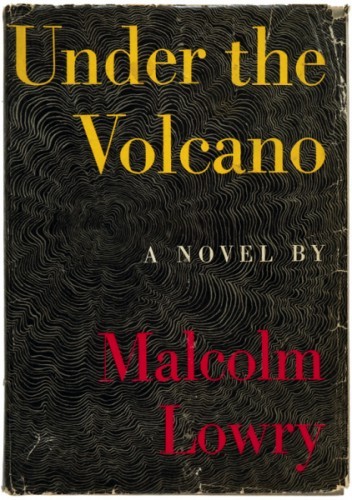
You will never find the above quote— so exacting in its prognosis of alienation—in any contemporary memoir. It belongs to literature, specifically Malcolm Lowry’s Under the Volcano, published in 1947, during a time when alcoholic and drug fiends—if they wanted to be published— transubstantiated their brutal experience into an exquisite poetry that demanded from the reader a severe attention if he or she decided to go along for the ride. For Lowry, an alcoholic who never beat his demons but exorcised them in this literary masterpiece, the devil doubled as the muse.

Under the Volcano is the story of Geoffrey Fermin, an ex-British consul drinking himself into oblivion in Quauhnahuac, Mexico. The story, like Joyce’s Ulysseus, comprises a single, eventful day, the Dia de Las Muertes, November 1st, 1938, a day that begins with his estranged wife, Yvonne, an American B-actress past her sell-by date, returning from California after a year’s estrangement. Along with the Consul’s half-brother, Hugh, they decide to travel to the nearby town of Parain. En route, they witness a crime that has later tragic repercussions.

The setting and time are important, related as they are to the major global event at the time, the Spanish Civil War, which, ideologically, had been a contest between anarchy and communism against fascism and, industrially, a testing ground for the weapons of mass destruction that would follow within a year, once Hitler’s Germany invaded Poland. The progressive ideas coming out of communism, particularly that of nationalization of resources, was a testy subject in Mexico, beset with its repressive Catholic heritage as well as its own Revolution’s legacy and the State’s very recent takeover of its oil reserves.

The best novels feature an interconnectedness between the greater world and the interior one and this complex relationship is evoked within the characters in different ways. Hugh, a failed commercial troubadour and utopian-minded drifter-dreamer, feels guilty that in spite of his convictions and the knowledge that the Spanish Republic’s defeat is a fait accompli, wonders if he has missed the one opportunity to do something honorable and meaningful in life. Of course, he disagrees with the Consul’s self-destructive apathy, yet he is not unaware of man’s survival instinct to let well enough alone what is not his battle to fight. This is eloquently expressed following the incident of the crime and his witnessing of the other passengers’ reaction: “Death they knew, better than the law, and their memories were long… in these old women it was as if, through the various tragedies of Mexican history, pity, the impulse to approach and terror, the impulse to escape, having replaced it, had finally been reconciled by prudence, the conviction it is better to stay where you are.”

The Consul, well aware of the benefits of isolationism, has his own contentions. His alcoholism is not a pleasure nor is it a form of escapism. It is a sickness, and the drinking is necessary for him to reach a physical and psychological equilibrium. The DTs strike whenever he attempts to empower himself any degree of free will over his disease. Just as bad is the sense of doom that pervades sobriety, liable to wipe out any sunshine or cheer. Sitting at a café, in view of a fair celebrating the holiday, the setting “had suddenly become transcendentally awful and tragic, distant, transmuted, as it were some final impression on the senses of what the earth was like, carried over into an obscure region of death, a gathering thunder of immedicable sorrow; the Consul needed a drink…”


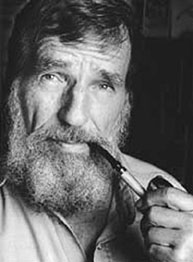
Malcolm Lowry

Mexico, which Lowry once wrote in a letter to friend was "the most Christ-awful place in the world in which to be in any form of distress, a sort of Moloch that feasts on suffering souls," is a grandiose theater from which this tragedy plays out: Mexico and its ruined palaces, Gothic churches, hideous ravines, pullulating flowers, clandestine scorpions, and canvas-like skies where "high overhead sailed white sculpturings of clouds, like billowing concepts in the brain of Michelangelo." There is also its tequila and its mescal, the sad-eyed drunks and the corrupt police. In the turning point of the novel, when the Consul, Yvonne and Hugh encounter a brutalized Indian lying injured on the side of the road, one of the other passengers not only pockets the man's money and pays his fare with it but shamelessly keeps the pelf on his lap conspicuously for all to view. Was it any wonder then, that Europe was rushing headlong and heedless into another great war and that for those who knew better, the human race would not be worth dying for?

But in the end this is a love story and it is the Consul's tumultuous relationship with Yvonne that is the real source of his despair. Yvonne, having come to rescue him from Mexico and its addictions, has agrarian dreams, one in which they withdraw from the world onto their own farm, in the country, a place where Geoffrey would be able to write (he is working on a book on Mayan ritual, the Kabbalah, and other occult matters) while she tends their living space, looking after him, being his friend, his housewife, his lover. It doesn't matter that she knows nothing of the day-to-day affairs of such an endeavor, for after all, it is but a dream and one that can be easily discredited by reality. Though they never discuss it outright, Geoffrey suspects it's on her mind and though he loves the novelty of such an enterprise, he believes more in futility than fruition. Early in their reunion, he hints at the hopelessness of her schemes, his query, “What’s the use of escaping from ourselves?” quickly forgotten. There was not even real regret that this inevitable failure was something to feel bad about: “the past was irrevocably past. And conscience had been given man to regret it only so far as that might change the future.”

That the Consul may be pessimistic about his predestined perdition doesn’t make the reader any less sympathetic to Yvonne’s cause—her imagining of the farm comes as a contrast to a brutal sporting event—since the marriage, in spite of its flaws and blemished disgrace seems worth saving, as these two people, for all their mistakes, need each other desperately. The novel's greatest substance comes from the construction of the small details communicated between a man and a woman with a long tragic history, beautifully evoked in Lowry’s prose: “…as he approached she turned this hand palm upward…like an unconscious gesture of appeal: it was more: it seemed to epitomize, suddenly, all the old supplication, the whole queer secret dumbshow of incommunicable tendernesses and loyalties and eternal hopes of their marriage.”

Yvonne is no innocent: her affair with M. Laurelle, a childhood friend of the Consul is what makes it so hard for them to reconcile. It is not clear whether his alcoholism was responsible for the affair or the affair responsible for the alcoholism. This chicken-or-the-egg argument has no bearing for Geoffrey and Yvonne in their current predicament. They are doomed lovers, a Romeo and Juliet denied any future union of consummation not due to external parties but from deep within themselves. Being responsible for so much unintentional pain upon the other, is it any surprise “how alike are the groans of love to those of the dying…?”

The Consul understood the inarticulateness of his debilitation and that though every drunk’s tragedy might be as mass-produced as the liquor he drank, his very real pain was personal in its broken-tongued head-spinning downfall, a sui generis descent into a forgettable void. People might help you, they might care for you, but in the end, you were on your own: “In the final analysis there was no one you could trust to drink with you to the bottom of the bowl.”

This may be true. But as an old barkeep consoles Geoffrey on his long day’s journey to the end, there can always be a sense of companionship among the lost nevertheless, for “I have no house only a shadow. But whenever you are in need of a shadow, my shadow is yours.”

Friday, March 5, 2010

Burning Billboards and Other Literary Matters


Edward Abbey’s The Monkey Wrench Gang begins with “the aftermath” of the novel itself, the detonation of a bridge in the Four Corners Region of the American Southwest. Like an inspiration born of yippies or Al-Qaeda, the bridge is a high-profile target, sabotaged during a media event with officials glad-handing, local TV news crews videotaping, and the public witnessing: the bigger the spectacle, the larger the message, which is more or less, neo-Luddist.

It is generally a risky move to make literature overtly political (as opposed to presenting your polemics with subtlety, which is the greater trend; done right, nuance can be just as powerful). Fictional agitprop generally does not sell well with the public nor does it charm the midlist critics. Notable exceptions would be Harriet Beecher Stowe’s Uncle Tom’s Cabin and Upton Sinclair’s The Jungle, both of which went on to affect the public conscience on such vigorous levels that their narratives entered the national debate over slavery and food safety, respectively.

Abbey’s The Monkey Wrench Gang was published in 1975, a fascinating period in liberal dissent, in which some radicals had more or less abandoned sit-ins and peace marches in favor of violence. Members of The Weather Report and the Symbionese Liberation Army really did believe that terrorist acts against institutions that promote or profit off the industry of war and oppression were fair targets and through their destruction would come significant change. Putting down the love beads and picking up the Molotov cocktail, they were fearless, if not misguided individuals operating in a social climate that was moving comfortably towards The Hustle and cocaine on pleather love seats.

Abbey’s Monkey Wrench Gang is not a clan of hippies indoctrinated by the burgeoning Earth Day celebrations but are men of the earth who have soil in their fingernails and the wherewithal to live by their philosophy, that is that technology and industry are incompatible with the pristine beauty of nature. As Seldom Seen Smith, the polygamous, blonde, lanky, good-humored Mormon whose living, livelihood and life is the marvelous Colorado River, says:

"The river, the canyon, the desert world was always changing, from moment to moment, from miracle to miracle, within the firm reality of mother earth. River, rock, sun, blood, hunger, wings, joy-- this is the real... all the rest is androgynous theosophy. All the rest is transcendental transvestite transactional scientology or whatever the fad of the day, the vogue of the week."

Philosophically, he is right on with Doc Sarvis, a middle-aged surgeon with a pathological antipathy regarding highway billboards, of which he indulges in his pyrotechnic habits. Doc Sarvis views man’s fate through fiery-tinted apocalyptic goggles, the Devil’s Advocate in any conversation related to man’s inherent goodness:

"The wilderness once offered men a plausible way of life. Now it functions as a psychiatric refuge. Soon there will be no wilderness... then the madness becomes universal. And the universe will go mad."

Over a campfire of rations, whiskey, and beer, they discuss possible targets, Doc Sarvis working himself into a rage as he lists nature’s worst transgressors due a mean reckoning:

"And don't forget the billboards. And the strip mines. And the pipelines. And the new railroad from Black Mesa to Page. And the coal-burning power plants. And the copper smelters. And the uranium mines. And the nuclear power plants. And the computer centers. And the land and cattle companies. And the wildlife poisoners. And the people who throw beer cans along the highways."

Doc Sarvis’s secretary and chauffeur-cum-lover, Ms. Bonnie Abbzug, is a Bronx Jewish beauty who is the Patty Hearst of the gang, a city gal politicized by charismatic company and the delight of detonating bulldozers. As the men get carried away with their visions of sabotage, she reminds them that prudence would be key to survival. She’s the voice of the 1960s, bright, lovely, idealistic, meditative, and yet she can see the more clearly than the others:

"But they have everything. They have the organization and the control and the communications and the army and the police and the secret police. They have the big machines. They have the law and drugs and jails and courts and judges and prisons. They are so huge. We are so small."

Her philosophical rival within the group is George Washington Hayduke, a hairy, squat, muscular, vulgar Vietnam Vet with itchy trigger fingers and an incapacity to resist any kind of sabotage, as much for the fun factor as for the environmental statement itself. Though told in the third person, it’s clear that Hayduke is the story’s protagonist, if not Abbey’s altar ego, as he is the most offended by the pathetic turn in materialist America. Hayduke is a kind of rampaging Greenpeace Rambo whose end-all pastoral vision of America is compromised by his ingrained pessimism:

"When the cities are gone and all the ruckus has died away, when sunflowers push up through the concrete and asphalt of the forgotten interstate freeways, when the Kremlin and the Pentagon are turned into nursing homes for the generals, presidents and other such shitheads, when the glass aluminum skyscraper tombs of Phoenix Arizona barely show above the sand dunes, why then, why then, why then by God maybe free men and wild women on horses, free women and wild men, can roam the sagebrush canyonlands in freedom--goddammit!--herding the feral cattle into box canyons, and gorge on bloody meat and bleeding fucking internal organs and dance all night to the music of fiddles! banjoes! steel guitars! by the light of a reborn moon!-- by God, yes! Until... the next age of ice and iron comes down and the engineers and the farms and the general motherfuckers come back again."

Take or leave the politics, this is passionate prose, and the story flows with energy and humor. Progress of the narrative is simple and inevitable: after forming the Monkey Wrench Gang (also called the Wooden Shoe Conspiracy as the word sabotage is derived from the French sabot or ‘wooden shoe,’ as in “from damage done to machinery by sabots (Webster’s)), they progress from simple to complicated operations that lead to evermore close calls with the law, including some extraordinary chase sequences that would make great cinema (though it’s very unlikely corporate Hollywood would spend the big bucks financing such a piece). Throughout the Four Corners region, they have supplies cached for regrouping, survival, and the next act of mayhem. In case you were wondering, the typical inventory was such:

“The stores consisted of (1) food: tinned goods, dried meats, fruits, beans, powdered milk, sealed drinking water; (2) field equipment: medical kits, tarps and ponchos, fire starters, topographical maps, moleskin and Rip-Stop, sleeping bags, canteens, hunting and fishing equipment, cooking gear, rope, tape, nylon cord and (3) the basic ingredients: monkey wrenches, wrecking bars, heavy-duty wirecutters, bolt cutters, trenching tools, siphon hoses, sugars and syrups, oil and petrol, steel wedges, blasting caps, detonating cord, safety fuse, cap crimpers, fuse lighters and adequate quantities of Du Pont Straight and Du Pont Red Cross Extra."

If Abbey is political, he is also poetic and oftentimes funny. The Gang’s enemy, the representatives of industry are the kinds of people that "can hear a dollar bill drop on a shag rug." No institution is safe with Abbey, even cartoon characters suffer embarrassing acts of vandalism:

"Bonnie unbuttoned Smokey's fly, pictorially speaking, and painted onto his crotch a limp pet-cock with hairy but shriveled balls. To Smokey's homily on fire prevention Hayduke attached an asterisk and footnote: "Smokey the Bear is full of shit."

Mr. Abbey
Would you play with dynamite with this man?

In the copyrights page, Abbey declares that though the novel is “fictional in form,” it is “based strictly on historical fact.” Mischievously, he adds that “it all began just one year from today.” It seems then that his novel is a call to arms for all environmental warriors to take up wrenches against industry. As we all know, such a Neo-Luddite revolution never occurred but that is not to say it might happen yet with Abbey some smiling godfather angel poet.

Abbey, who had an FBI file going back to the 1940s, was a fringe thinker with a golden pen, but is not known to have engaged the system as his fictional characters had. But he was at the right place at the right time, as it’s hard to believe that he could get away with his politics in our contemporary and endless War on Terror. Finding an empathetic editor and courageous publishing house would have been extraordinarily tedious. When the character Hayduke speaks for Abbey, “Because freedom, not safety, is the highest good," he is contradicting the literature of our age, with its sanitized, whitewashed machinations. Had he lived long enough, maybe the author would have gone rogue in his eighties. Abbey was too aware of what was at stake to stand by idly. Best to let the bard enjoy the last word:

"That ultimate world... the final world of meat, blood, fire, water, rock, wood, sun, wind, sky, night, cold, dawn, warmth, life. Those short, blunt and irreducible words which stand for almost everything he thinks he has lost. Or never really had..."

Friday, January 29, 2010

In Memoriam

Howard Zinn, on the cusp of politicalization

This past Wednesday, two larger-than-life writers, who had not insignificant effects on my world view, passed on. That Howard Zinn and J. D. Salinger died is not especially tragic-- Zinn was 87 years old and Salinger, 91, and certainly their very best days were behind them. Zinn's most famous work, The People's History of the United States, was published in 1980 and Salinger's The Catcher in the Rye in 1951. Both men are old enough that they served in the Second World War, Salinger participating in D-Day and Zinn as a bombardier, whose vigorous anti-war beliefs stem from being one of the first pilots to use napalm, dropping it on Royan, France, at the end of the war. Zinn and Salinger had paradoxical reactions to their successful careers in letters. As much as Salinger withdrew from public life, Zinn embraced it, lecturing at universities and rallies on the role of the average American in producing progressive change, teaching that it has been the participation and inspiration of ordinary individuals, the unsung heroes, who have effected whatever liberal programs we enjoy (and take for granted) today.

I've read People's History twice. The story of America's rise to power is an overwhelmingly tragic tale, from the theft of indigenous land to the brutal, cheap labor enjoyed by both Southern plantation owners and Northern capitalists, building industries and making fortunes on the work of slaves, and later, immigrants. If there is a thread that connects this history, it's one of blood and tears. Well-researched, much of People's History is told in the first person by Americans who were brave enough to challenge the power structure and its tight grip on the status quo. Zinn was a revelation for a number of modern historians (termed "revisionist" by a reluctant establishment) for taking on a view of history in which progress is not measured by the winning of wars but the championing of basic human rights deserving of all men and women.

J. D. Salinger

I've read The Catcher in the Rye three separate occasions: the first time was in High School when I was too young in life to "get" it; the second time was just after finishing university, having decided to pursue a writer's life but having no idea how I would make my way in the world otherwise, wary of the transformations necessitated by adulthood; and the third time was during my first extended stay in New York City when I was 25. That final time, I didn't get it either but it was because I had moved on from Holden's callow obsessions. In short, I felt that Holden was a sympathetic misanthrope, sympathetic to the extent that he felt powerless in a society that strips us of our innocence and that this was the world's biggest "f*** you" he could never efface. All of us, especially young readers, can relate to the realization of our limitations, which is the true, great pain of young minds raised on the myths of superheroes.

I wonder had the character, Holden Caulfield, read Zinn's People's History, might he embrace the idea that there is no absolutism in life and that adults are capable of amazing, beautiful and imaginary actions. A fictional character, Holden, on the edge of life: his fate is whatever we care to dream.